Summary of the morning REX session n°1 — fire: protecting against solar radiation, September 16, 2025
Key takeaways
First no-regret actions to analyze
Our discussions led us to identify four actions that we could consider generalizing across all our projects:
- Perforated exterior shading and insect screen on all windows and glazed doors
- Additional fixed solar protection for sensitive areas (visor or solar control system)
- Awning if the windows or glazed doors open onto an outdoor space: balcony, terrace, garden, etc.
- "Anti-intrusion" blackout system for windows and glazed doors located on the ground floor and first floor
Launch of a Task Force to draft an air conditioning policy
This policy aims to guide local authorities, social housing operators and developers in their decisions related to the installation and management of air conditioning, through a prudent, pragmatic, and responsible approach.
Task force identified during the meeting: CDC habitat, Bouygues Immobilier, Immobilière 3F, Ville de Paris, Vinci Immobilier, Elioth, CSTB, Pouget Consultants.
Upcoming actions
October 13: API closure
- Final push to share the API with your contacts and on your social networks!
- The innovation analysis phase will follow: about forty applications to document
- Then we will hold a jury to select the 9 favorites!
October 21 from 2:30 pm to 4:30 pm: Innovation Committee n°2
- In hybrid format with experts
- Theme: renovation / existing building stock
- Agenda:
- What requirements?
- What simplified method to measure summer comfort?
- How to guarantee the result
November 13 from 10:30 am to 12 pm: Booster Session n°3
- 100% videoconference (Teams link)
- With everyone: program progress updates
Objectives of REX Morning Session n°1
"The REX Mornings are about combining theory and practice. Understanding what works, measuring it, and sharing it so actions can be systematized."
The idea is to create a framework where project owners and experts can:
- Share concrete data from recent projects,
- Compare theory (simulation, modeling, research) with practice (measurements, field feedback),
- Identify effective, reproducible and “no-regret” solutions,
- Build upon these lessons to develop a shared policy and systematize actions across the asset portfolio.
This first edition was dedicated to a single theme: how to protect against solar radiation.
In a context of repeated heatwaves, this is no longer just a matter of comfort but one of public health. The session explored different levers to address the issue of solar radiation:
- Movable and fixed shading devices,
- Reflective surfaces (cool roof, waterproof coatings, light-colored tiles),
- The role of architectural design
Several concrete feedbacks were presented during the session, accompanied by expert “lessons”:
- Immobilière 3F and Pouget Consultants
- CDC Habitat and CSTB
- Bechu & Associés

News and program updates
- Current news reminder
Heatwaves are increasing in frequency and becoming more deadly: Santé Publique France recorded +280 excess deaths during the September 2025 heatwave, mainly among people over 75. The question arises of finding a balance between mitigation (reducing carbon emissions in the long term) and adaptation (taking immediate action to protect residents).
- Program workstreams
The program has started, with several workstreams now underway:
-
- Operational support: launch of discussions and proposal of an upstream specifications document for early October
- An RE2020 calculator integrating the evolution of the DH threshold in the 2050 weather scenario and the tightening of the threshold with ISB, location, and ICU: V0 expected during November (with CSTB)
Practical guides (fact sheets)
-
- The first program insight: Heat pumps and heat waves – What are the limits? What solutions?
- A publication on shading devices, with system ratings to facilitate and systematize their implementation (no-regret actions).
Summer comfort
Summer comfort is the ability of a building to remain habitable and pleasant during hot periods, combining intelligent design, passive solutions, and, as a last resort, efficient active systems.
It is not limited to a given indoor temperature; it includes several parameters that influence the sensation of thermal comfort, such as:
- Indoor air temperature,
- Surface temperature (walls, floors, ceilings, glazing),
- Air movement (natural ventilation, circulation),
- Humidity level,
- Exposure to solar radiation (direct or diffuse).
In a more regulatory context, summer comfort according to RE2020 is ensured when the indoor temperature of a building does not exceed the threshold of 28°C during the day (without considering adaptive comfort) and 26°C at night. The number of occupied hours during which these thresholds are exceeded (with air conditioning off) is then counted over the year, multiplied by the number of degrees above the thresholds. For example, for 10 days and 10 nights at 30°C: 2°C x 12 hours x 10 days + 4°C x 12 hours x 10 nights = 720°C.h. By regulation, this sum must be below a maximum threshold: DH_max, which evolves according to different parameters.
Bioclimatism, by David Lebannier
Bioclimatism is based on a simple yet structuring idea: adapting the building to its climatic environment rather than fighting against it with mechanical means.
"Bioclimatism is common sense: prevent heat from entering, allow air to circulate, and use movement to improve comfort."
Three principles guide this approach:
- Reduce heat gains: through exterior shading devices, insulation of opaque walls, optimized window management, and limiting internal gains (equipment, domestic hot water).
- Thermally discharge: by promoting natural night ventilation, preferably cross-ventilation, when the outside temperature drops.
- Improve comfort through air movement: via fans, cross-ventilation, and more broadly through architecture that encourages airflow.
Some lessons:
- A window insulates six times less than a wall: managing glazed surfaces is therefore a critical issue.
- East- and west-facing openings are the hardest to protect, since they receive low-angle sunlight in the morning and evening.
- Even north-facing openings can be subject to gains from diffuse solar radiation.
- The solar factor (g, gtot, Sw) remains the reference indicator for measuring and comparing performance.
Bioclimatism does not eliminate heat, but it creates conditions to better manage it, relying on design before resorting to systems.
Shading devices
Renovation of an Immobilière 3F residential building, by Pierre Giovanetti.
The project
- Group of 6 buildings, 4/5 storeys high, built in 1971, comprising 110 cross-through family apartments.
- Particular feature: extensively glazed façades, which were seen as modern at the time but now prove very detrimental to summer comfort.
- First thermal renovation in 1988, insufficient: E energy rating, persistent thermal discomfort, envelope pathologies.
- Major challenge: working on an occupied site while taking into account the real habits of residents.
Actions implemented
- Mitigation:
- Façade and roof insulation
- Replacement of windows and doors
- Installation of a collective air-to-water heat pump.
- Adaptation:
- Removal of fixed glazed spandrels to improve ventilation
- Creation of an air-conditioned refuge room for vulnerable residents during heatwaves
- Removal of asphalt and greening of outdoor spaces to reduce the heat island effect and improve stormwater management
- Installation of diverse shading devices according to use: motorized adjustable sun-breakers, secure metal shutters, fixed sun-breakers in front of storage rooms, motorized awnings with wind sensors.
Results
- During the heatwave on July 1, 2025: 36 °C outside, 26 °C inside.
- Measurements show up to a 10 °C difference between renovated and unprotected apartments.
- Residents are generally satisfied, but some points require attention: high cost, maintenance of motorized systems, need for education on proper use.
This project illustrates the ability to quickly improve summer comfort in existing buildings by implementing proven no-regret actions (even without conducting dynamic thermal simulations).
Pierre Giovanetti: "One can carry out every possible technical study, but I am convinced that the key to choosing the right solar protection solutions during the renovation of occupied housing is to start with the habits of the residents!"
Shading devices: moving towards proven no-regret actions, by David Lebannier
Shading devices appear to be the most immediate and effective solution for protecting buildings from solar gains. They provide a simple, adaptable response and are already widely available on the market.
Effectiveness
- Exterior shading devices are the most efficient: they stop between 93 and 97% of solar flux before it enters the living space.
- Interior shading devices (blinds, curtains) are much less efficient, allowing between 20 and 50% of the heat to pass through, since it has already come in through the glazing before being trapped inside.
Selection criteria
The choice of a shading system cannot be based solely on its thermal effectiveness. Other important criteria must also be considered:
- Ensuring sufficient natural light
- Preserving views to the outside
- Security (especially for ground floor and first floor apartments)
- Ease of use (motorization, automation)
- Durability and maintenance of the device
Sector professionals are exploring new solutions to combine efficiency and user comfort:
- Hybrid roller shutters with adjustable slats (shutter mode / louver mode)
- Solar-powered motors that avoid complex wiring
- Connected systems integrated with home automation (automatic closure in case of high heat, wind detection for awnings)
- Perforated shading devices enabling night-time ventilation while preventing intrusions
- Integrated insect screens allowing increased night-time ventilation while keeping harmful insects out
The challenge with shading devices is twofold: ensuring measurable thermal effectiveness and gaining residents’ acceptance, so these systems are truly used daily.
Focus on the mosquito issue
The question of insect screens has emerged in discussions as a frequently overlooked but essential point: to ventilate at night, windows need to be opened. Yet in many areas, especially in densely populated urban regions or in the south (and increasingly in the north), residents face the problem of mosquitoes.
Some striking figures:
- In 2024-2025, France experienced several local outbreaks of dengue and chikungunya.
- The tiger mosquito is spreading: its expansion rate increased from 6 km/year in 2006 to around 20 km/year in 2024.
- More frequent heatwaves, longer summers, and increasingly erratic rainfall are expanding its habitat: swales, retention basins, infiltration basins, drainage trenches, rain gardens...
And what if insect screens became a widespread, no-regret measure, an automatic adaptation reflex? They can be:
- Integrated with roller shutters: close the shutter and the insect screen drops down.
- Fixed: discreet grilles on windows, terraces, skylights.
- Mobile: roll-up, sliding, magnetic. Easy to install and remove.
- Innovative: treated fabrics, ultrafine meshes that let air through—but not mosquitoes!
In new construction and renovation: insect screens should be planned just like insulation—naturally, as an automatic feature. The same goes for schools, hospitals, and social housing; installation should be systematic.
No-regret actions to be systematized
Proposals for no-regret actions in new construction and renovation.
- Exterior perforated shading and insect screens for all windows
- Additional fixed solar protection for sensitive areas (overhang or solar control)
- Awning if the window opens to an outside area (balcony, terrace, garden…)
- “Anti-intrusion” shading on ground and first floor windows
David Lebannier: "Letting air and light circulate, protecting against mosquitoes, preserving privacy, and ensuring the safety of occupants when windows are open… Beyond their role in solar protection, shading devices fulfill many essential functions in adapting buildings to heatwaves. Their selection demands real design work, which is still too often neglected."
Roof coverings
Albédo, cool roof : comment ça marche ? Par Emilien Paron (CSTB)
Le cool roof consiste à appliquer en toiture des revêtements très réfléchissants et à forte émissivité. Leur efficacité est mesurée par le SRI (Solar Reflectance Index).
- Avantages : réduction de l’échauffement en toiture, amélioration du confort d’été, limitation de l’îlot de chaleur urbain, gain de productivité pour les panneaux photovoltaïques
- Technologies : peintures réfléchissantes (économiques, mais durabilité limitée), membranes blanches synthétiques, bitume clair, SEL clairs
- Limites : efficacité surtout sur bâtiments peu isolés et/ou climatisés ; entretien régulier nécessaire (nettoyage) ; risque d’augmenter les besoins de chauffage en hiver
Limitations et points de vigilance :
- Équilibre été/hiver : les atouts de l'été peuvent devenir des défauts l'hiver (hausse du chauffage car moins d'apport solaire gratuits) : il faut raisonner sur l'année
- Effet qui disparait si la toiture du bâtiment est bien isolée
- Pertinent plutôt dans les zones sud : H2d, H3 où le gain hiver/été peut être favorable
- Entretien : l'encrassement peut réduire rapidement l'efficacité et nettoyage (type karcher) peut dégrader le revêtement et l'étanchéité
- Possible incompatibilité chimique entre certaines peintures et échanchéités
Emilien Paron : « Le cool roof, c’est un revêtement “froid” (réflectance élevée + émissivité forte) qui refroidit la toiture et soulage la clim — ou l’inconfort d’été. Mais ce n’est pas une baguette magique : efficace surtout quand le contexte s’y prête (zones très ensoleillées, toitures peu ou pas isolées et occupant une part importante du bilan thermique, pentes et étanchéités compatibles...). Sinon, on risque d’annuler en hiver ce qu’on gagne l’été ! »
Les toitures réfléchissantes de CDC Habitat, par Elodie Espeout
Les enseignements
- Les peintures réfléchissantes (type CoolRoof) se distinguent par leur rapport coût / efficacité : rapides à appliquer, elles apportent un bénéfice immédiat pour les logements situés aux derniers étages
- Les membranes présentent une durabilité intéressante, mais nécessitent une instrumentation fine pour bien en mesurer les effets
- Les habitants ont exprimé un ressenti positif immédiat dès l’application des revêtements réfléchissants
Limits and conditions for success
- The effectiveness depends on the initial condition of the building: the less insulated the roof, the greater the benefit.
- Regular maintenance (cleaning about every 2 years) is necessary to preserve the reflective properties.
- Safety during maintenance must be planned ahead: roof access, slope, waterproofing.
For CDC Habitat, cool roofing is emerging as an operational solution that is both fast, cost-effective, and suitable for social housing, capable of addressing urgent needs during heatwaves.
A key point to note: it would be useful to test these coatings over a longer period (a full year) and place sensors inside the apartments.
Elodie Espeout: "Reflective roofs are among the simple and quick solutions we are studying—in response to emergencies—to help people 'live better' during heatwaves in our homes and to avoid the installation of individual air conditioning units."
Architecture: low carbon versus summer comfort
What should we look at? By Guillaume Meunier (A4MT)
Architecture is at the heart of a dilemma: how can we reconcile the goal of carbon sobriety with the growing demand for summer comfort?
A structural dilemma
- The compactness of a building reduces the amount of materials used and improves its carbon footprint. However, it limits cross-ventilation and increases the risk of overheating.
- Conversely, protective architectural features (deep balconies, overhangs, fixed sunshades, dividing walls, terraces) provide effective solar protection… but increase the consumption of materials and therefore the carbon footprint of the construction.
The search for balance
- Should we accept a temporary increase in carbon emissions to permanently reduce the need for air conditioning?
- Or should we seek innovative architectural forms that combine material frugality with summer comfort?
This reflection calls for rethinking the indicators: instead of focusing only on window-to-wall ratios or gross compactness, it may be more relevant to consider the opening index (Io) and ventilation capacity.
The goal is not to oppose low-carbon design and summer comfort, but to seek an optimum that ensures buildings’ resilience in the face of heatwaves.
Guillaume Meunier: "Can we accept a bit more carbon if it avoids decades of air conditioning? That’s the real debate."
What kind of climate architecture? By Luca Bertacchi (Bechu & Associés)
Bechu & Associés holds a strong belief: architecture can be a central lever for climate adaptation, not just a technical support to which solutions are added. The agency therefore integrates, from the very first sketches, the constraints of summer comfort, orientation, daylight, and natural ventilation as drivers of architectural creativity.

Solutions proposed by Bechu & Associés
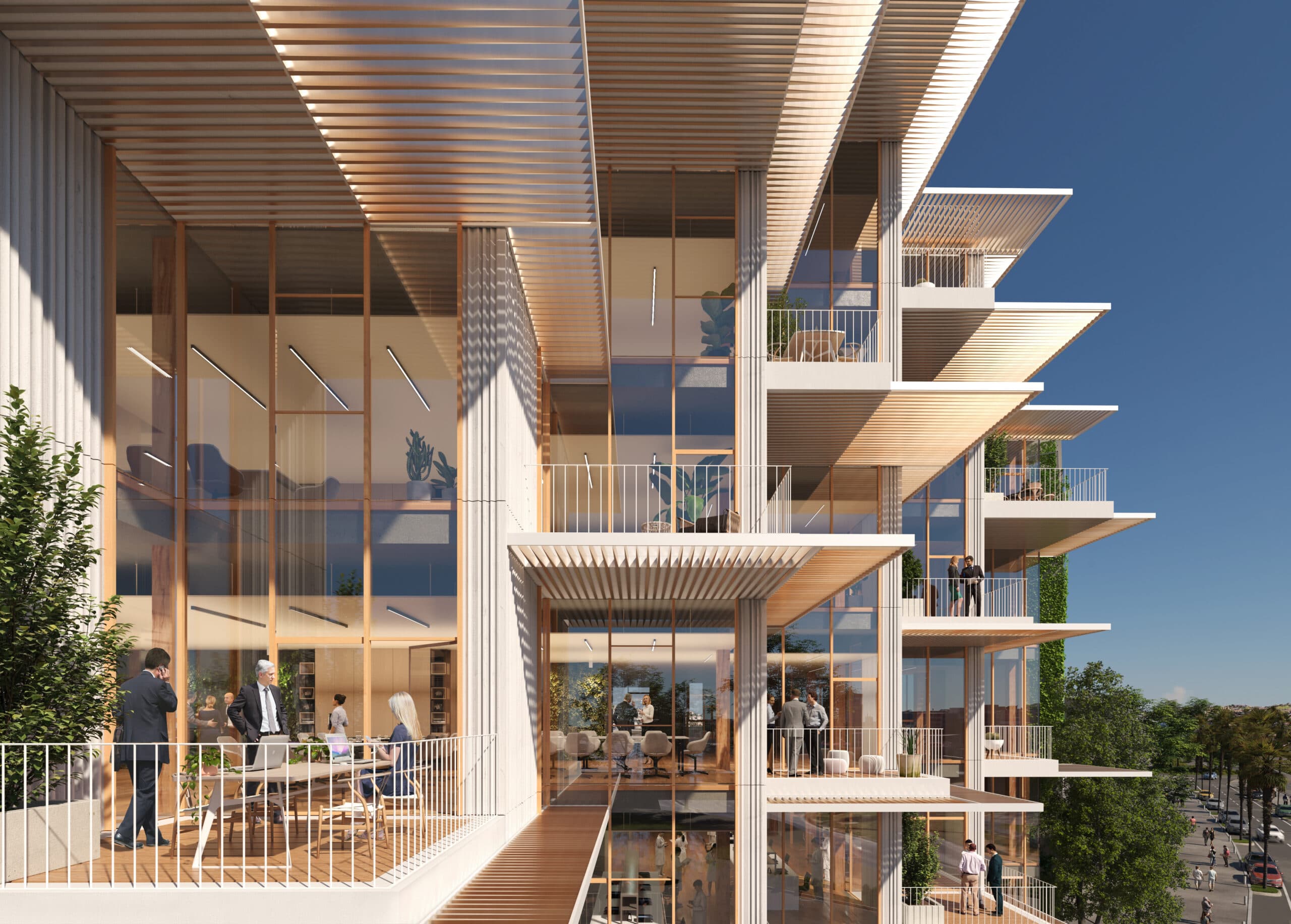
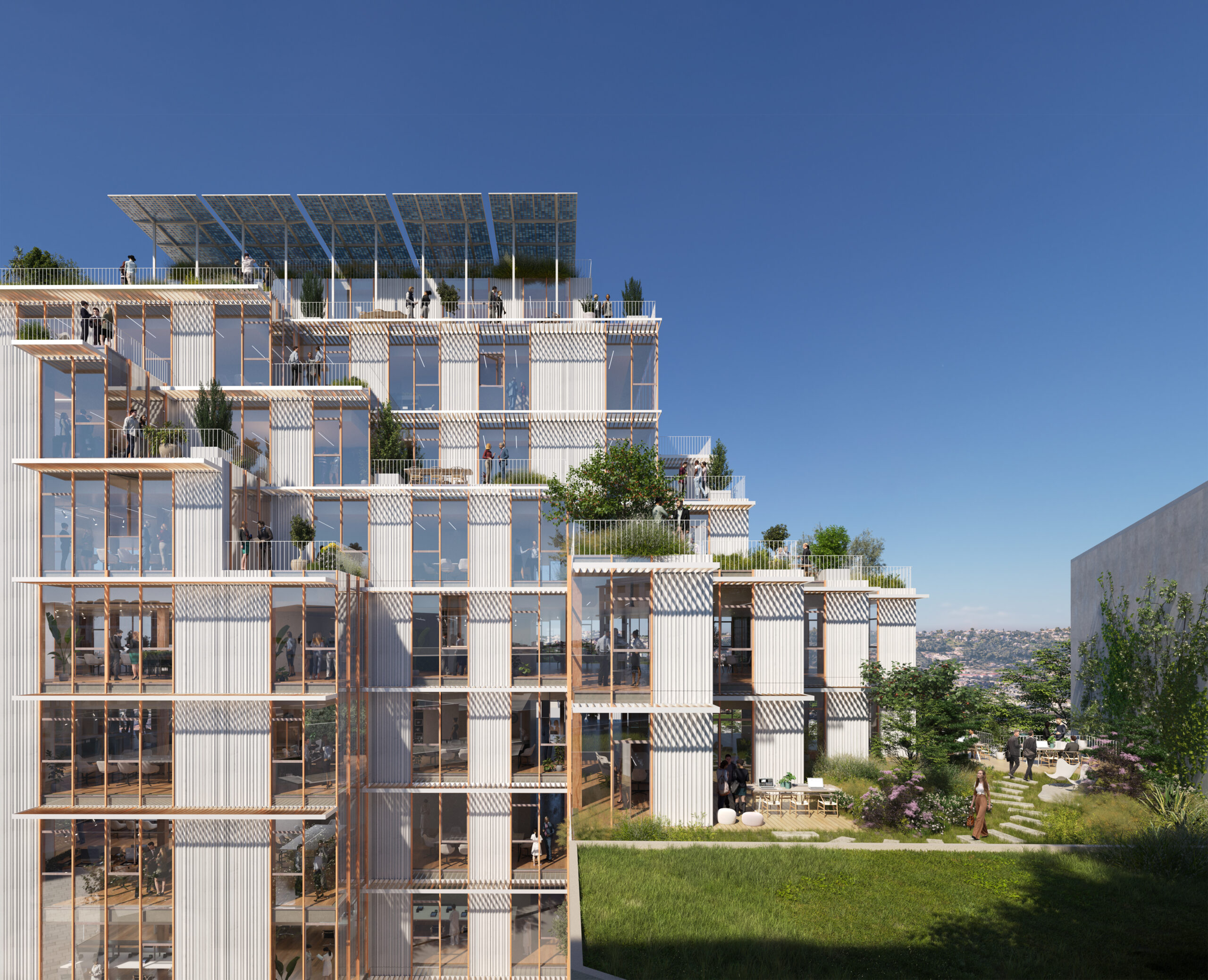
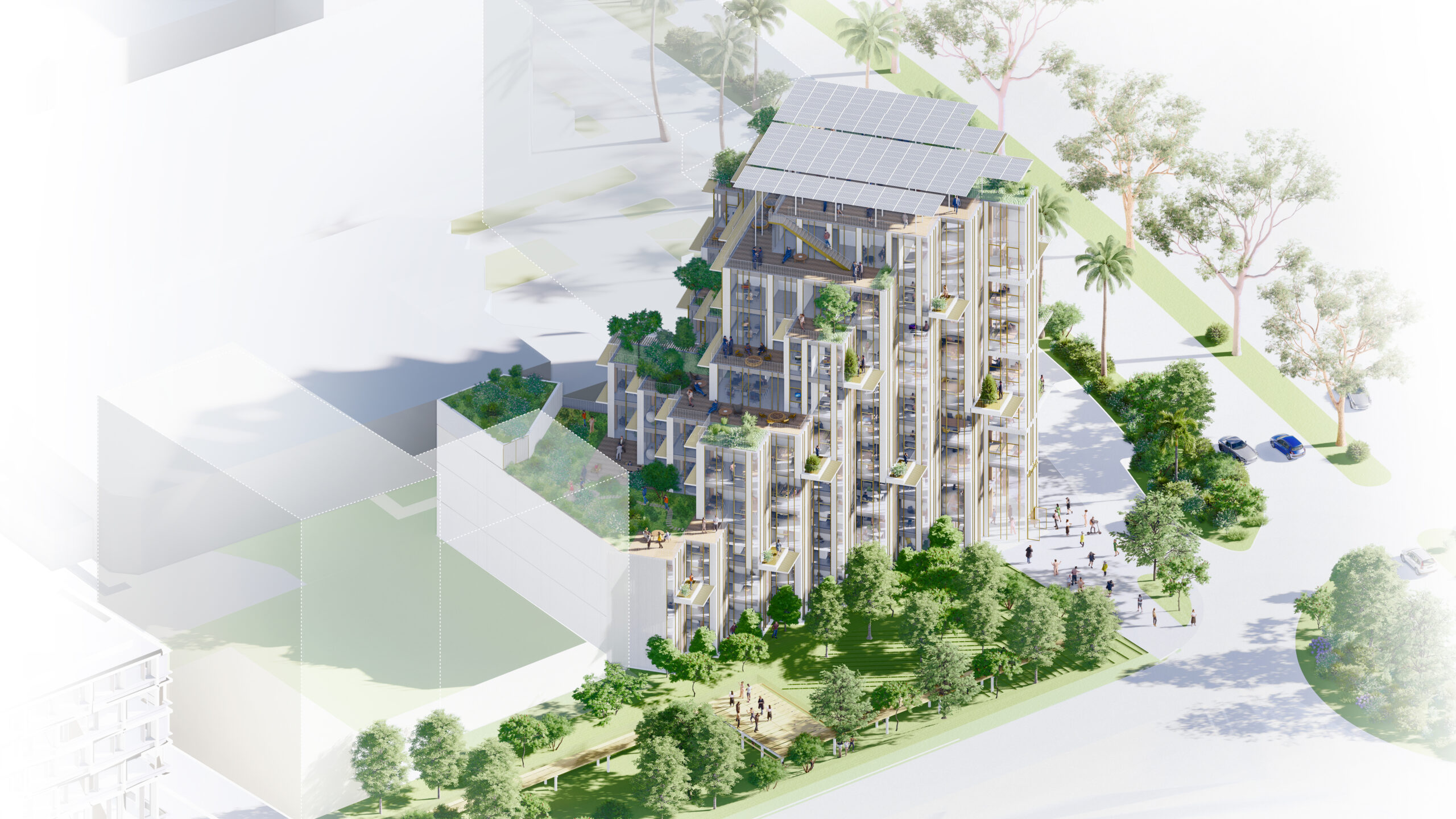
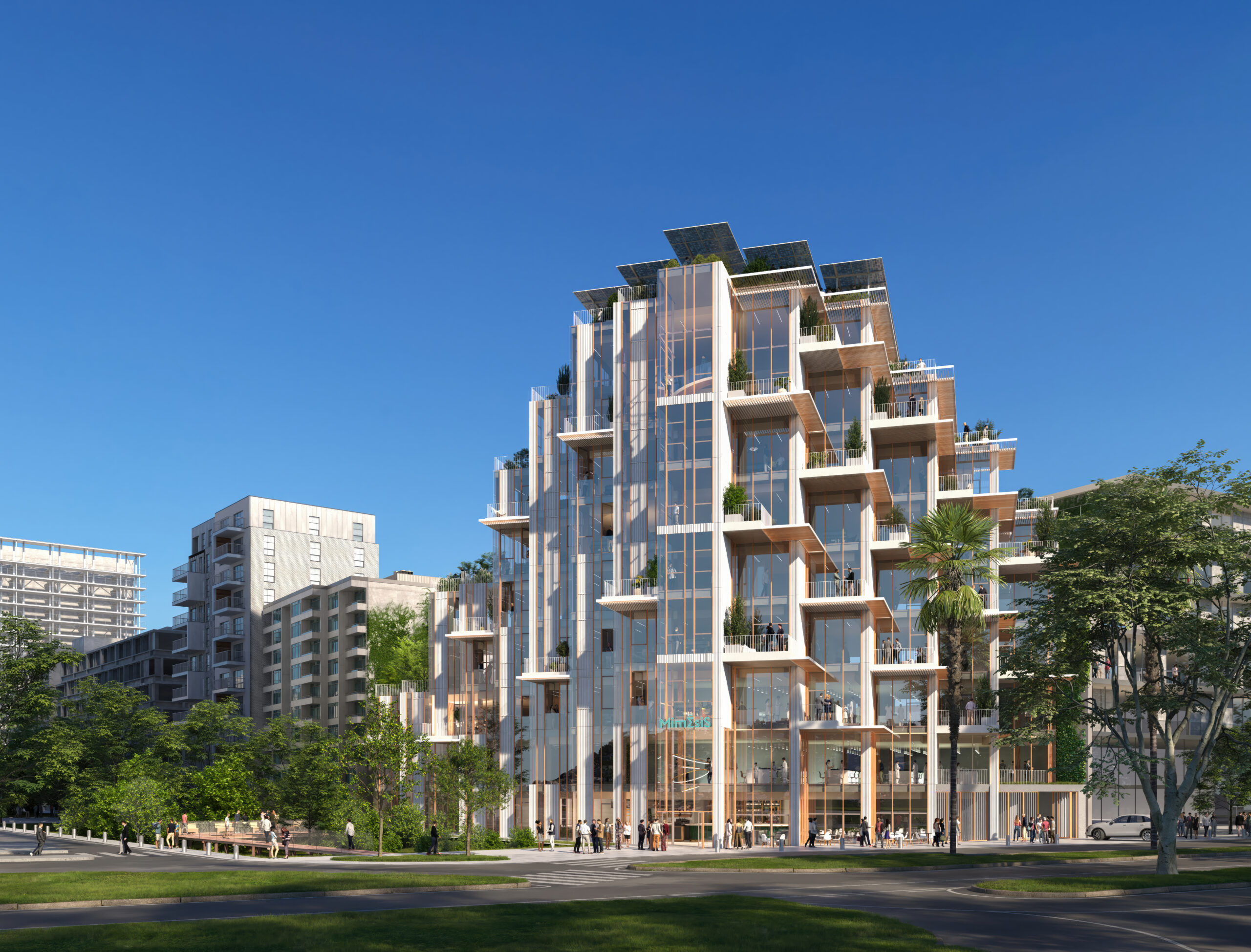
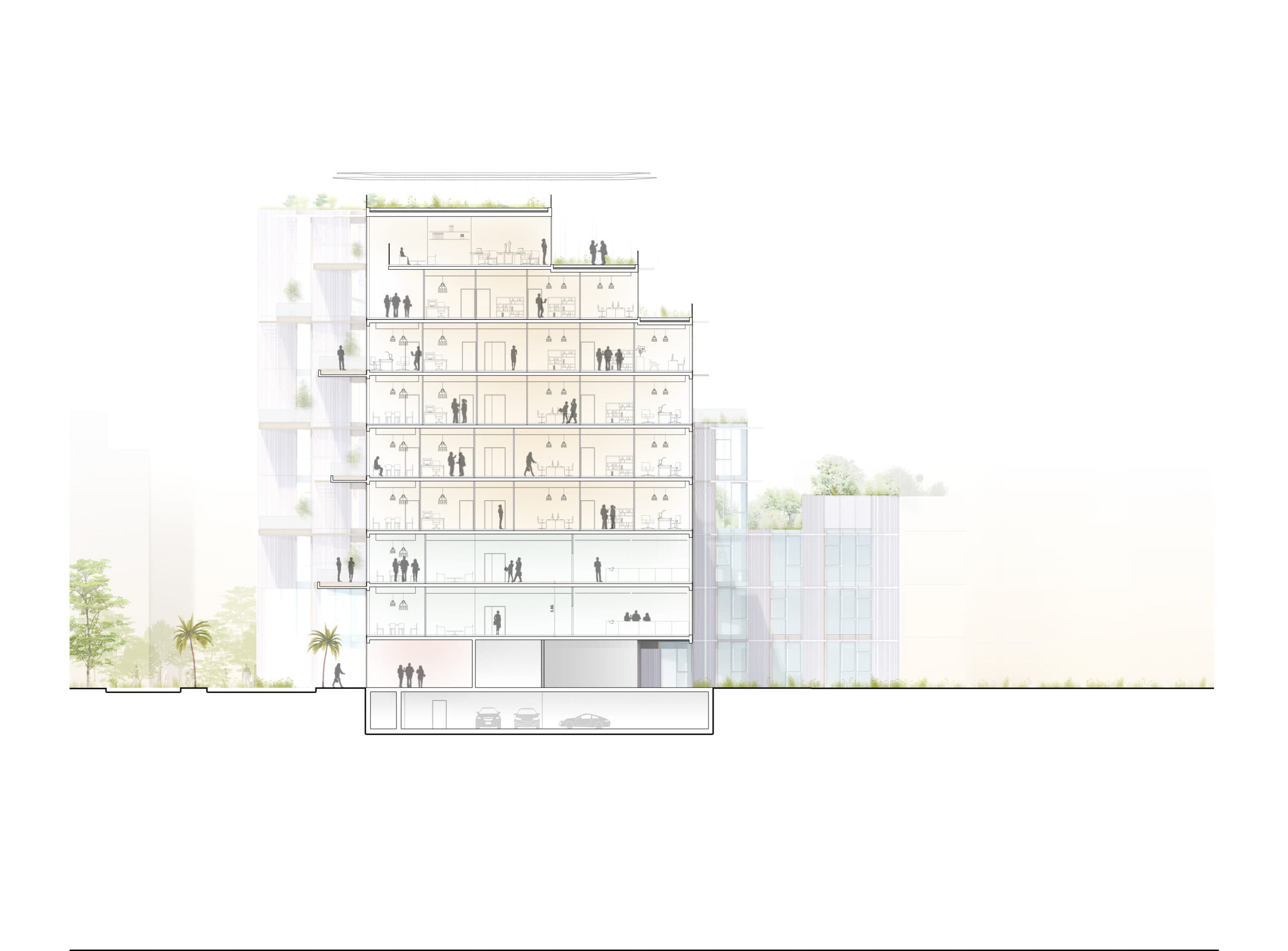
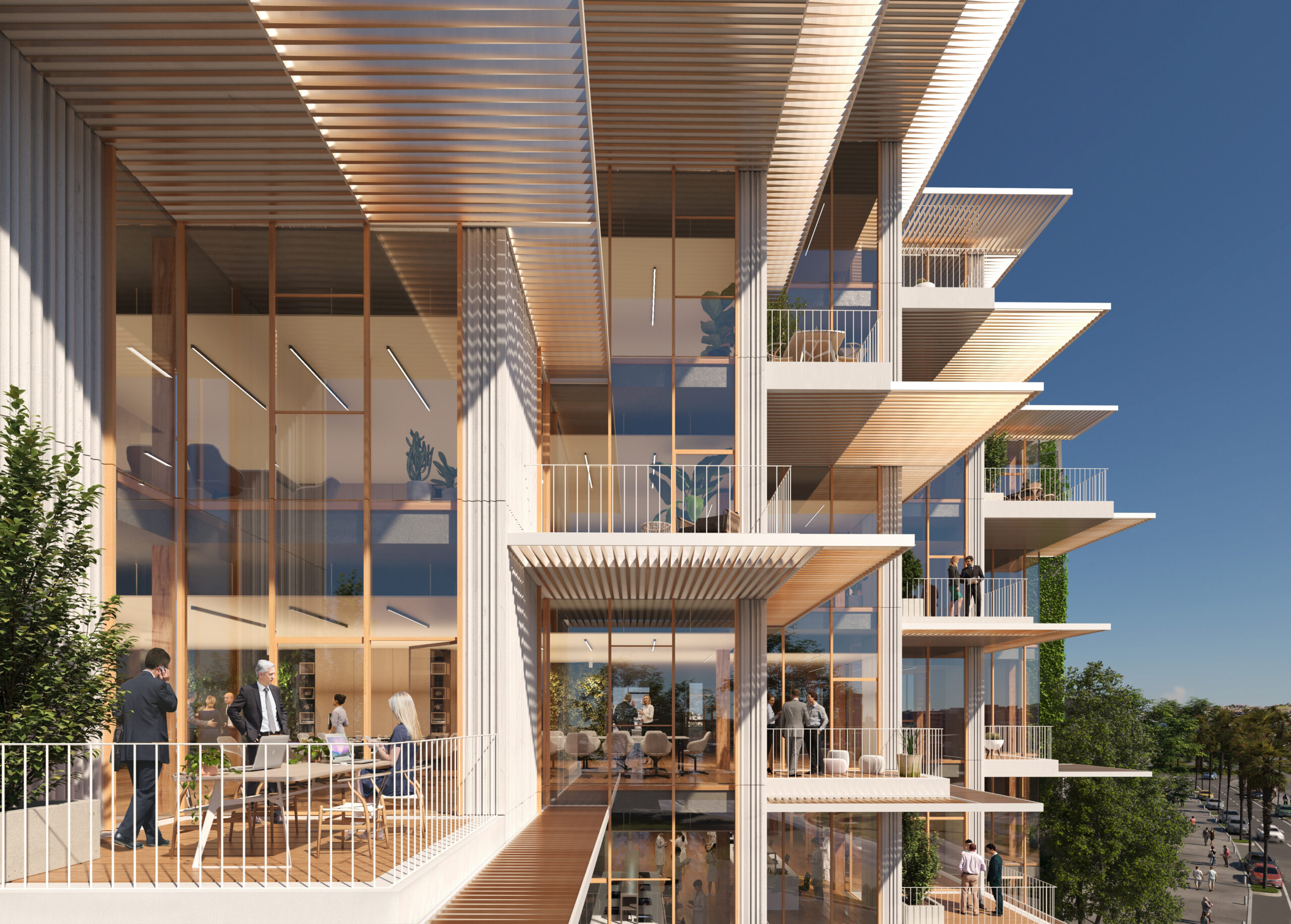
MIMESIS – Nice (not built)
The MIMESIS project is a complex building, bringing together laboratories, offices, and collaborative spaces. The goal is to create a high-level scientific facility while ensuring optimal comfort in a hot Mediterranean climate.
Solutions implemented:
- Bioclimatic facades that reduce solar gain by 70% compared to a classic facade, inspired by the ferocactus
- Organisation of spaces to maximize diffuse light, limiting reliance on artificial lighting while reducing overheating
- Outdoor spaces (terraces, walkways, balconies) designed as living areas, not just technical add-ons
- Reversible design: the building can accommodate other uses over time (housing, offices, amenities)
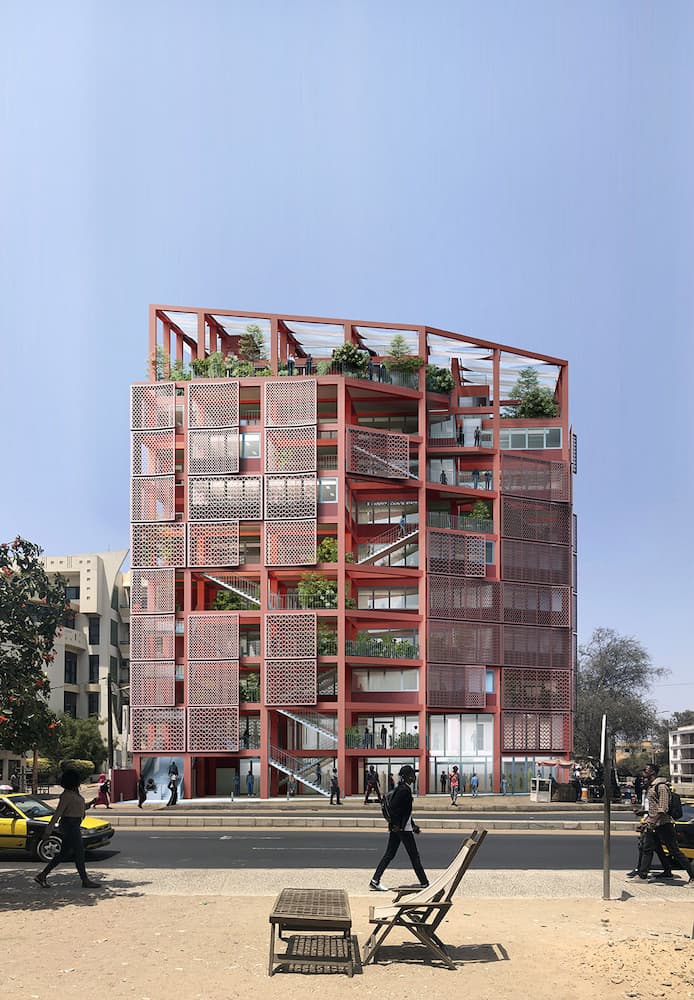
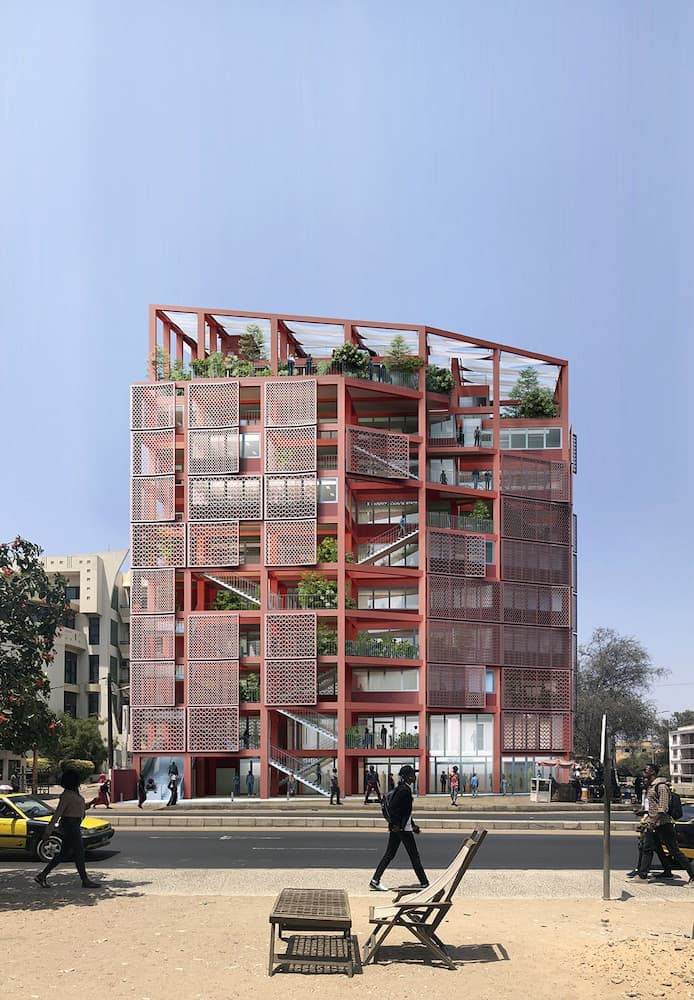
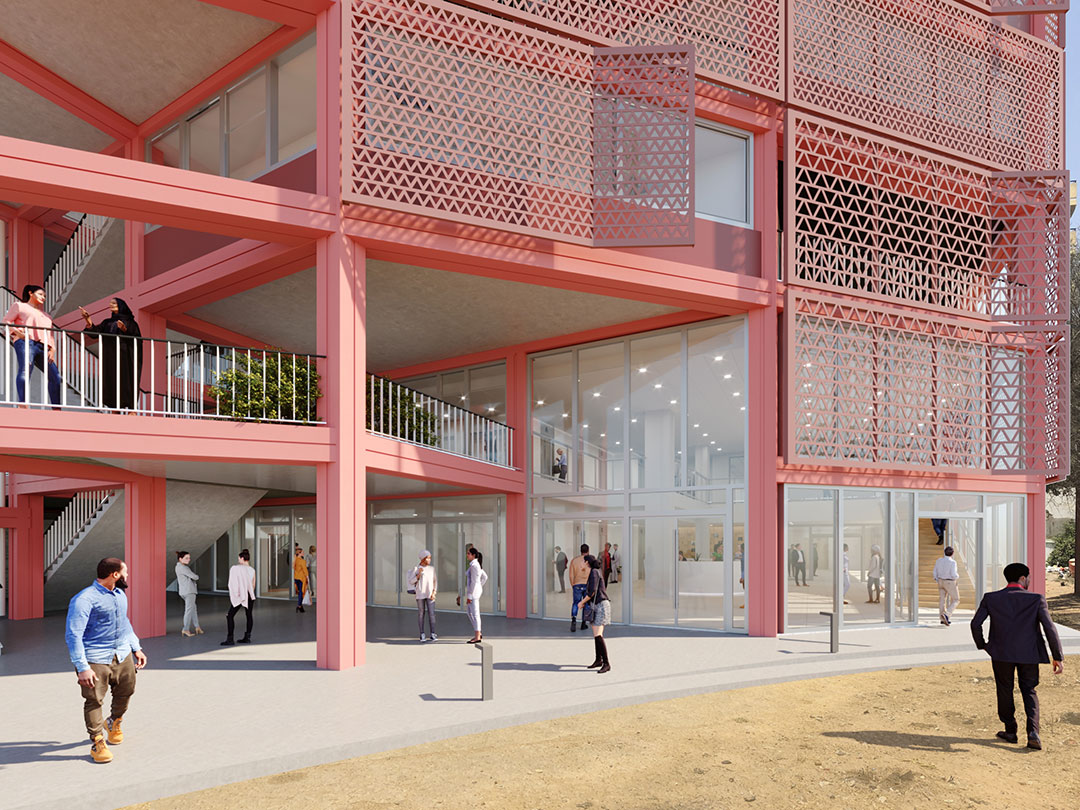
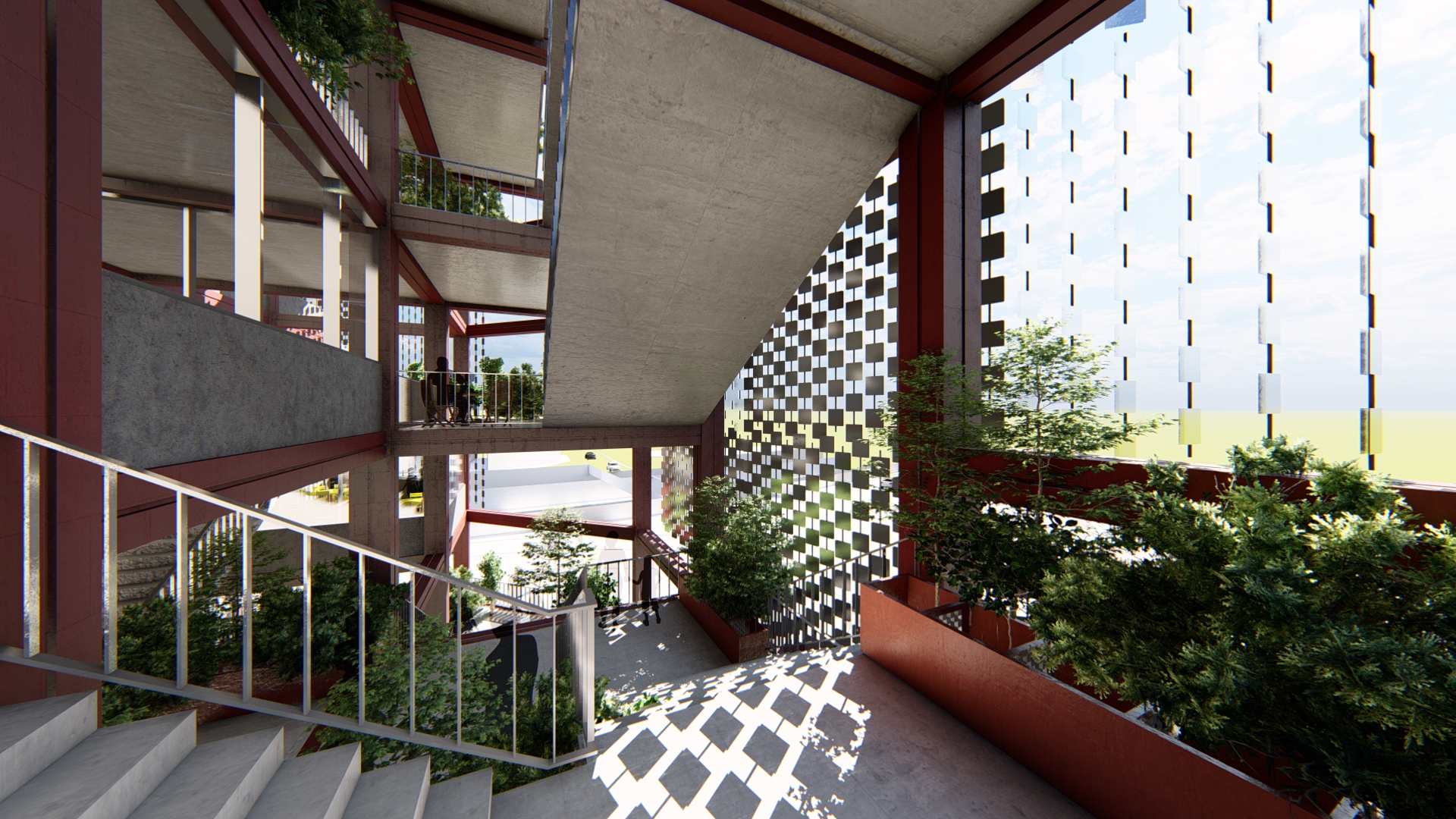
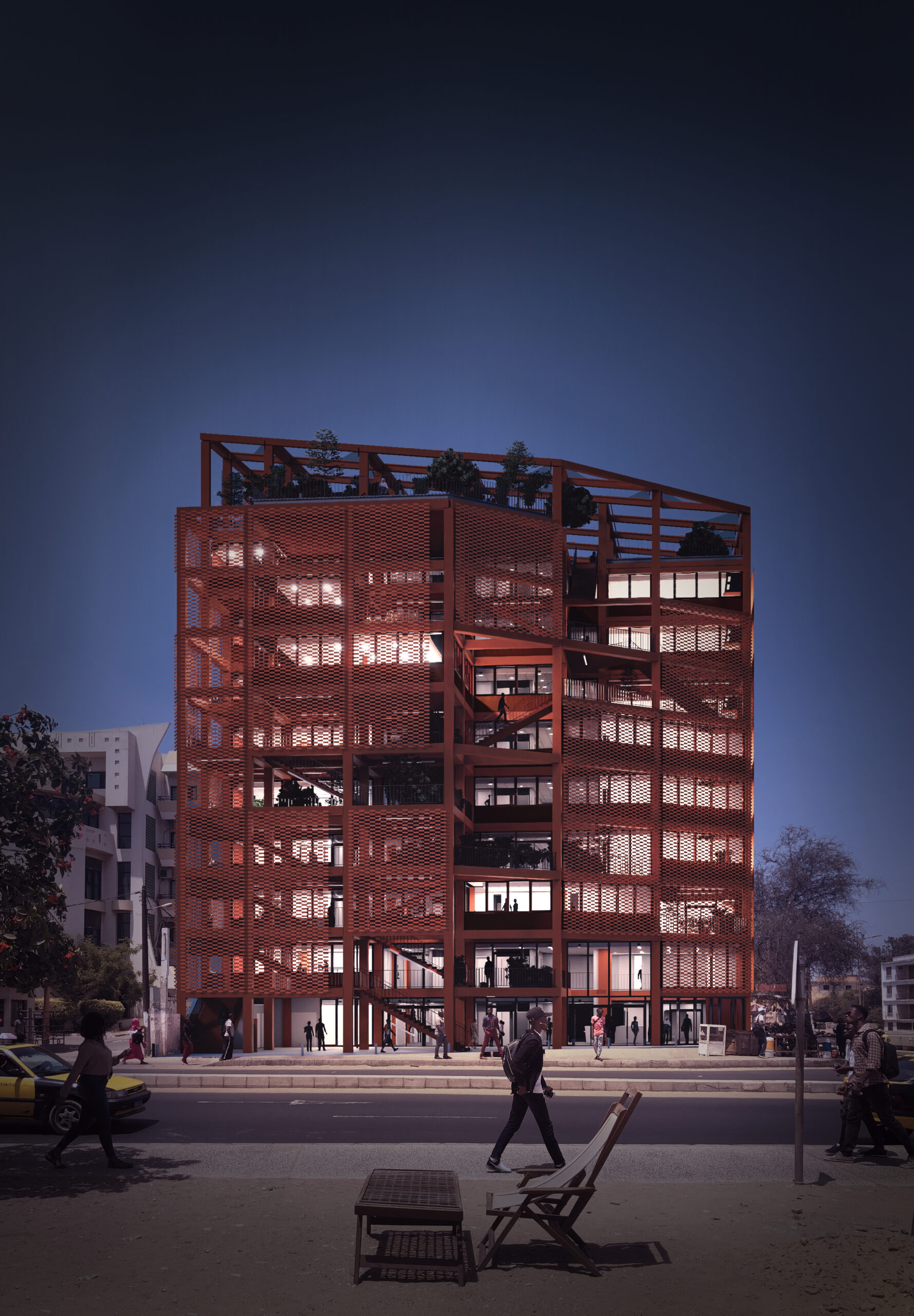
Campus BAOBAB – Dakar (completed)
The BAOBAB campus is a site located in West Africa, characterized by intense heat, high humidity, and the need to create an urban and educational landmark. The objective of the campus is to host 3,000 students in a sustainable, iconic, and comfortable building without heavily relying on air conditioning.
Implemented solutions:
- Design concept inspired by the palaver tree, the traditional African communal space for dialogue and exchange, reinterpreted as an architecture fostering collective, shaded interaction
- Vertical campus: a dense and compact urban form optimized for city integration, articulated around large naturally ventilated and solar-protected voids and circulation spaces
- Terracotta façades: locally sourced material with high thermal inertia, ensuring passive thermal regulation and minimizing risks of overheating
- Optimized orientation and bioclimatic strategies achieving up to 60% reduction in cooling demand and reliance on artificial lighting
- Didactic architecture: the building becomes an explicit pedagogical tool, exemplifying sustainable design practices and positioning architecture as an agent of ecological transition
Teachings
- Summer comfort can be integrated from the design stage and should not be reduced to a mere technical add-on
- Climatic constraints become drivers of creation: crenellated façades, deep balconies, shaded outdoor spaces
- Architecture can contribute to the long-term reduction of energy consumption without sacrificing the project’s aesthetics or identity
These feedbacks demonstrate that a project conceived holistically can go far beyond a defensive logic (protecting from the sun) and move toward a positive approach (creating comfort and value).
Luca Bertacchi: "We want to transform the climatic constraint into an architectural opportunity. Summer comfort should not be an add-on, but a signature."
Next steps and conclusion
Coming up in Our Cities at 50°C:
Innovation Committee No. 3: renovation / existing building stock
- October 21 from 2:30 p.m. to 4:30 p.m.
- Hybrid format with experts
- Theme: renovation / existing building stock
- Agenda:
- What requirements?
- What simplified method to measure summer comfort?
- How to ensure the result?
Booster Session No. 3
- November 13
- Fully remote (videoconference)
- Program progress: analysis, tools, boosted projects
This first REX Morning demonstrated:
- The effectiveness of proven solutions (shading devices, reflective roofs),
- The importance of ongoing dialogue between science and practice,
- The need to find a balance between low carbon design and climate adaptation.
The next steps are clear: systematize best practices, share feedback, and strengthen a common doctrine for summer comfort.