Perm Arts Towers
Open the doors of the city to art
Perm Arts Towers
Kortros
Construction of a district of housing and shops
Perm, Russia
2019
193,765 m², including 172,236 m² of housing, 2,163 m² of shops, a parking lot with 724 spaces, and a kindergarten of 3,606 m²
Bechu & Associés
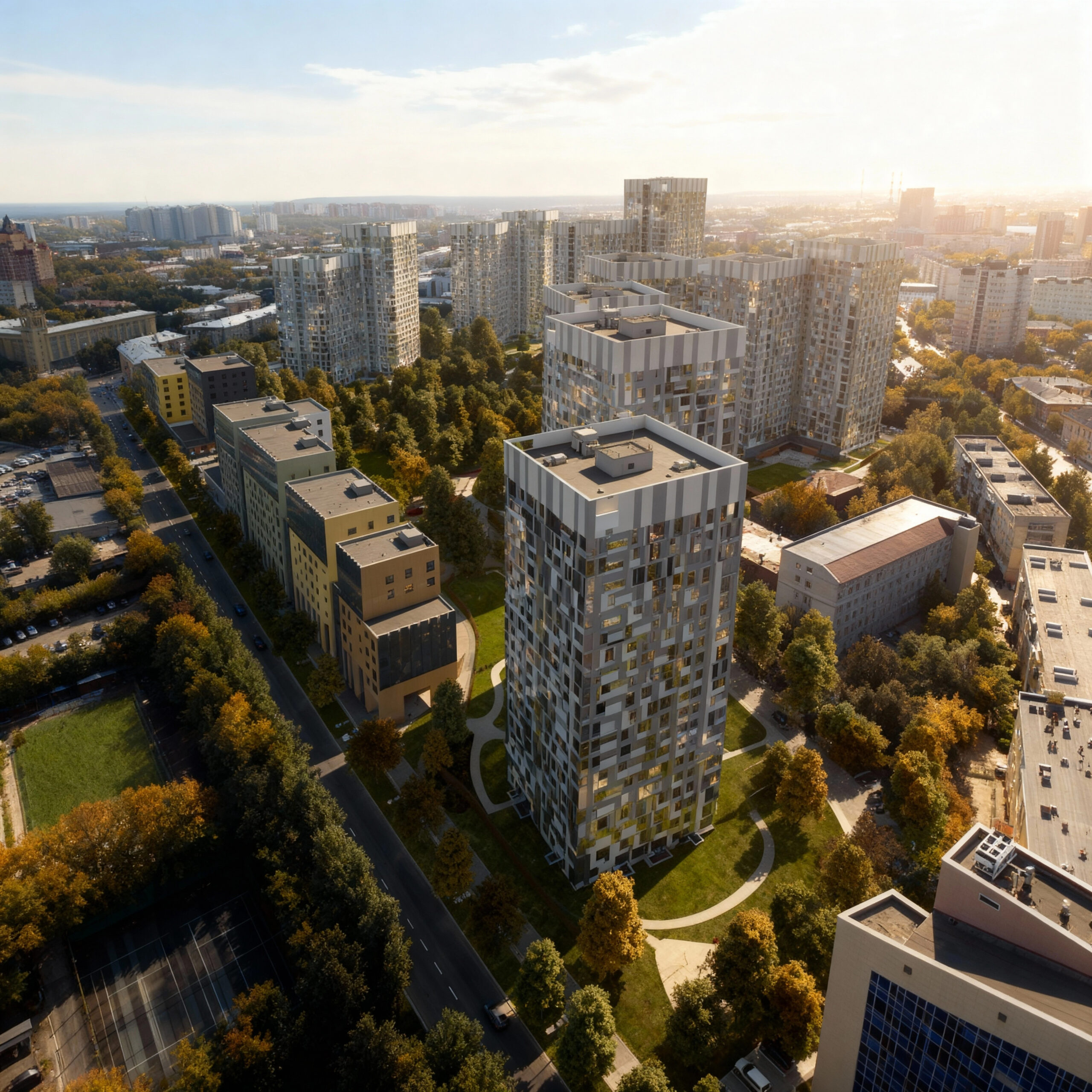
Symbol of the urban and cultural renewal of Perm
Located two hours by plane from Moscow, at the gateway to the Ural Mountains, along the Kama River, and on the border between Europe and Asia, Perm is today the sixth largest city in Russia, with a population of just over one million two hundred thousand inhabitants.
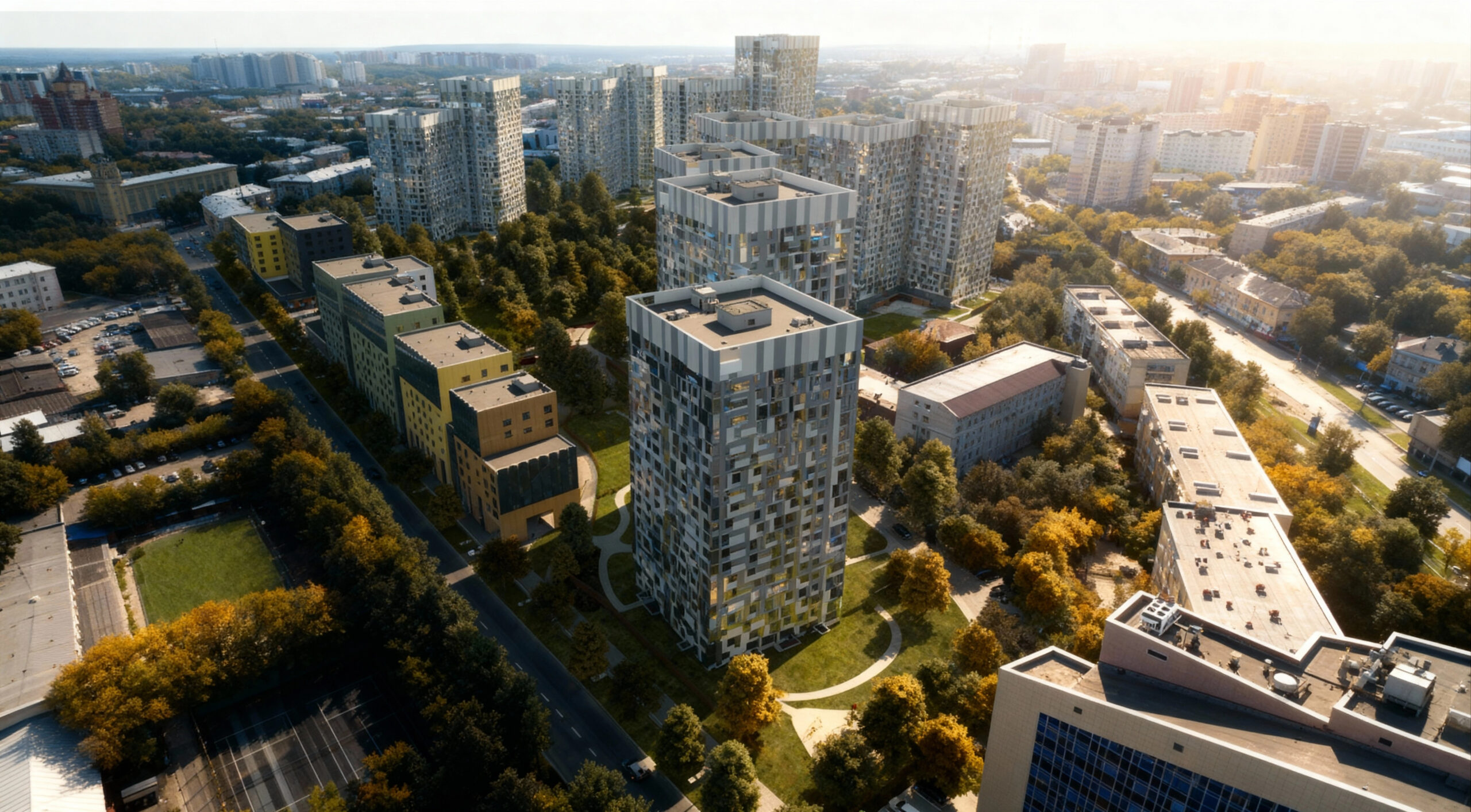
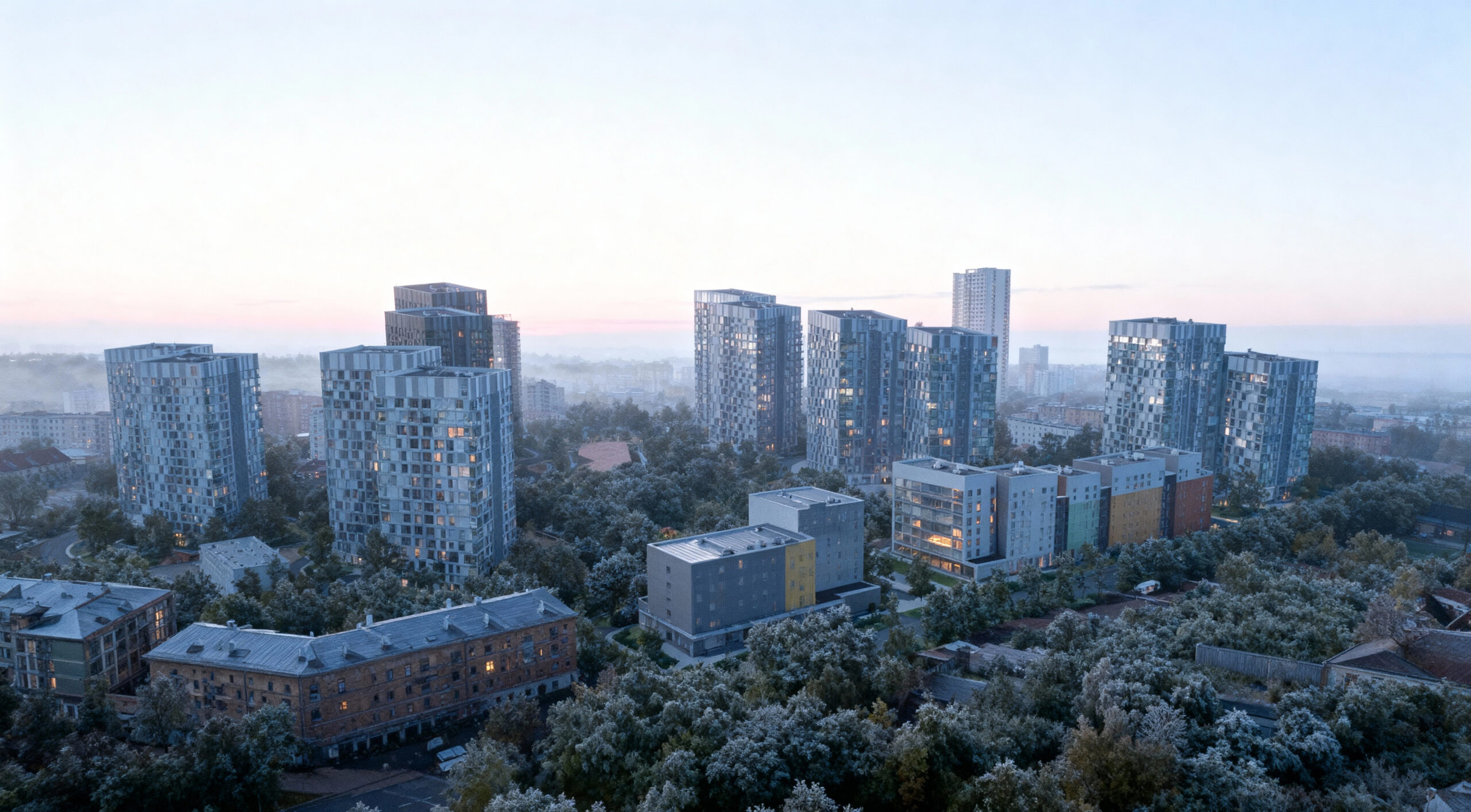
Absent from maps until the end of the Cold War, the city seeks to redefine its image, notably through culture. This includes both enhancing its significant heritage and opening the doors of the city to contemporary art. A modern art that can be found in certain museums, in the streets, on public buildings, and within other real estate developments, among which stands our project, the “Perm Arts Towers”: a residential park comprising 180,000 m² of housing and shops, currently under construction in the city center on the site of a former psychiatric hospital.
A project that connects history and modernity
Because culture lies at the heart of the city’s renewal, this project aims to embody the ambition it has set for itself.
Thus, the cultural project aims to reconnect the history of the site with the modernity into which the new district is being projected. Because there can be no culture without education, neighboring schools are regularly invited to visit the site and share their perspective. A monument dedicated to the Soviet actor Georgy Burkov will also be erected in May 2018, on the occasion of the 85th anniversary of his birth.
A project with positive biodiversity
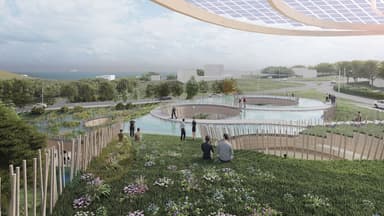
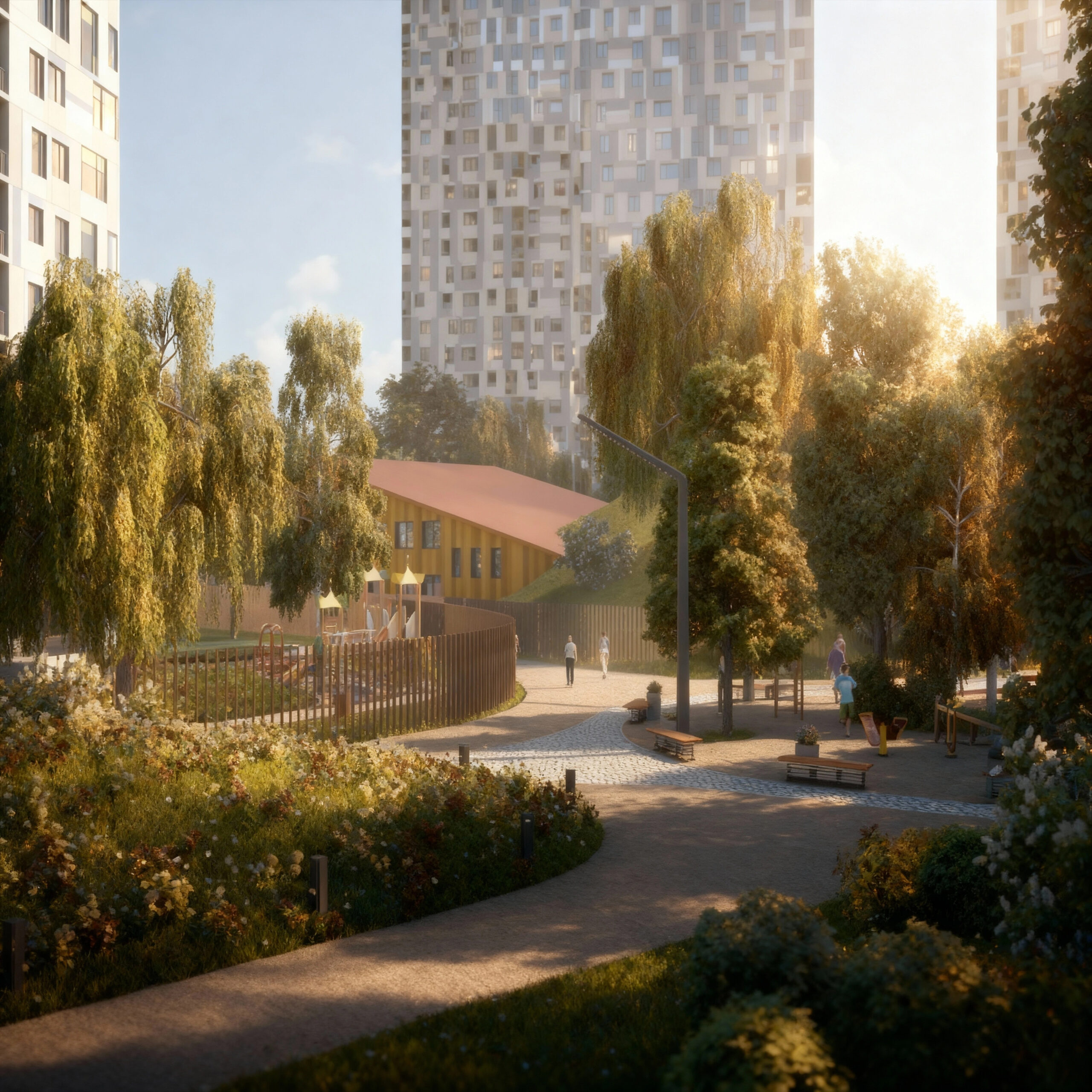
The site contained numerous trees (1,400) over a hundred years old (elms, oaks, ashes, and larches), which were enhanced by designing a district around an already existing natural environment: a “green heart.”
Thus, the buildings emerge from the space left by the demolition of outdated structures, in order to disturb the surrounding nature as little as possible, and to create a project that optimizes genuine quality of life in the city center. More than an aesthetic feature, nature becomes “active”: it serves as a social bond for those who gather there and provides an excellent educational resource for children who discover biodiversity in the heart of the city. Altogether, it is a project that generates and fosters a far more diverse biodiversity than that which previously existed.
The remarkable features of the project
- The transformation of the former psychiatric hospital site into a 10-hectare inhabited park open to the public marks its rebirth. Developing a public park through private spaces is a first in Russia. Each tower has its own private area. The boundaries between private and public spaces are treated 50 percent with planted enclosures to make the separation between public and private imperceptible.
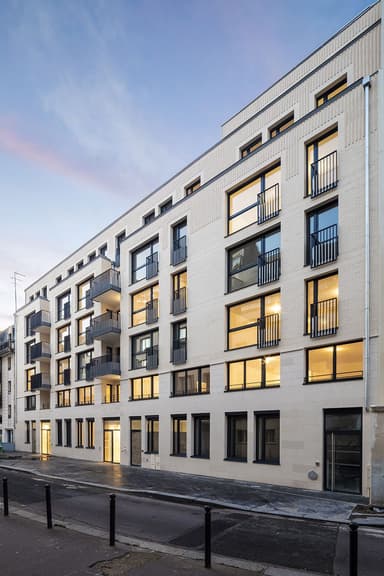
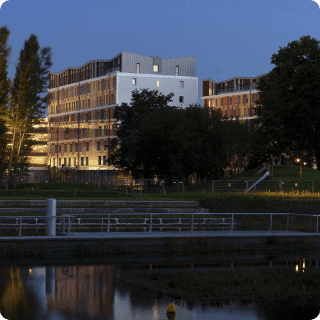
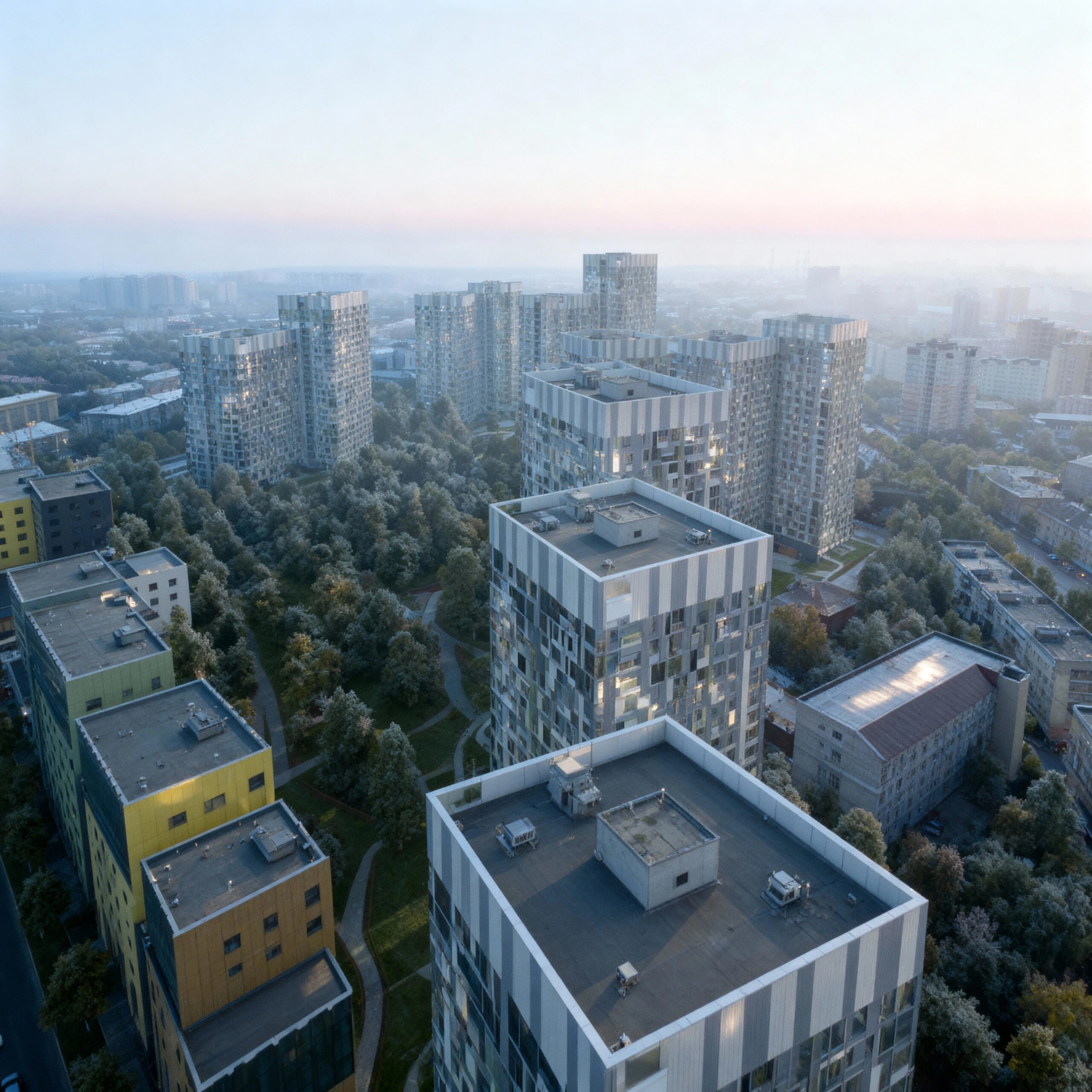
- The project seeks to carry both meaning and expression, and the six pairs of towers are conceived as works of art—simple parallelepipeds with neutral façades that highlight the park. The façades and openings of the towers blend into a pixelated system, reflecting the surrounding vegetation on the lower levels. Higher up, the sky and clouds are mirrored, creating an optical play that stimulates the imagination.
- Reusing the plots of the demolished “Dacha” buildings to reconstruct on the exact same locations made it possible to minimize the project’s carbon footprint. A circular road serves each building and is the only one accessible to vehicles. All other paths are reserved for pedestrians, weaving through the park.
Energy goals to encourage user responsibility
To make users more responsible for their energy consumption and ultimately reduce their bills, the project targets a minimum energy efficiency rating of class B, achieving energy use 25 percent lower than the baseline level.
To achieve this, in terms of design, the ventilated façades of the buildings protect them from hypothermia in winter and overheating in summer. Their cladding also provides protection against humidity. The technologies implemented for heating allow individuals to adjust and regulate temperature levels according to their needs. Thus, the horizontal arrangement of the heating system from one room to another within the apartments facilitates energy control for each of them. Residents can submit individual readings on the thermal energy device, thereby defining and paying only for the heat energy actually consumed. Additional thermostatic elements, mounted on integrated thermostat valves, ensure the automatic maintenance of the internal ambient temperature.
Discover also
See all our projectsSee all our projects