Gare Lisch
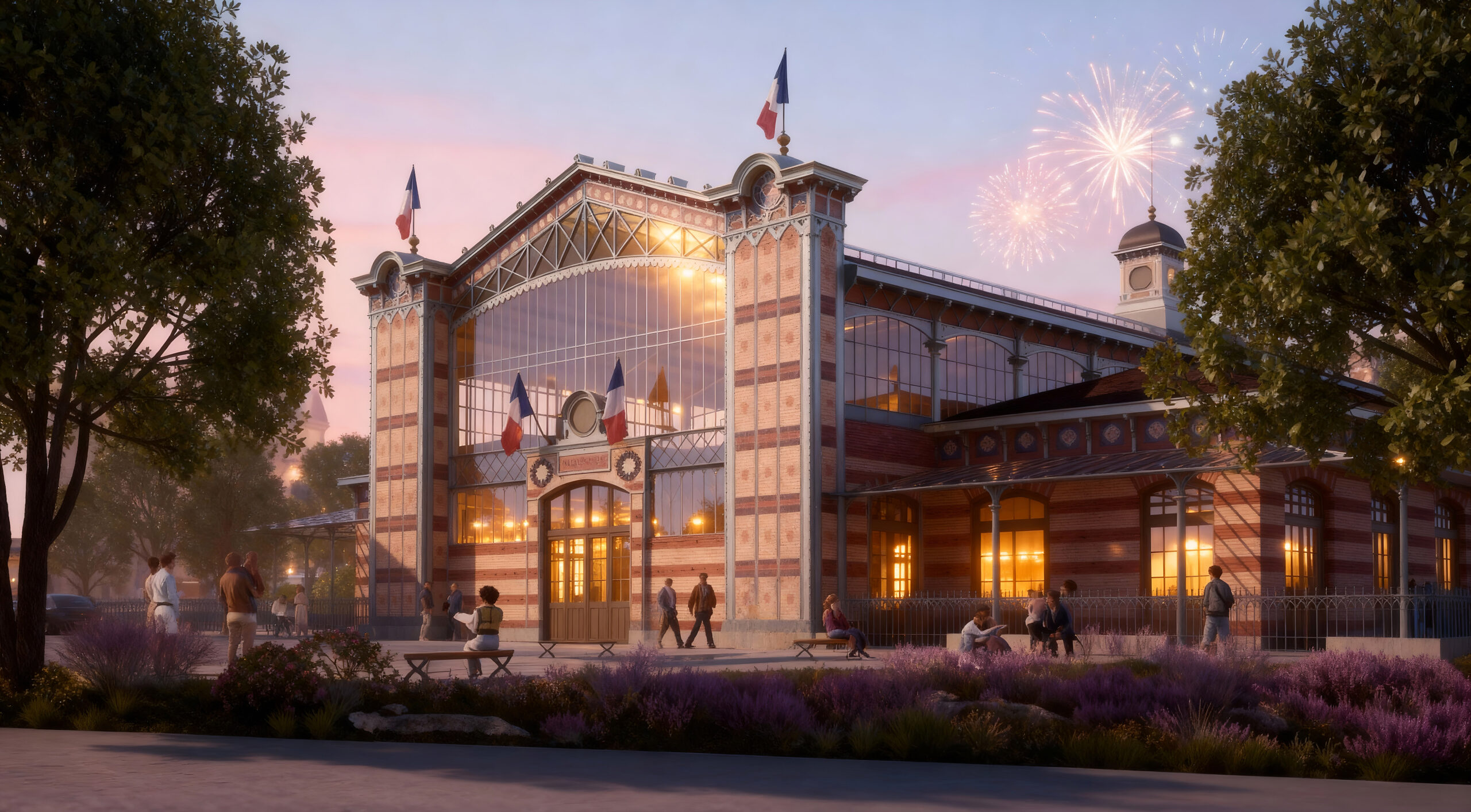
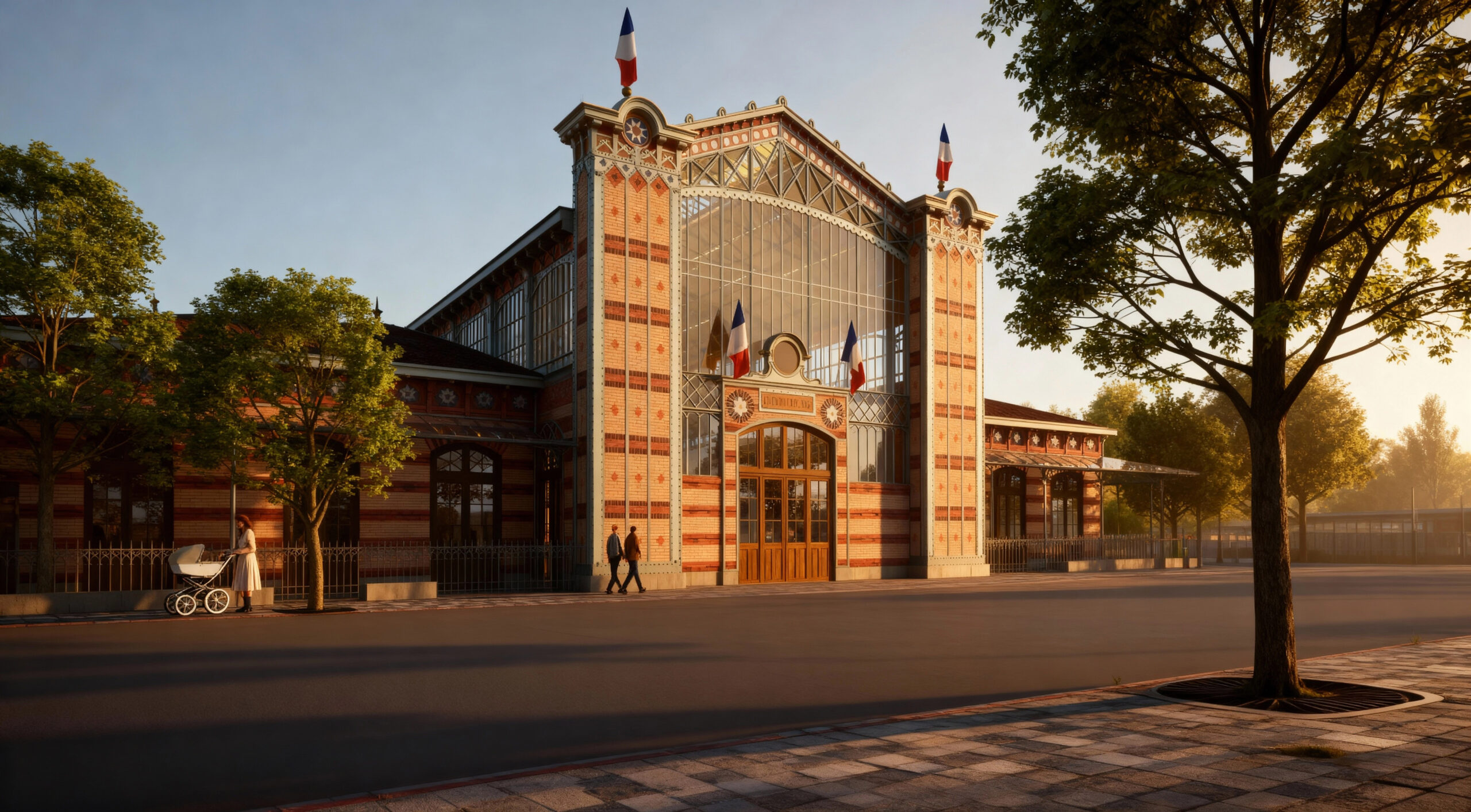
The renaissance of the Lisch station, from the Universal Exhibition to Greater Paris
Gare Lisch
City of Asnières-sur-Seine
Restoration of the shell and envelope (weatherproofing and airtightness) – future host of hybrid activities (culture, light catering)
Gare Lisch, Impasse des Carbonnets, Asnières-sur-Seine (92)
In progress
1,500 m²
Bechu & Associés
Decontamination, high-performance glazing, bio-based, geo-sourced and reused materials, greening of the plot
Save, restore, reinvent
Located in Asnières-sur-Seine, the Lisch station is a singular building, a remarkable testament to nineteenth-century metal railway architecture.
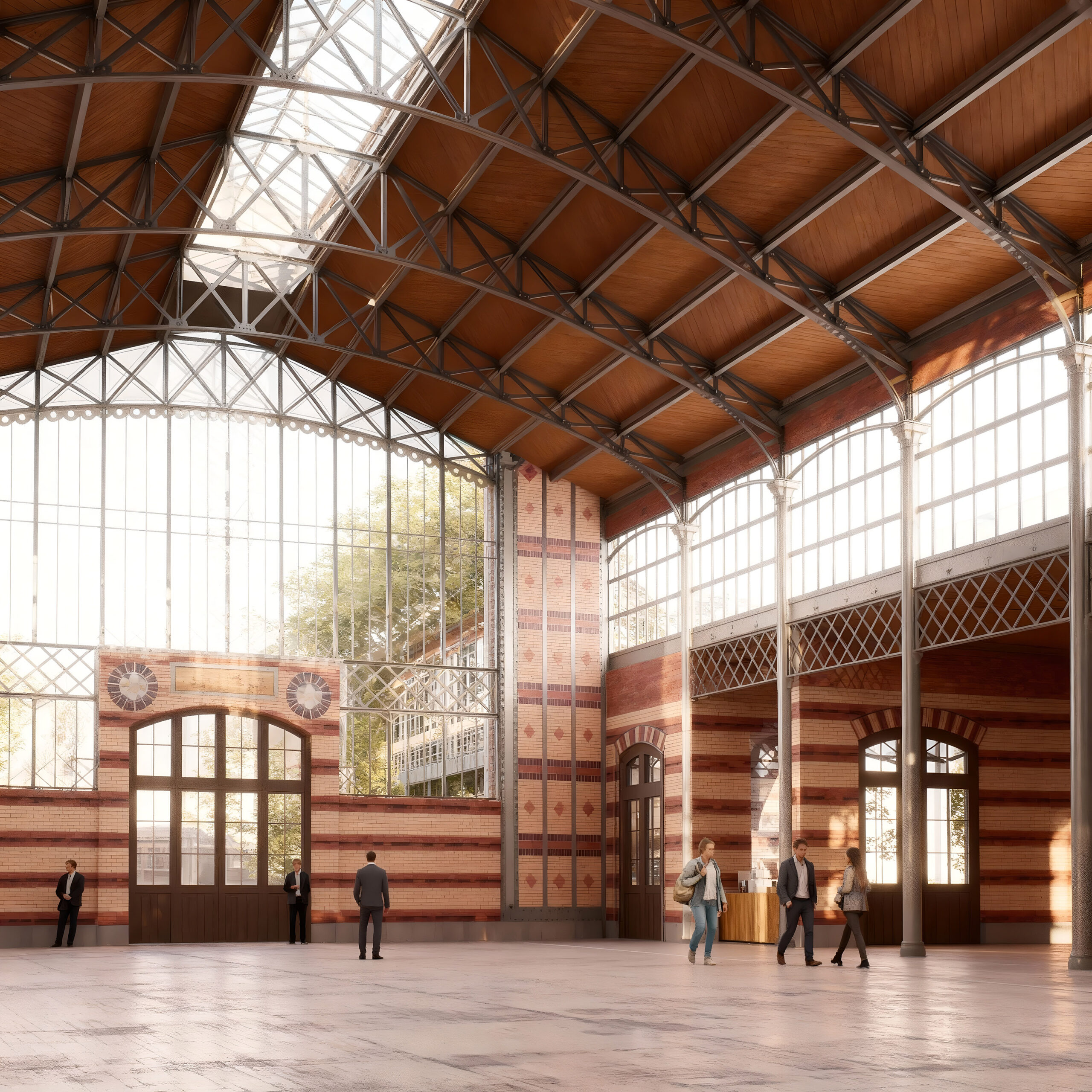
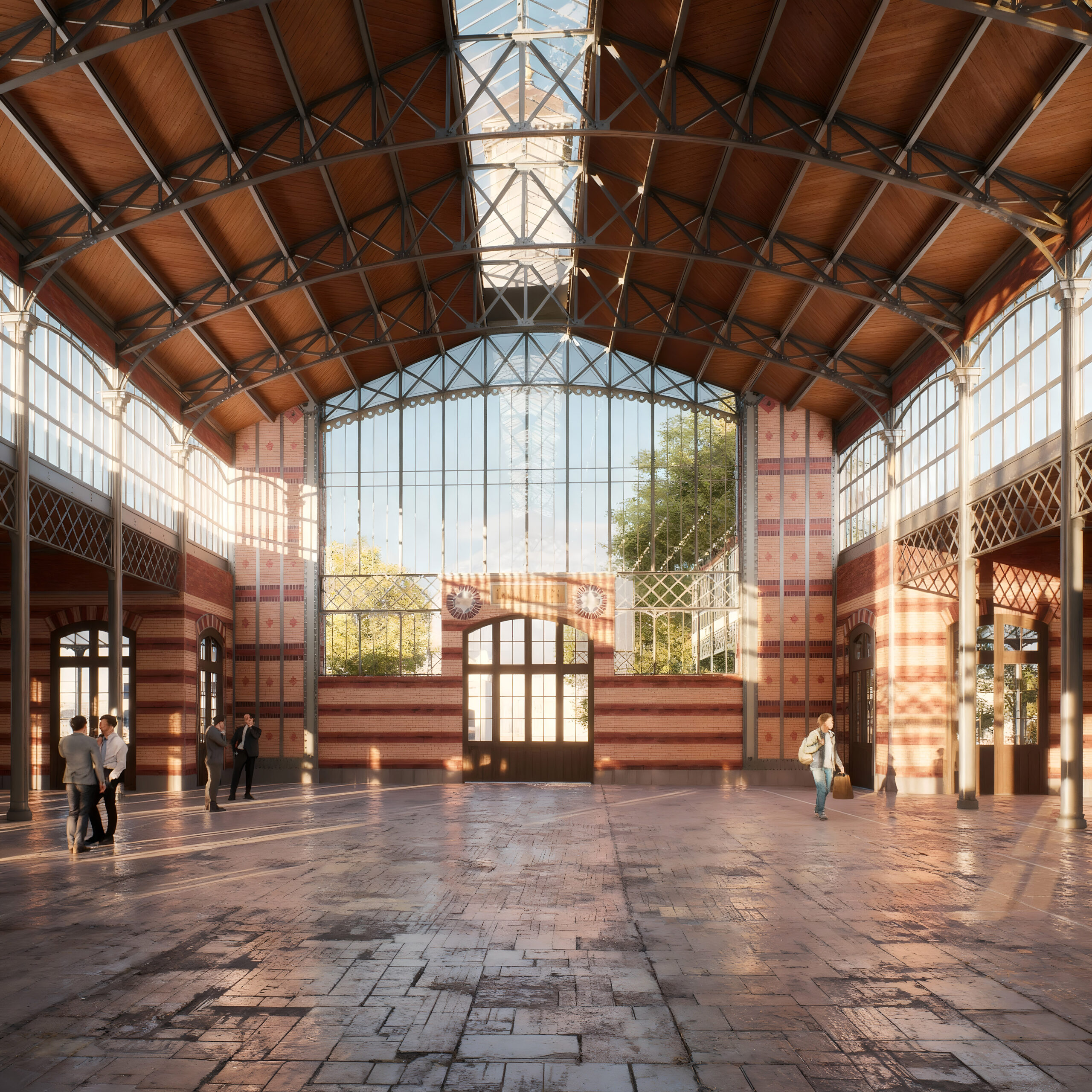
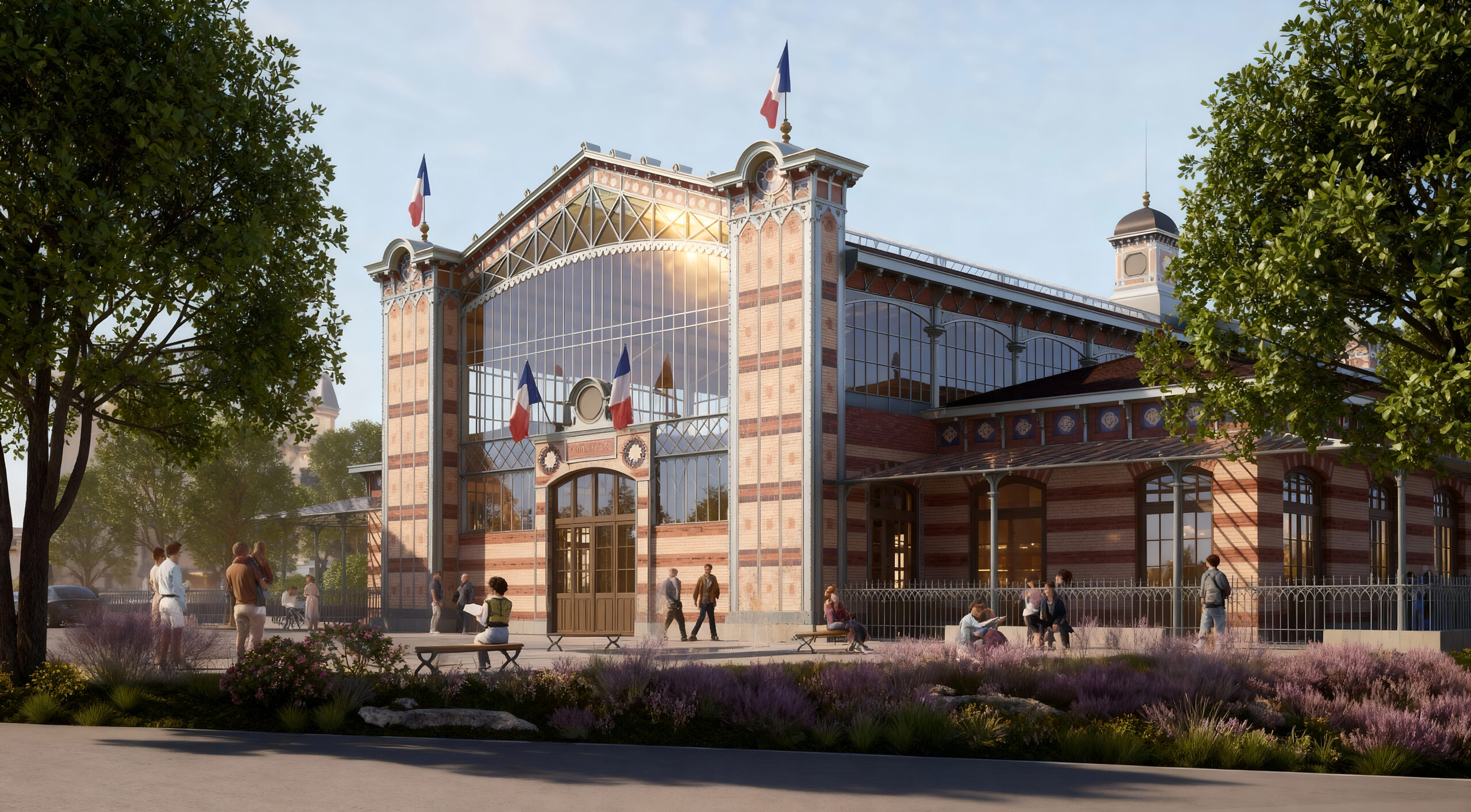
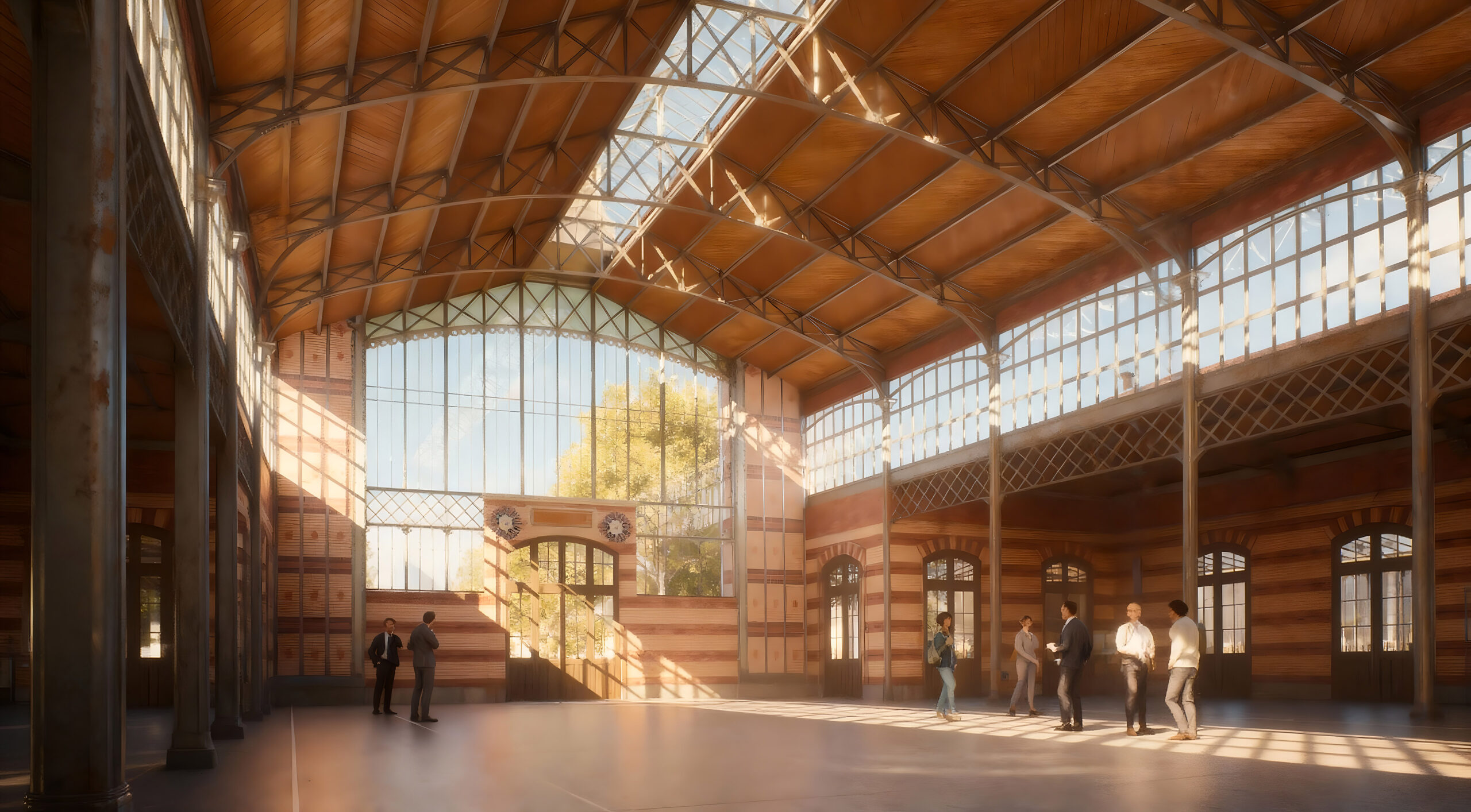
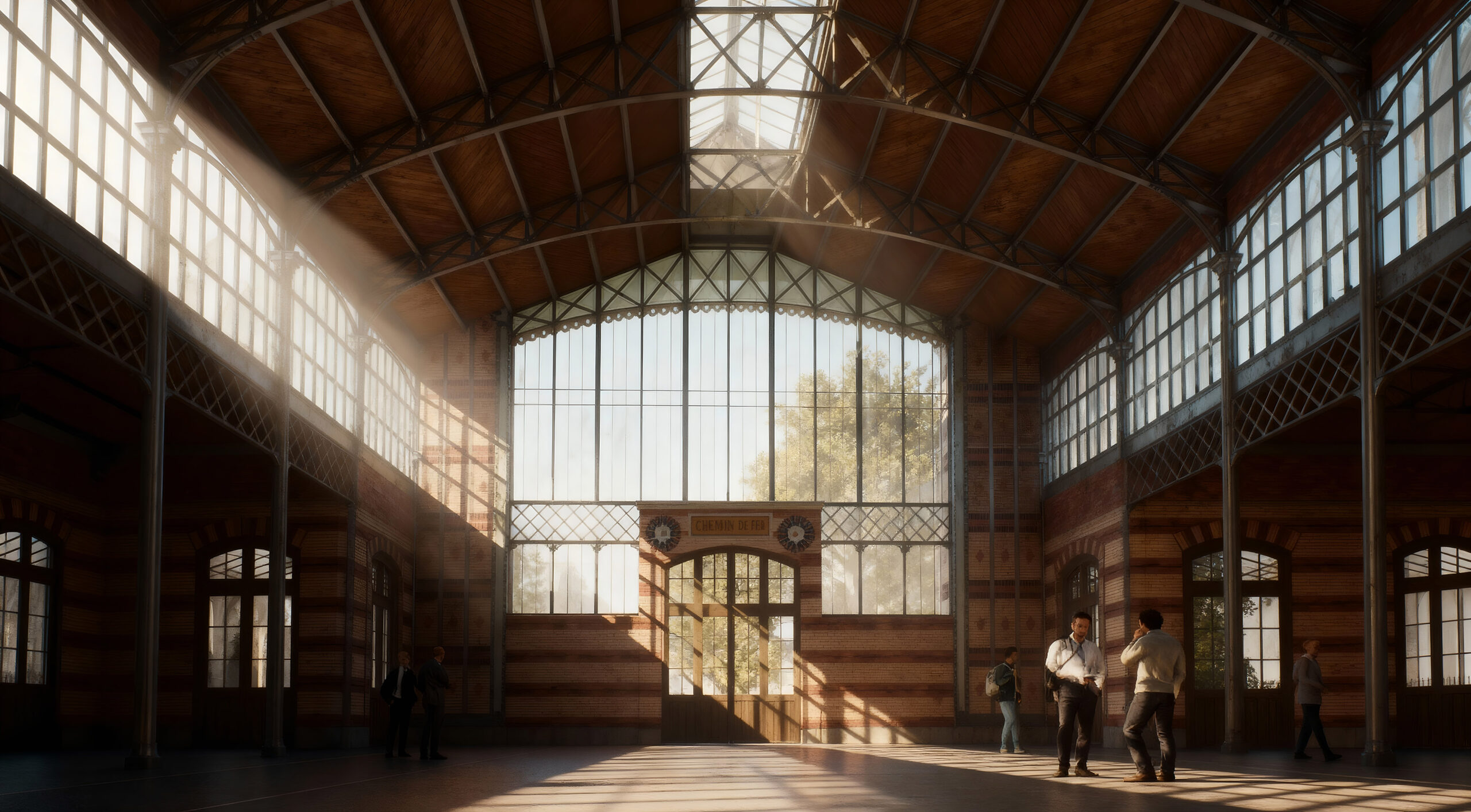
Designed by the architect Juste Lisch, who was also active within the Historical Monuments Department, it was originally built in Paris as the Champ-de-Mars terminal, intended to serve the 1878 Universal Exhibition on the line granted to the Western Railway Company. Its structure, blending puddled iron, brick, and large glass canopies, brilliantly illustrates the spirit of modernity and innovation that defined the industrial era. On the eve of the 1900 Universal Exhibition, the Western Railway Company obtained permission to extend the line to the Esplanade des Invalides, where a new station was to be built. As early as 1894, trains therefore stopped serving the Champ-de-Mars station. But in June 1897, a rare and violent cyclone struck Asnières, destroying the Western Company’s workshops. The idea of reusing the old Champ-de-Mars station then took shape. The Parisian building was dismantled piece by piece, transported to Asnières, and reassembled on its current site — a technical feat ahead of its time. The Lisch station subsequently housed workshops and storage areas, then, for a period, passenger services, before being converted into a depot and ultimately abandoned. Today, it still stands, isolated at the heart of a dense railway and urban fabric. A rare survivor among reused exhibition architectures, the Lisch station remains distinguished by the singular episode of the cyclone that paradoxically ensured its preservation and relocation. Thanks to its listing as a Historical Monument in 1985, the station was permanently saved from demolition. This recognition safeguards its distinctive architecture, characteristic of late nineteenth-century stations: a metallic structure of puddled iron, typical of the period, combined with colorful brick masonry whose contrast and rhythm endowed the building with an industrial elegance. The central glass roof, glazed façades, and generous volumes placed the station within the great tradition of railway halls, conceived both as technical achievements and as symbols of modernity.
Architectural and heritage restoration
The restoration project of the Lisch station follows a rigorous heritage approach, based on a thorough analysis of iconographic sources, existing remains, and their condition.
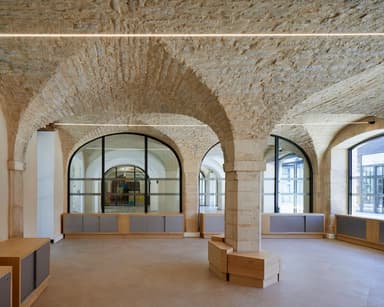
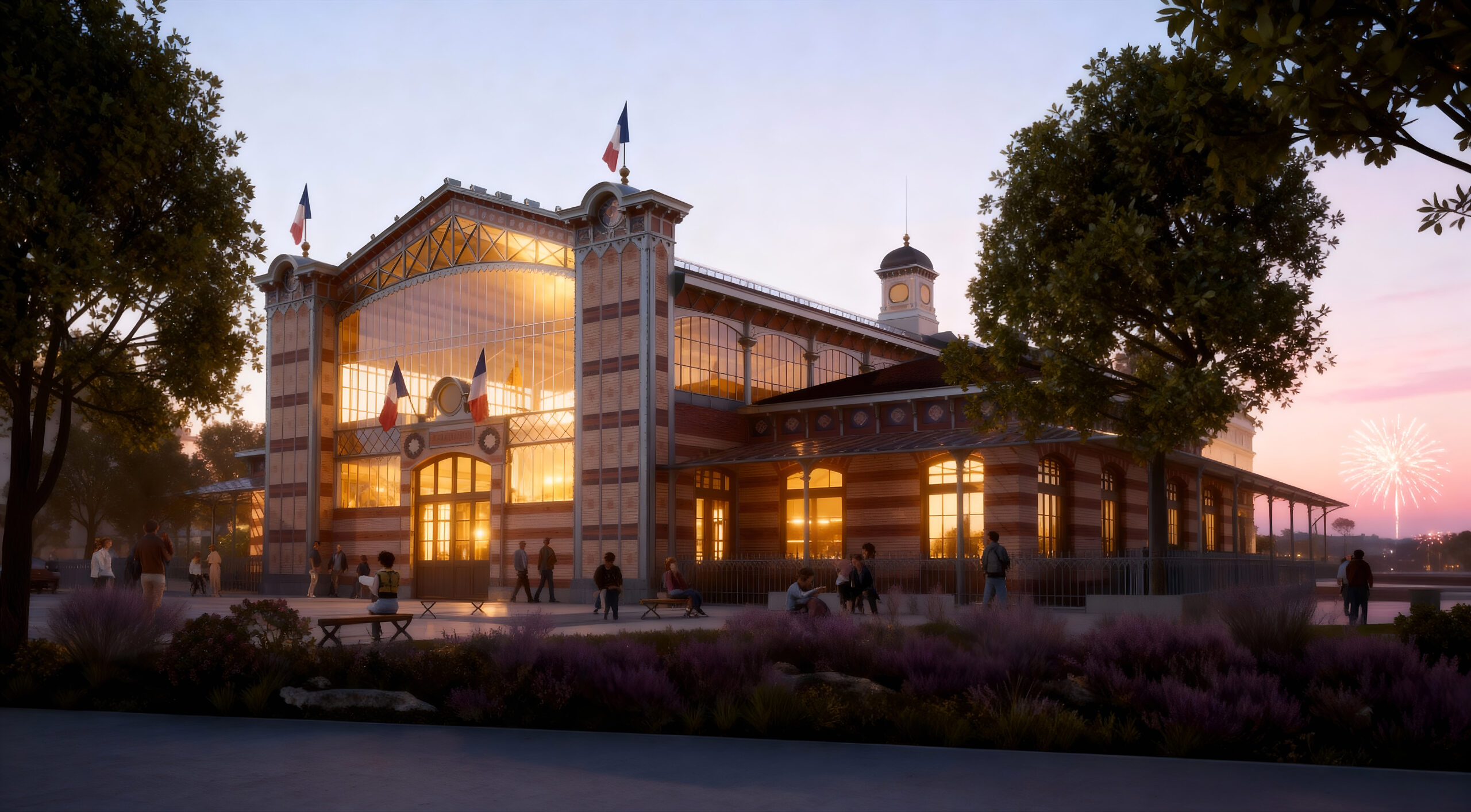
The initial idea of restoring the building to its original 1878 state was set aside in favor of an approach more faithful to the real history of the structure, taking into account the successive layers of its evolution up to the “electric station” of 1924. This orientation will be submitted for approval to the Regional Directorate of Cultural Affairs (DRAC) and aims to restore the architectural reading of a living building, marked by its reuses and adaptations, while preserving its elements of historical value. The restoration thus plans the conservation and rehabilitation of the three original naves, the shelter added in Asnières, and the reconstruction of the lost campanile, a strong symbol of the initial composition. The emblematic materials – puddled iron, brick, glass roofs, and glazed terra cotta – will receive careful treatment, combining restoration, selective replacement, and technical upgrading according to their condition. Post-1935 interventions lacking heritage value will be removed to recover the structural and stylistic coherence of the whole. This approach, respectful of the passage of time, combines restoration, transmission, and technical innovation. It reaffirms the heritage vocation of the site, not as a frozen décor, but as a living testament to nineteenth-century architectural ingenuity and its deep connection to the railway history of Asnières and Greater Paris.
A rehabilitation focused on sustainability
The rehabilitation of the Lisch station also follows a sustainable development approach, attentive both to heritage integrity and contemporary challenges.
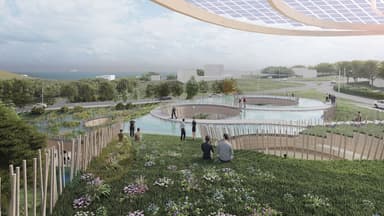
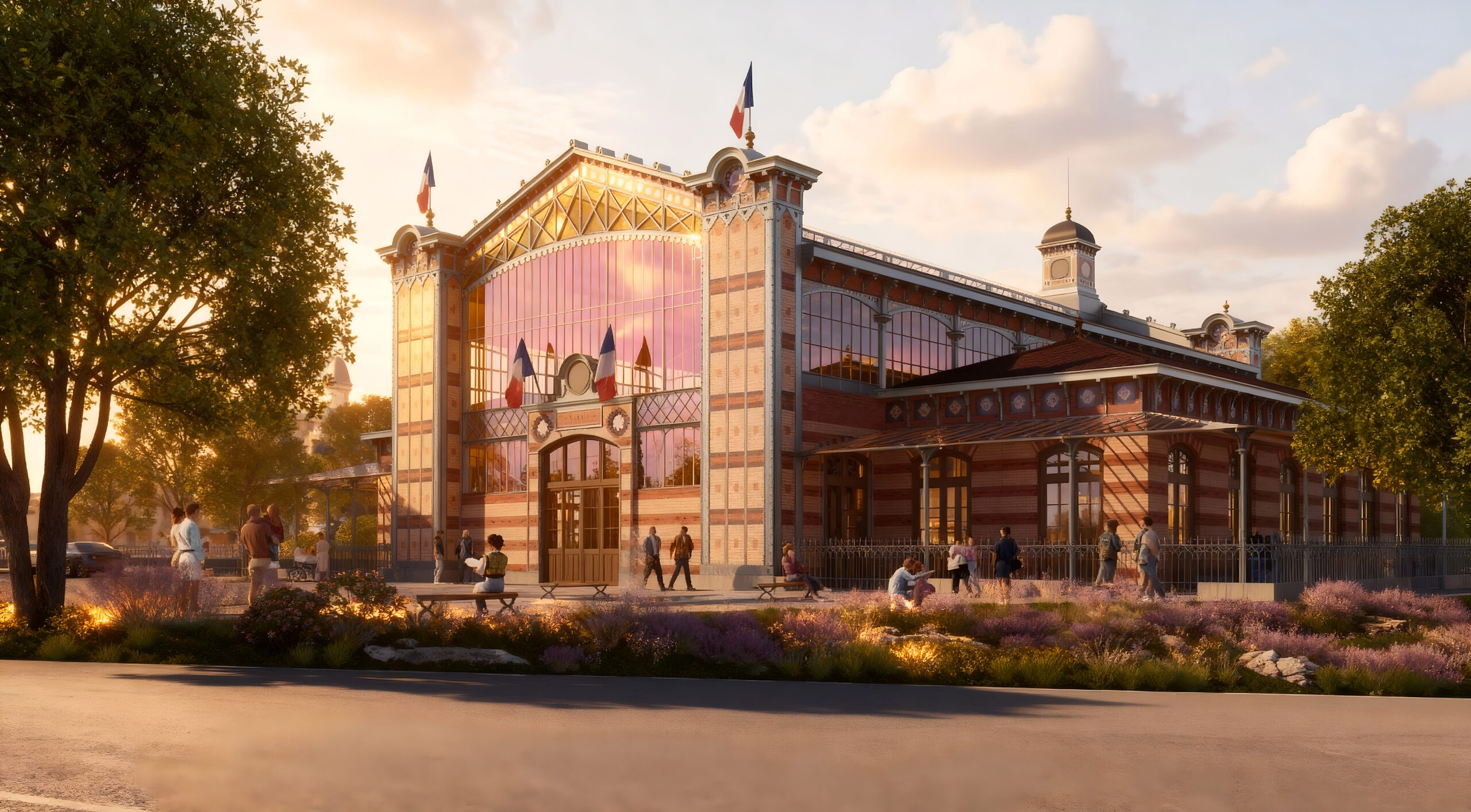
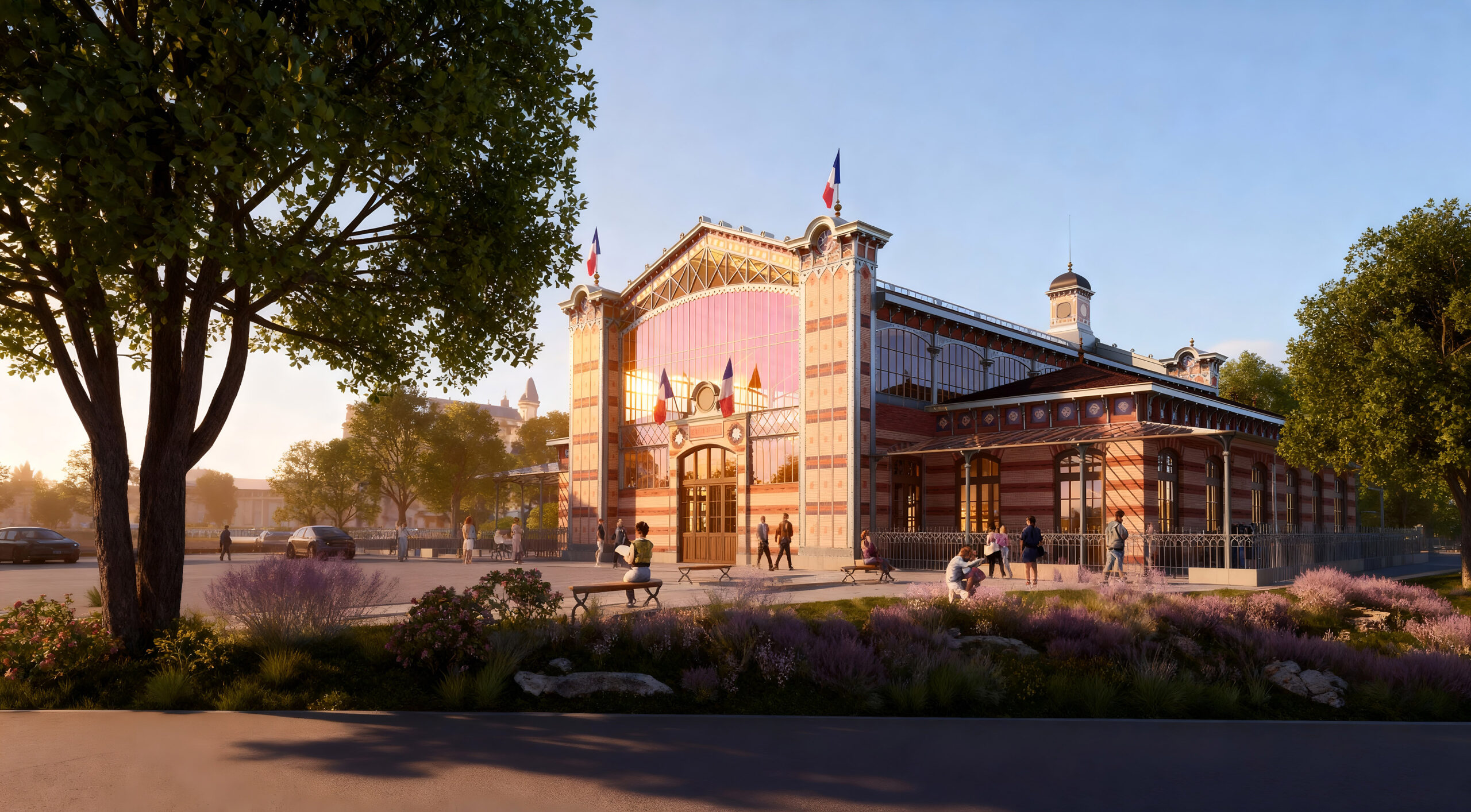
The planned interventions prioritize the reduction of energy loss through the restoration of the glass roofs and joinery with high-performance glazing, while preserving the delicacy of the original structures. Bio-based, geo-sourced, and reused materials will be favored, particularly for the floors and outdoor landscaping. The project also includes extensive greening of the plot – deciduous trees, local plants, and a reflecting pool – to mitigate the urban heat island effect and create a true oasis of coolness in the heart of Asnières. Finally, specific work is being carried out on decontamination and the building’s health: removal of asbestos and lead, treatment of dry rot, and soil decontamination. All these measures reflect a commitment to combining heritage restoration with ecological transition.
Between heritage and innovation
The City of Asnières, deeply attached to its heritage, purchased the Lisch station to give it a new life. An architectural competition was launched in 2024 to ensure the restoration of the shell and envelope – that is, the building’s structure and enclosure – in order to make the monument weatherproof, airtight, and secure.
Beyond preservation, the ambition is truly to prepare for the future. Although the program has not yet been finalized, the station is intended to host hybrid activities combining culture and light catering, open to both residents and visitors. The site, once a symbol of industrial modernity, is thus preparing to become once again a place of life and encounter.
A future metropolitan landmark
The renaissance of the Lisch station cannot be understood solely on the scale of Asnières.
It is part of a metropolitan dynamic, as the future Line 15 of the Grand Paris Express will serve the nearby Bois-Colombes station by 2029. This new mobility asset will enhance the site’s accessibility and make it one of the major landmarks of Greater Paris, at the crossroads of heritage and urban innovation. By restoring the Lisch station, the City is not merely saving a nineteenth-century witness; it is writing a new chapter in its history, where memory and modernity come together to create a unique place capable of connecting past, present, and future.
Discover also
See all our projectsSee all our projects