Interview of Clémence Bechu for Immoweek
She leads the architecture and urban planning agency Bechu & Associés. She coordinates the projects and the development of the agency. Deeply committed to the transformation of cities toward a more sustainable model, she is Clémence Bechu, a dedicated entrepreneur, speaking with Erick Cala for Immoweek.
Erick Cala
We are in 2025, and since the beginning of the year, many things have happened, of course, with the agency Bechu & Associés. We could perhaps first focus on the construction sites, those that have just been completed or are nearing completion, before discussing the projects currently in development. I am thinking in particular of a building that has been much talked about: Mondo. You have played a major role in it, of course.
Clémence Bechu
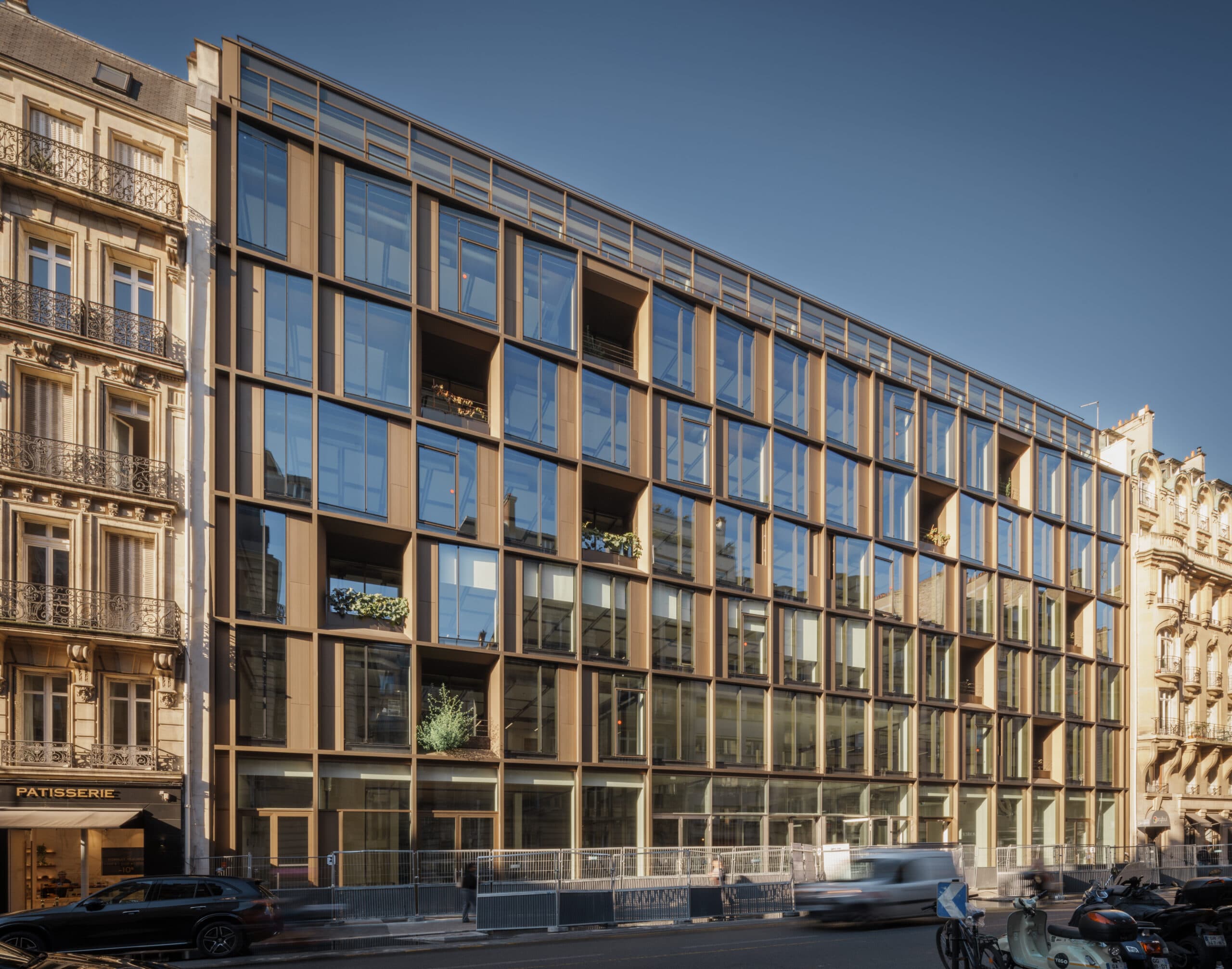
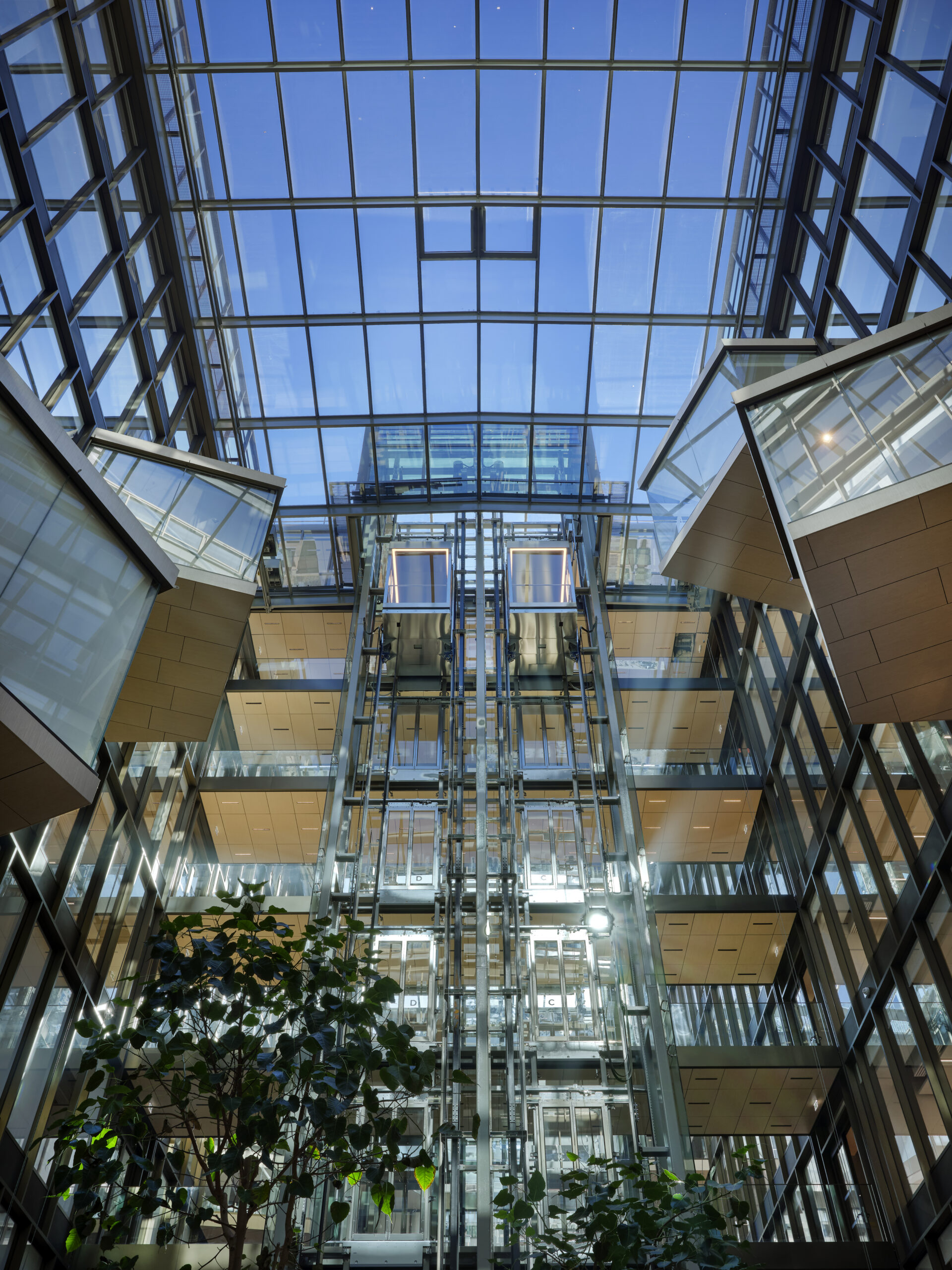
Yes, absolutely. The year 2025 is indeed rich in construction sites and project deliveries, marking the culmination of many years of work already dedicated to these projects. Among them, some are operations we had already followed previously, which makes their story all the more continuous. Mondo is one of them. This project has undergone major rehabilitation work in recent years, consisting of the merger of two buildings: one located on rue Pierre-Demours, historically known as the Banville, and another, the former CBRE headquarters, on rue de Courcelles. We rehabilitated these two buildings to merge them and thus create more than 30,000 square meters of office space, recently occupied by Publicis France, which chose to group its teams there and establish its headquarters.
It is a project that is especially close to my heart, because the Banville part, on rue Pierre-Demours, brings back a personal anecdote that I have not yet told you. It is a building I remember very well, as it was inaugurated when I was ten years old. At the time, it represented the first major project of our father, Anthony Bechu, an elevation built over a garage. The operation was then carried out by ING. Today, Gecina has acquired both assets and merged them. This project was truly significant in our family life; our father spoke about it so often that, when he turned forty, and I was ten, we told our mother, “Mom, for the surprise birthday we’re organizing for Dad, we absolutely have to ask the pastry chef to make a cake with the façade of the Banville on it!” So, in 1991, we ate the façade of the Banville, and years later, we rehabilitated the entire complex. The circle is complete.
Erick Cala
Mondo is therefore one of the flagship buildings for your agency this year, but it is not the only one.
Clémence Bechu
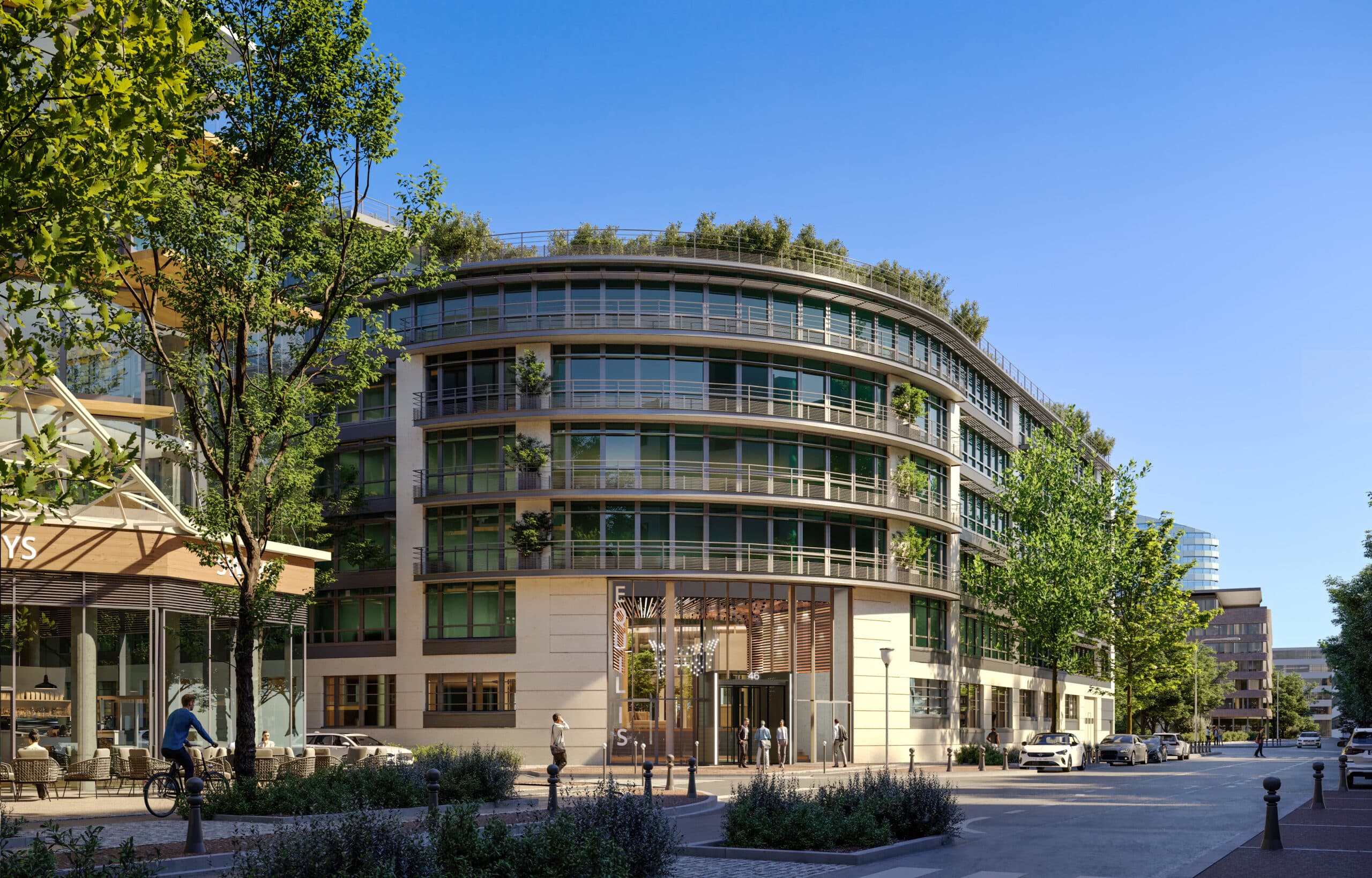
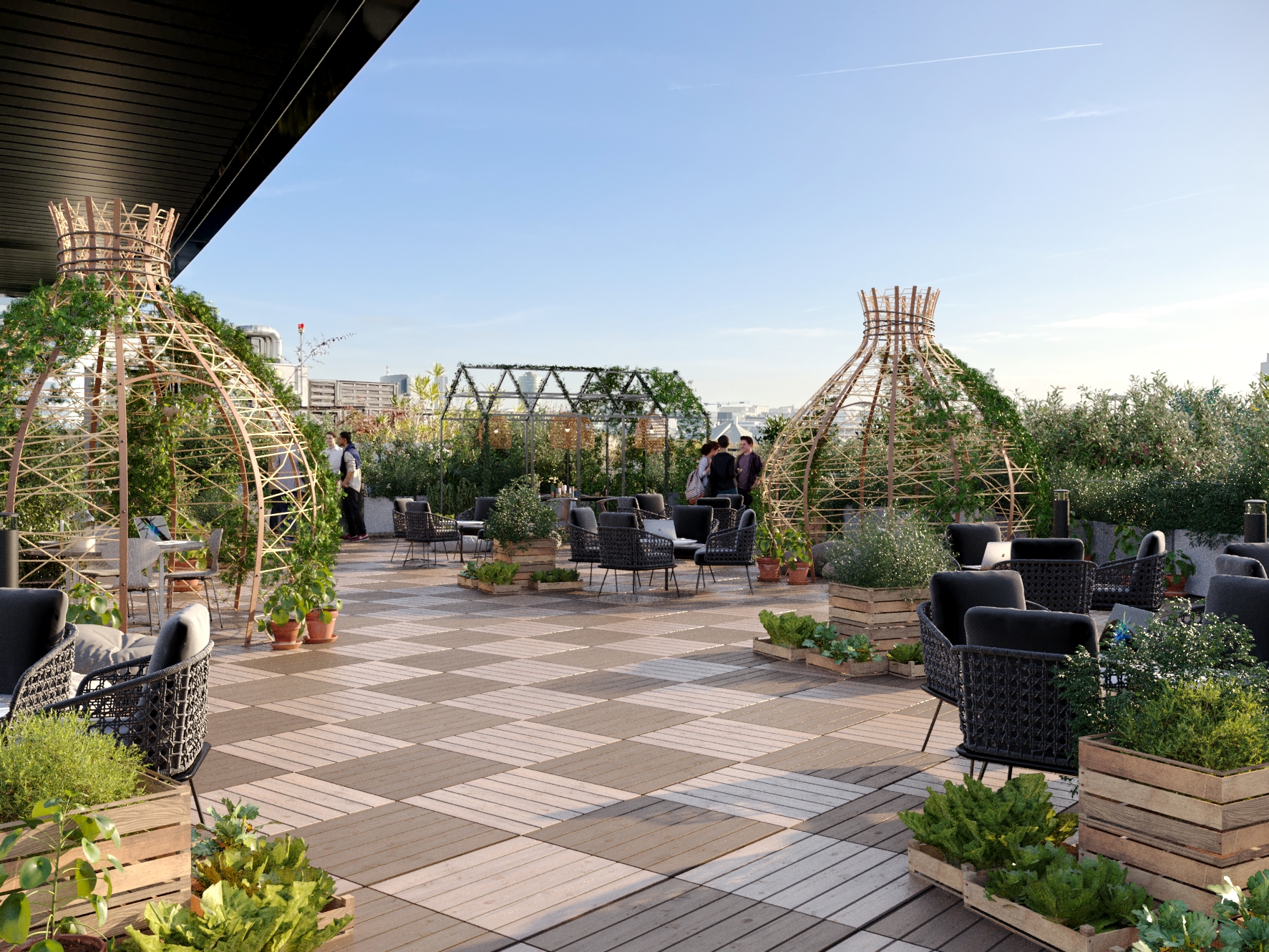
In the same family of so-called “phoenix” projects, which contribute to rebuilding the city upon itself and are rooted in the agency’s inherited history, we have Equilis, inaugurated recently. Equilis is an office complex owned by PIMCO, covering 27,000 square meters. We completely redesigned it to reintegrate it into the urban fabric. Extensive work was carried out on material reuse, with nearly 140 tons of materials repurposed on site, along with a focused effort on waste management. We also worked on the re-greening of the façades, the interior courtyards, and the roof.
Erick Cala
Reuse or re-greening have become somewhat of a standard today. Are these approaches part of an architect’s DNA?
Clémence Bechu
Yes, and these are constraints that stimulate creativity. It has become the norm, but also a universal necessity, as we must now regard cities as reservoirs of raw materials to be recycled and reinvented. This fully aligns with a circular economy approach, which is undoubtedly one of the keys to our future industrial evolution.
Erick Cala
Two beautiful projects that today serve as impressive calling cards for the Bechu & Associés agency. Are there also construction sites currently underway?
Clémence Bechu
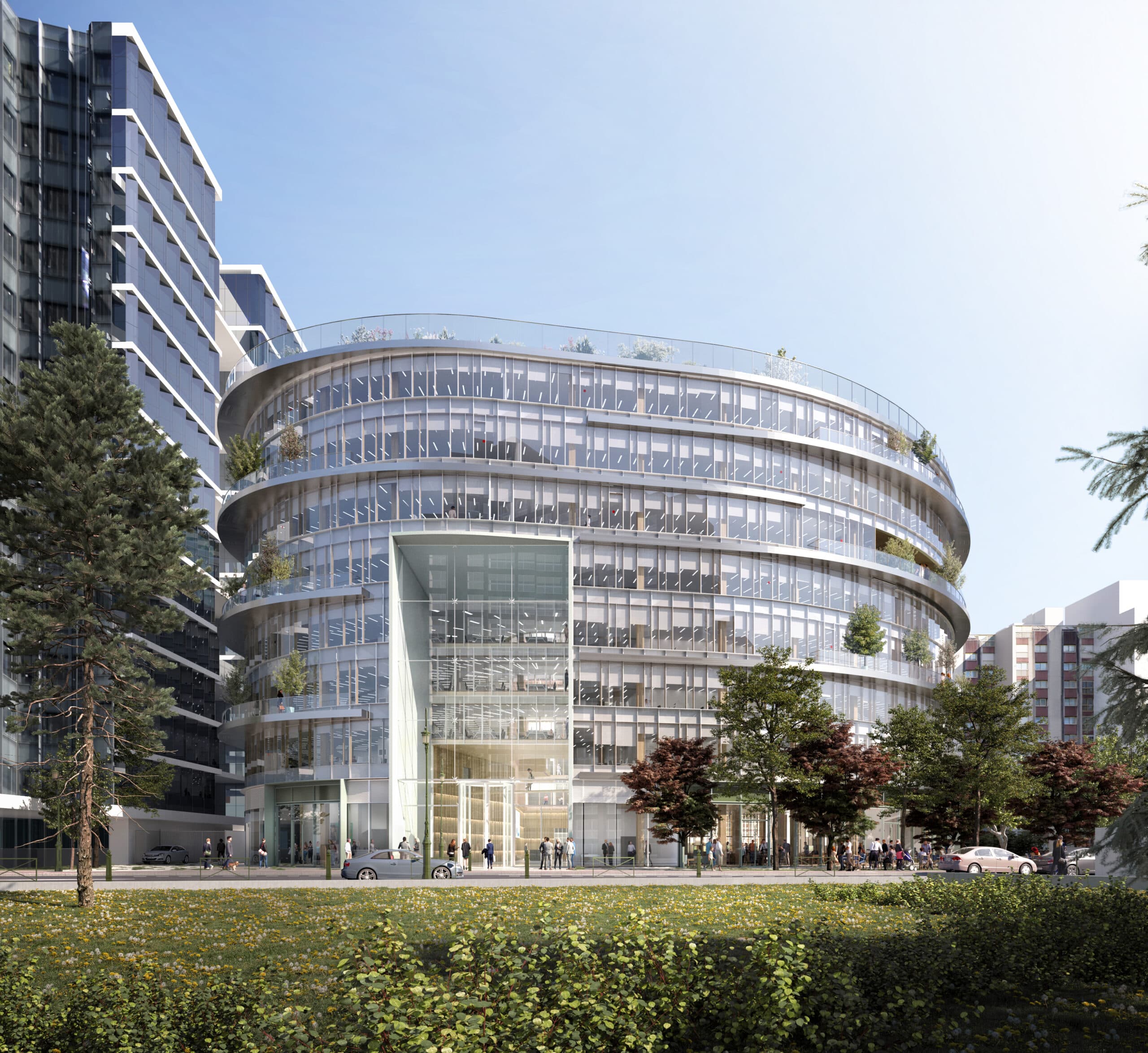
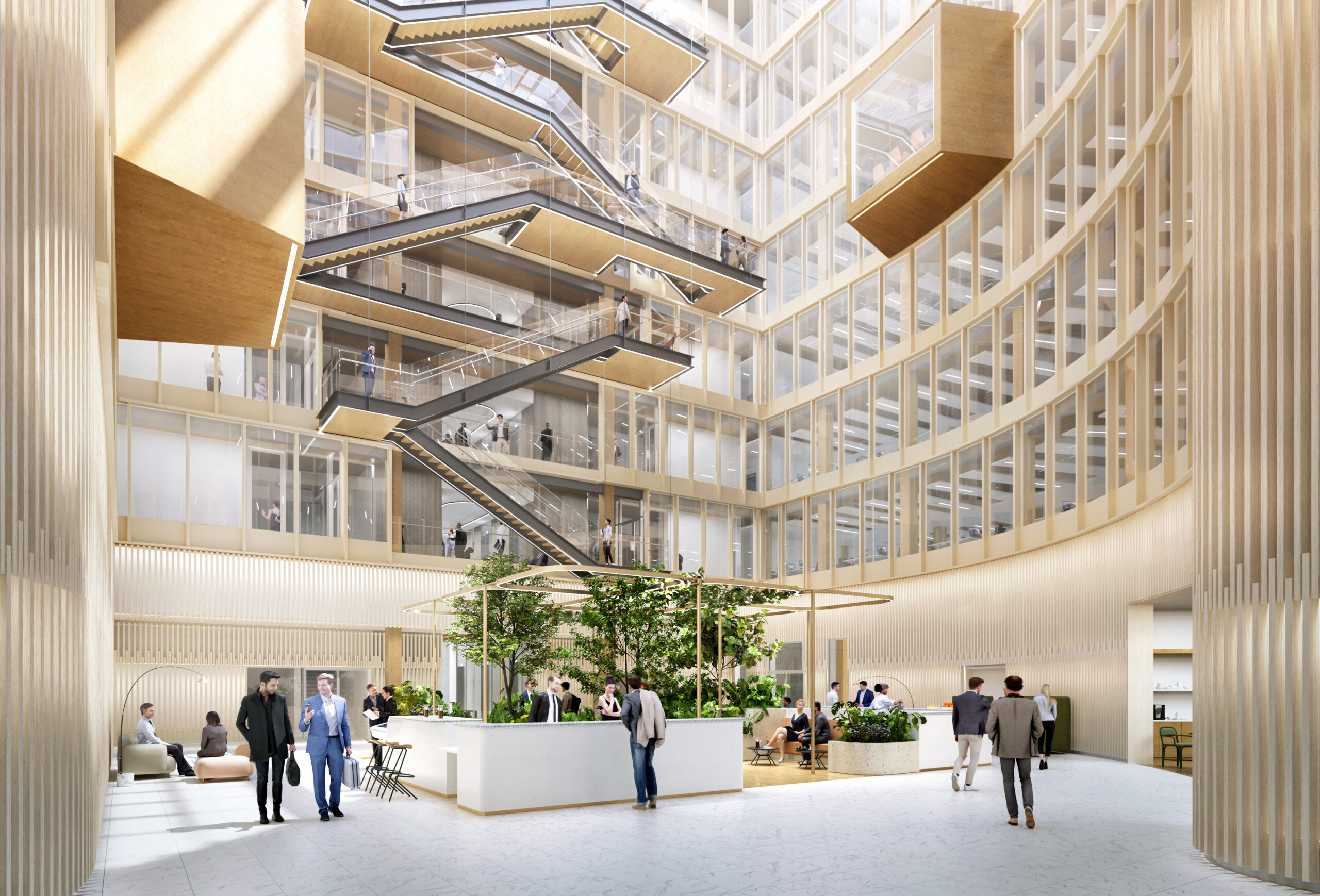
Yes, among our current projects is Inspire, another office building designed in collaboration with the teams from BNP Paribas Real Estate. It is located in the La Défense area, on the Puteaux side, and represents the first building in the district constructed with a timber frame. This project clearly contributes to the renewal of this area, on which many stakeholders are currently working. This sector, closely connected to the city of Puteaux and its village center, holds strong transformation potential. We designed a building with organic forms and volumes, featuring an entrance widely open to the city, in order to encourage its urban integration. It is one of the landmark projects of the moment in this area.
Erick Cala
The fact that it is on the edge, is that one of the aspects that interested you in this project?
Clémence Bechu
Yes, absolutely. When people think of La Défense, they often think only of office spaces, whereas in reality, there is a great deal of life in this area. In fact, there are many schools, though they do not necessarily welcome the “traditional” students one might imagine. It’s a small figure I have in mind, but La Défense counts around 300,000 students, including 70,000 “traditional” students and nearly 230,000 professionals in continuing education.
In this particular area, we were able to work in collaboration with a nearby primary school, which we truly integrated into the project. We went to present our approach, explain its environmental benefits, but also to listen to their desires and needs. The need for nature, in particular, came through very strongly, an obvious one, perhaps, but hearing it expressed by children makes it especially moving. It is deeply rewarding to be able to respond to their expectations through a project that nurtures their dreams.
Erick Cala
The Inspire construction site is therefore underway; when will it be completed?
Clémence Bechu
Inspire will be completed by the end of the year. Alliance Trade will move in to establish its headquarters there, having acquired the property at the very beginning of the construction.
Erick Cala
Other construction sites currently underway?
Clémence Bechu
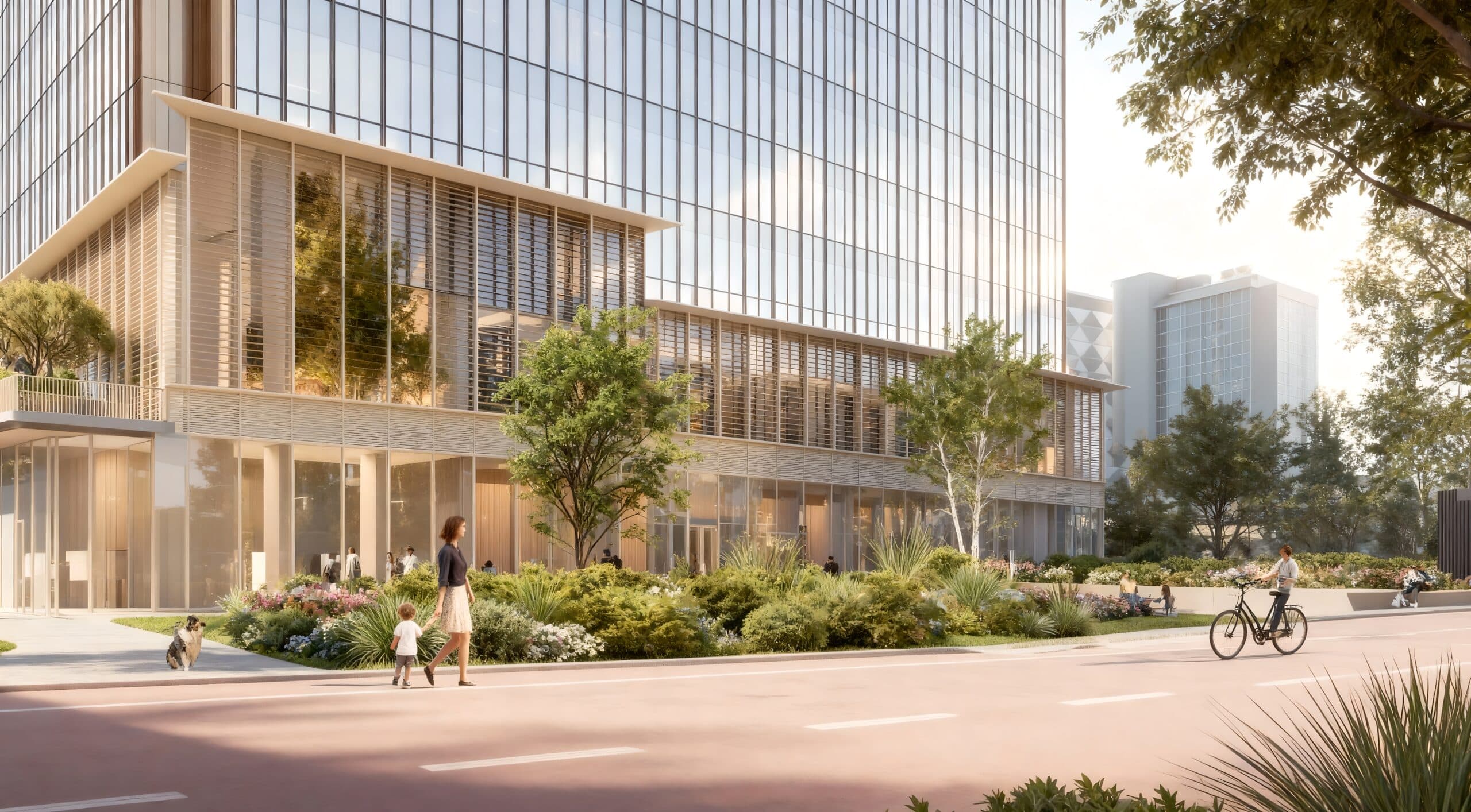
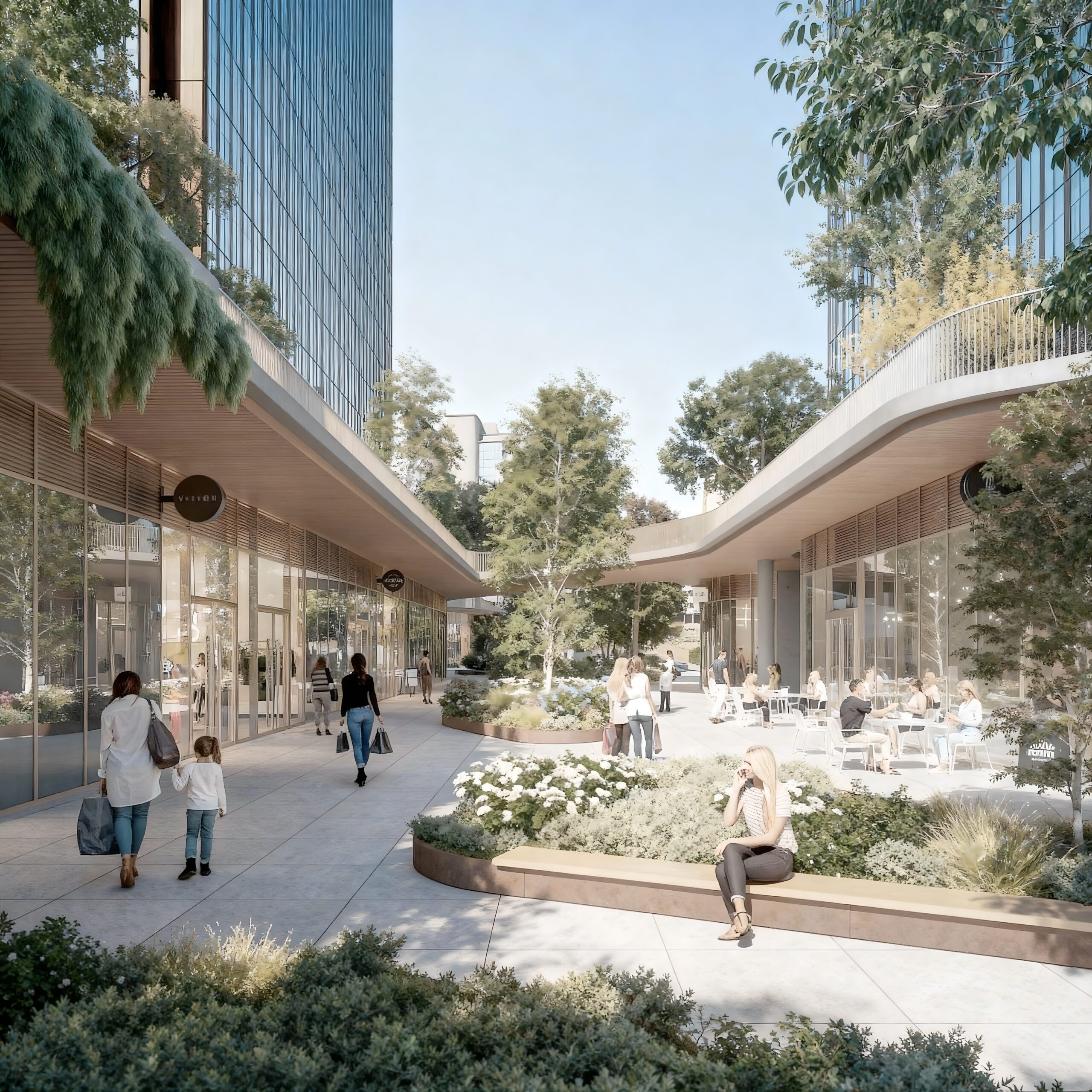
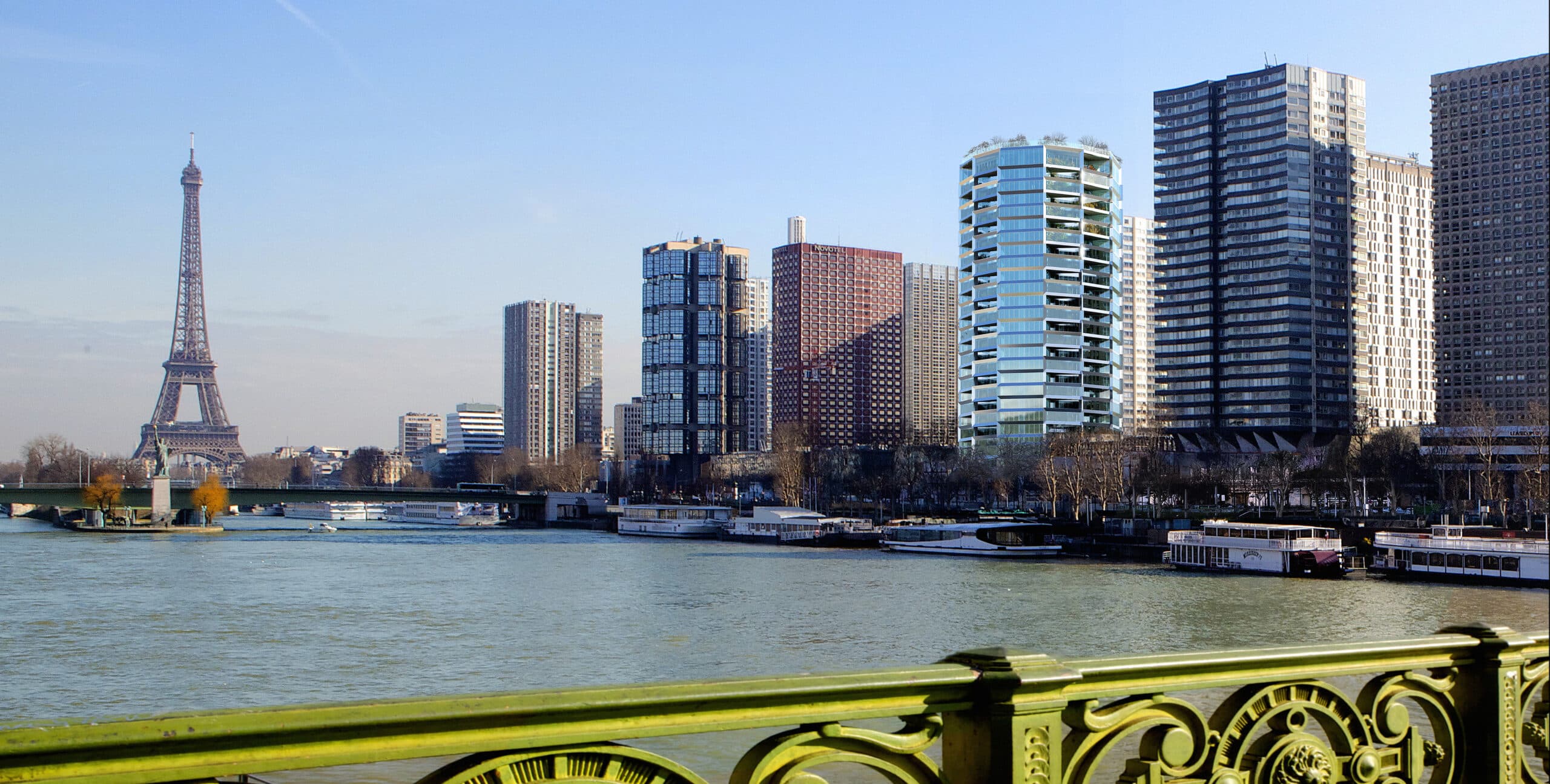
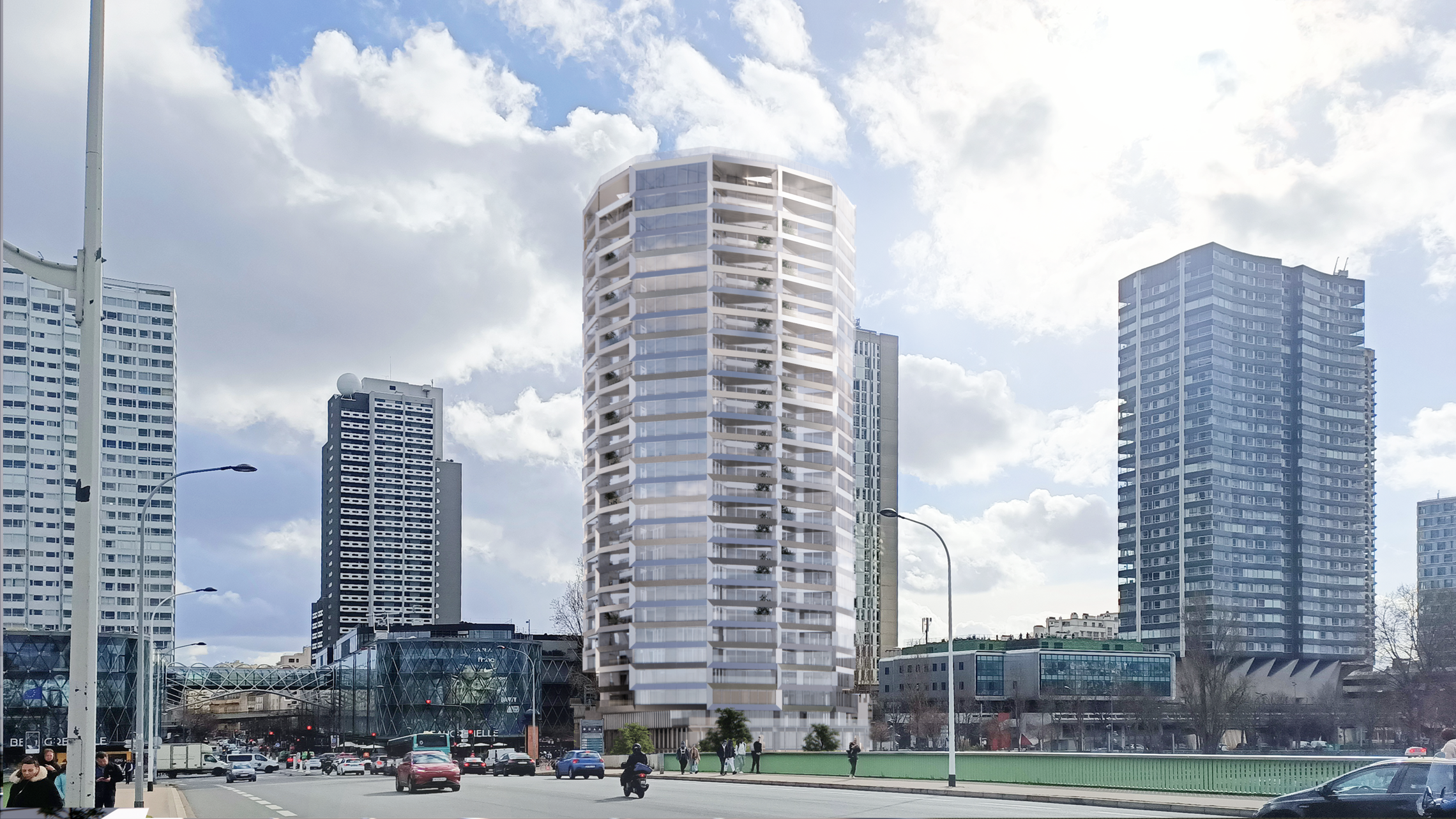
Yes, another major construction site in Paris is the rehabilitation of the Cristal Tower in Beaugrenelle. There, we are developing a project called The Circle, an exciting transformation of an office tower that will remain dedicated to this use but whose base will be significantly reopened to the city. Extensive re-greening work is also planned, particularly on the roof.
One of the main challenges in the architectural design was to demonstrate that the implemented system would achieve very ambitious thermal and energy performance levels. The numbers speak for themselves: we are moving from a consumption of 450 kWh per square meter per year to around 80. We will thus have reduced the tower’s energy consumption by a factor of six, making it the first to fully comply with the City of Paris Climate Plan.
Erick Cala
We are truly dealing with something tangible here; things are progressing and taking shape. People often talk about projects, but in this case, there are real results. When will The Circle be completed?
Clémence Bechu
During 2026.
Erick Cala
We have taken a brief look at the completed operations and the construction sites currently underway. I imagine there are, of course, also new projects at Bechu & Associés.
Clémence Bechu
Yes, many! A project is not always in the same phase of life. There are all the feasibility studies, carried out well upstream, that we conduct alongside other projects to ensure a solid portfolio for the future and to help cities reflect on the evolution of their territories. Other projects are in the study phase, with the well-known “stop and go” stages that currently demand great agility.
And then there is the satisfaction of winning competitions. We take part in many of them, as often as possible, because it is always intellectually stimulating; it nourishes our research and development, just as our international work does on territories with different climatic or socio-economic contexts. Out of ten competitions we enter, we win barely one. But 2025 is an exceptional year; we have won three remarkable competitions.
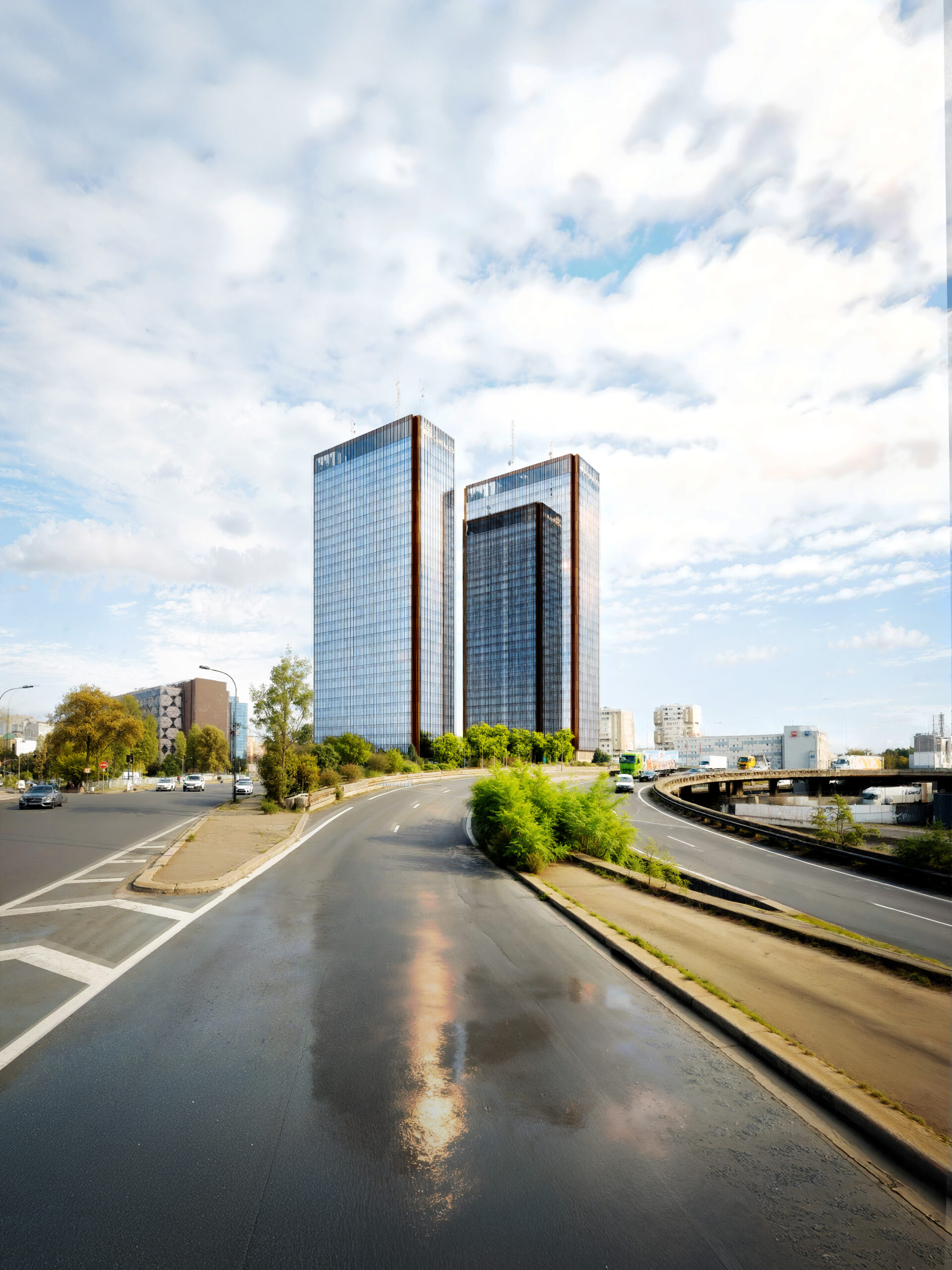
The first is for the future campus of the Airbus Defence and Space teams in Montigny-le-Bretonneux. This competition took place in two stages, following an earlier phase on another site a few years ago, which was eventually discontinued, where we were already well positioned. We agreed to play again with an excellent developer, GA, in collaboration with our colleagues at Kardham, and we were delighted to learn last spring that we had won it.
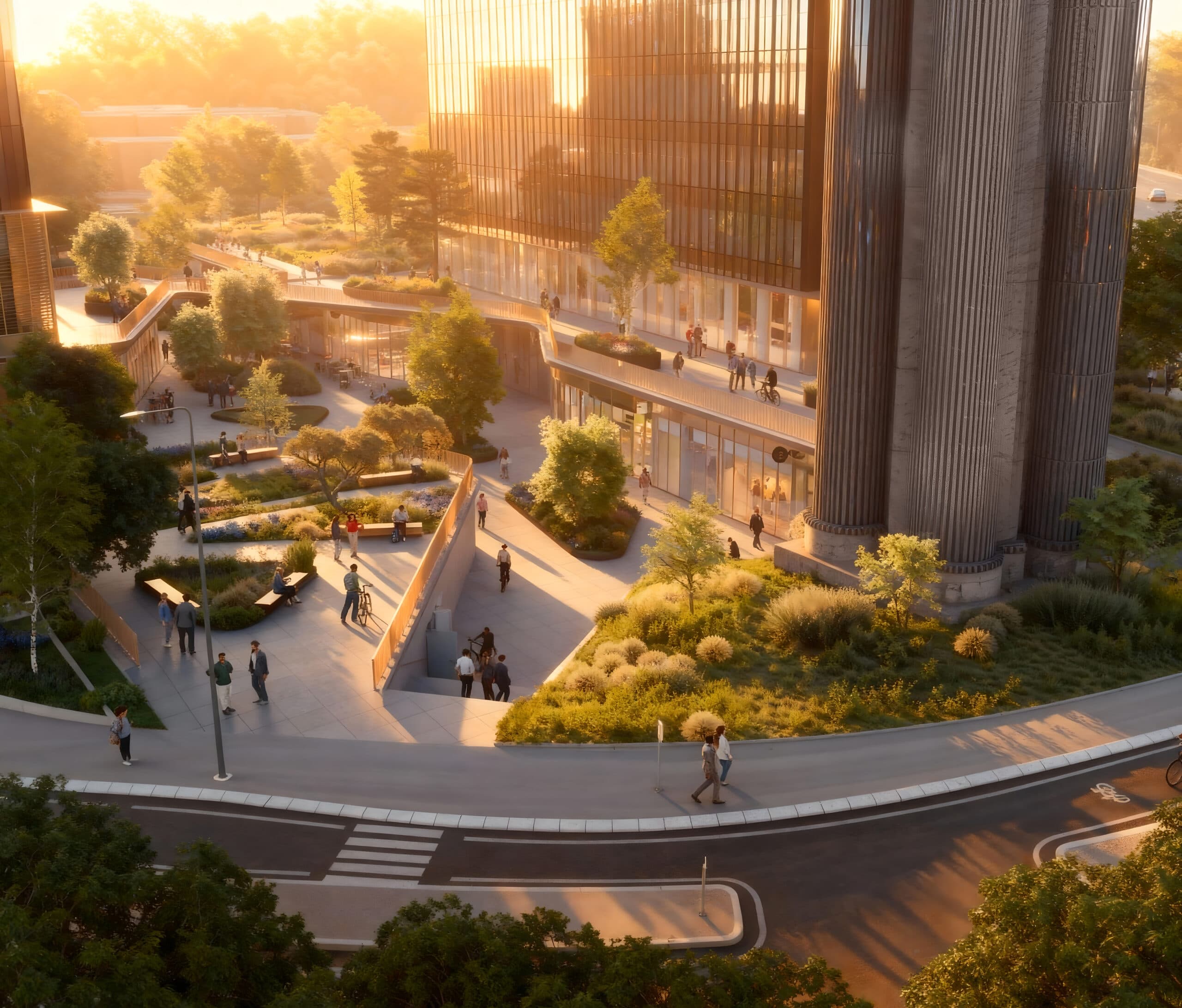
The second competition concerns the rehabilitation of the Mercuriales Towers in Bagnolet, well known to the general public. After years of consideration and changes of ownership, they will finally find a second life through an ambitious transformation, reopening the base into a space for walking, services, and shops, helping to regenerate the entire neighborhood, while converting the towers into student housing and managed residences. On this project, we are taking a particularly respectful approach to the identity of these towers, an emblematic part of the Parisian skyline. We intervene delicately, almost like performing acupuncture, to improve essential aspects without altering their character.
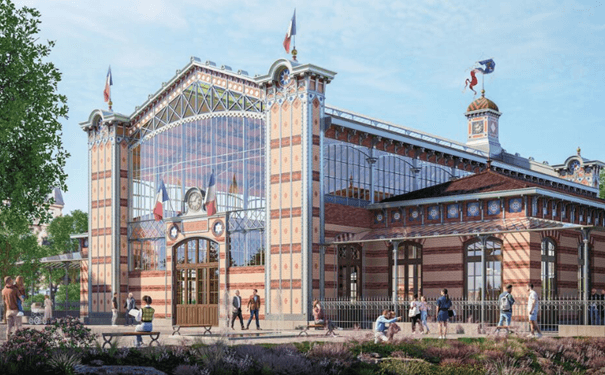
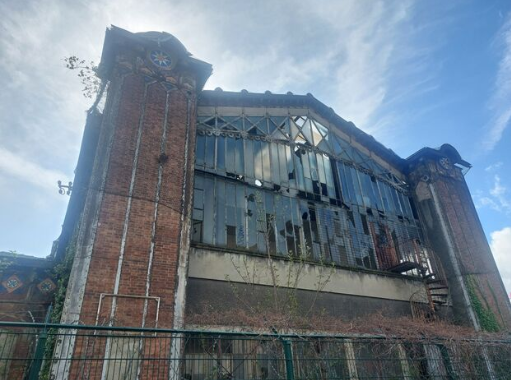
Finally, the third competition we won, more modest but very symbolic, is especially close to our hearts, the rehabilitation of the Lisch station in Asnières. This historic building, with its fascinating past, will be restored, its envelope and structure preserved, in order to soon host an operator offering a hybrid concept combining sport, culture, and small-scale dining. For our teams specializing in heritage architecture, it is a great source of pride.
Erick Cala
When we talk about rehabilitation, does that mean you will therefore preserve the historical character of the Lisch station?
Clémence Bechu
Yes, absolutely. This station, when it was still in operation, was first designed and built by the architect Lisch in 1878, on the Champ-de-Mars, for the World Exposition of that era. It even served a second time for another World Exposition before its activity came to an end following the extension of the railway to the Montparnasse station.
Meanwhile, in Asnières, a climatic event, a cyclone, destroyed the workshops of the Western Railway Company, and it was then decided to dismantle and relocate the station to Asnières, where it would host this new function. It then experienced a rather eventful life throughout the twentieth century, marked by occupations that were not always very respectful of the place. That is why the city of Asnières committed to protecting it and obtained its inclusion on the list of historical monuments in the 1980s.
Today marks a new chapter for the station. It had been selected as part of the “Reinventing the Greater Paris Metropolis” competition, but the project ultimately did not come to fruition. The city of Asnières then chose to take back control by repurchasing the station and launching this new competition to transform it into a lively place offering new services for the city, all the more significant as it is located right next to the Bois-Colombes station, the future stop of the Grand Paris Express line 15.
Erick Cala
Congratulations on all these wonderful achievements, past and future, with your agency Bechu & Associés. To conclude, Clémence, could you tell us about the identity of Bechu & Associés, what sets you apart from your competitors? What is your approach, your method, your set of values?
Clémence Bechu
There are several things. First, there is our family history, I represent the fourth generation, alongside my sister Aliénor. It is rare enough to be mentioned, a little over a hundred years ago, my great-grandfather, an engineer, had been noticed in the trenches of the First World War by architects who were impressed by the precision of his technical drawings. They told him, “As soon as the war is over, come work with us, we will train you.” Then came our father, Anthony, and today we continue this family story.
What sets us apart is our ability to operate across all scales, from urban design to interior architecture. We are not specialized in a single type of asset; we are capable of working on different typologies, with the particular strength of having a team dedicated to heritage enhancement. This gives us essential tools to address the challenges of the city upon the city, as well as those of diversity and the hybridization of uses. It is also our desire not to grow too large. As some say, it is easy to grow, but harder to slim down! Remaining human-sized and family-run allows us to approach each project in a specific way, to define strong concepts, and to build stories together.
Finally, we remain faithful to a guiding phrase, whatever the scale or the subject of the project: “To be sustainable, a project must be born from its roots, and each of our choices must be guided by the responsibility we bear toward living things.”