Hunnu City
A project aligned with Mongolia’s Vision 2050
Hunnu City
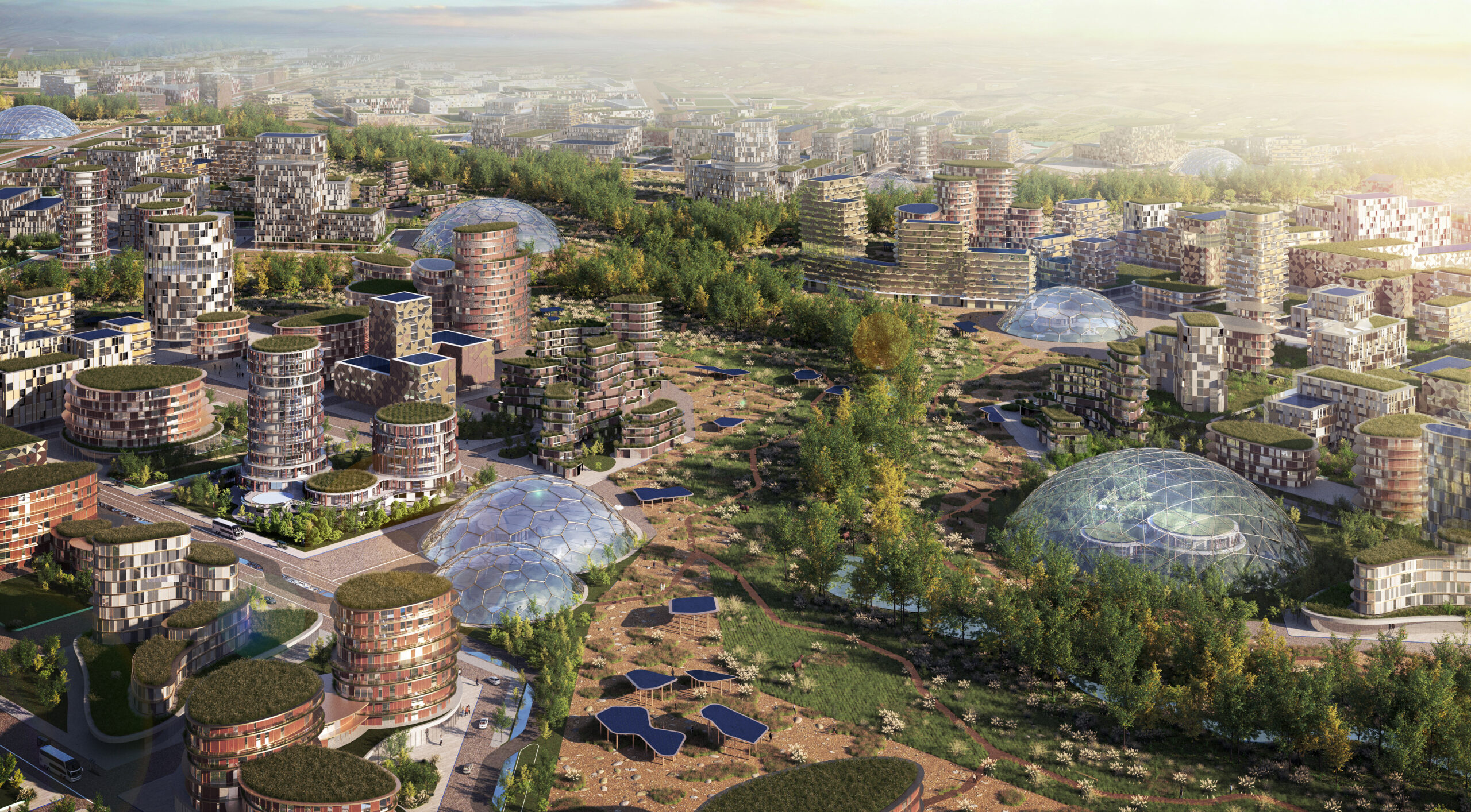
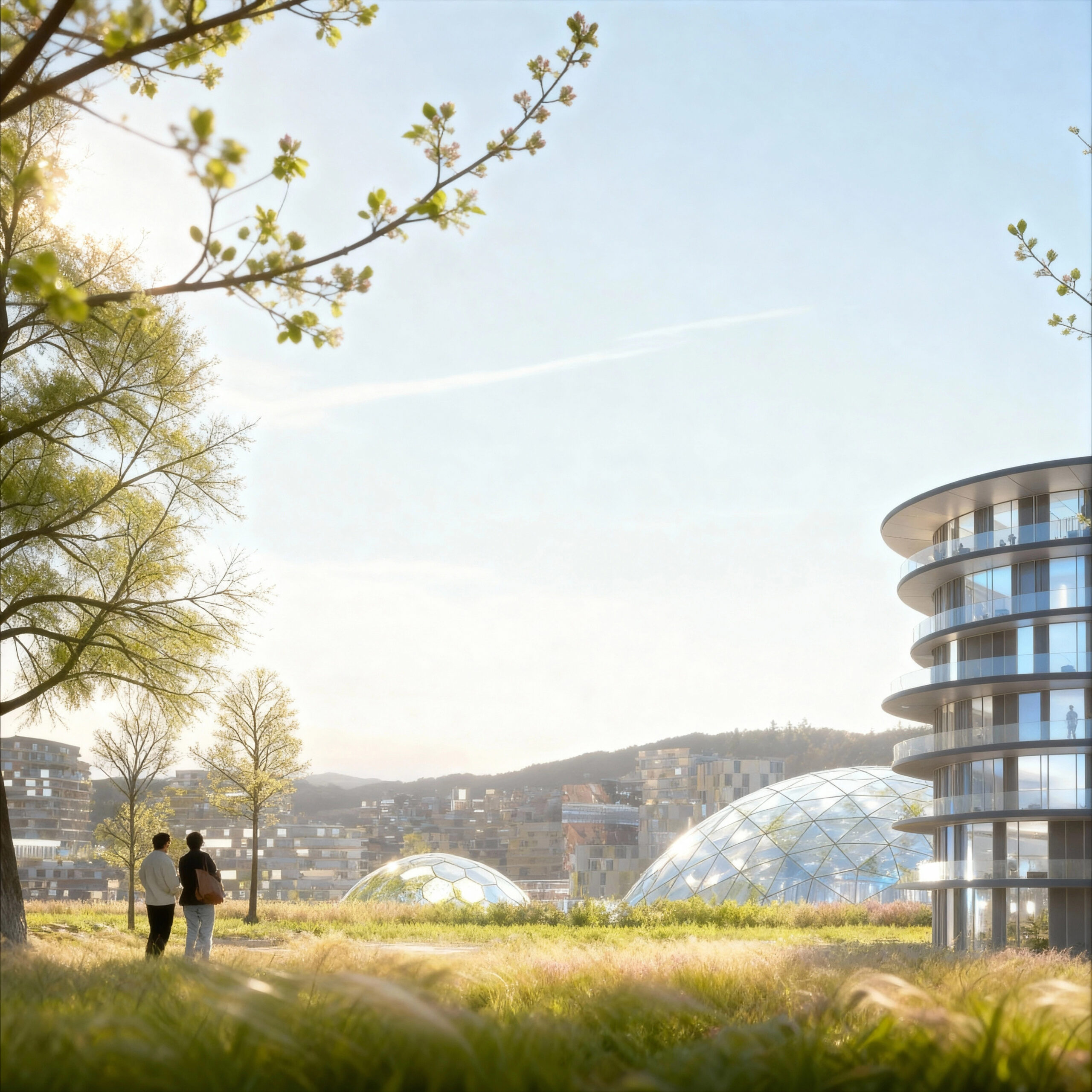
Hunnu City is a new Mongolian smart, green, and resilient city project, integrating residential districts, economic hubs, campuses, and public facilities, reimagined around biomimicry and local identity to offer a sustainable and innovative living environment.
Mongolia
Laureate
Bechu & Associés
SOA Architecture: Associate Architects
ParcNouveau: Landscape Architects
MIC Hub: Mobility and flow planning
Atelier Ten: Environmental and technical engineering
Robert Bird Group: Engineering and infrastructure
Future Food Institute: Food systems transition
Embix: Smart grid and energy
The Climate Company: Climate modeling and adaptation
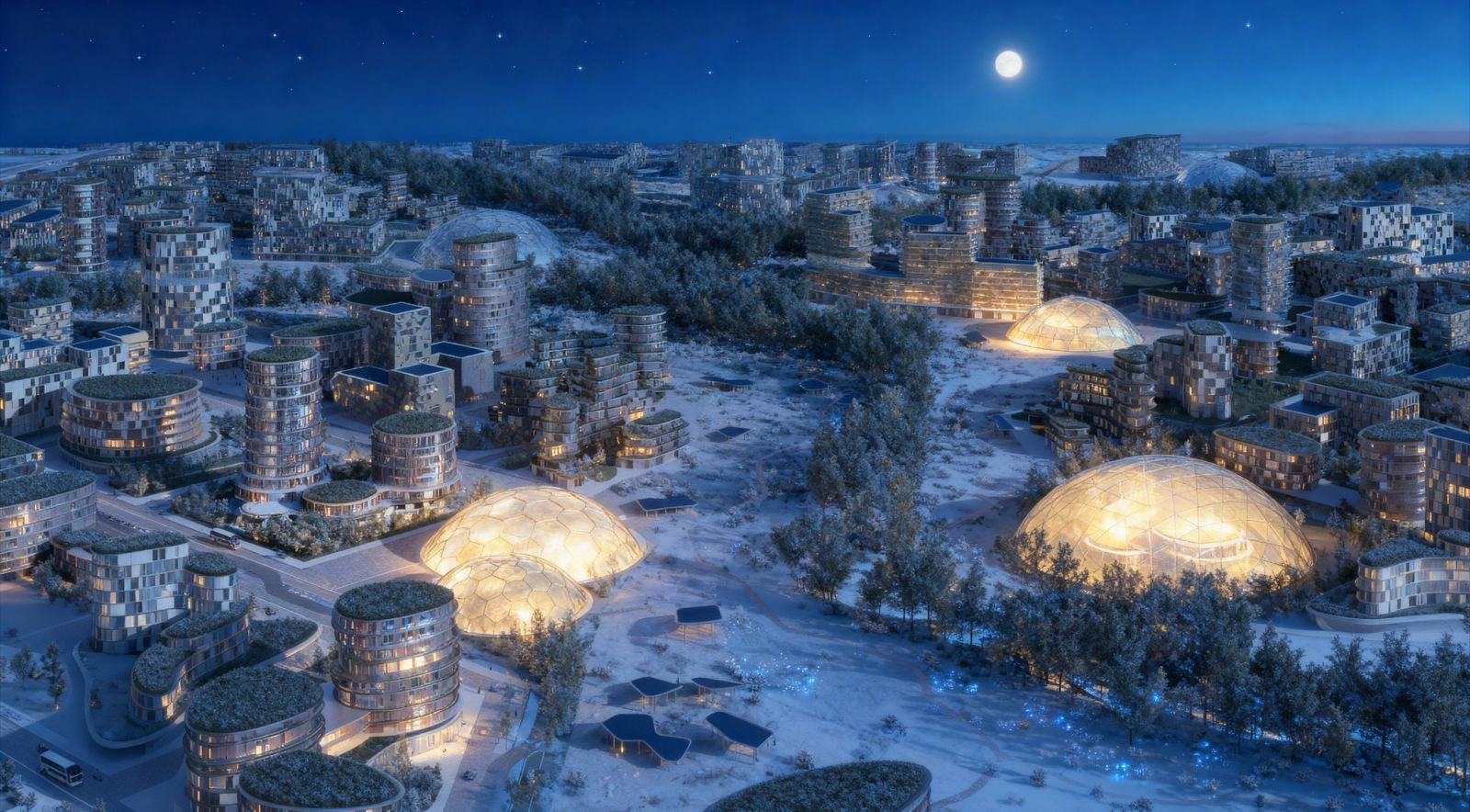
Hunnu City, regenerative new city at the gateway to the steppe
A new city of 31,503 hectares, designed to embody the Mongolian “Vision 2050” and address tomorrow’s climatic, economic, and cultural challenges, near the new Chinggis Khaan International Airport.
Planned to develop through 2045 over a territory of 31,503 hectares, Hunnu City is at the heart of the national “Vision 2050” strategy, aiming to strengthen the country’s economic sovereignty, climate resilience, and cultural identity. In close proximity to the new Chinggis Khaan International Airport, the city aspires to become a model of regenerative urbanism, suited to Mongolia’s extreme climatic conditions and rooted in the heritage of the Hünnü people.
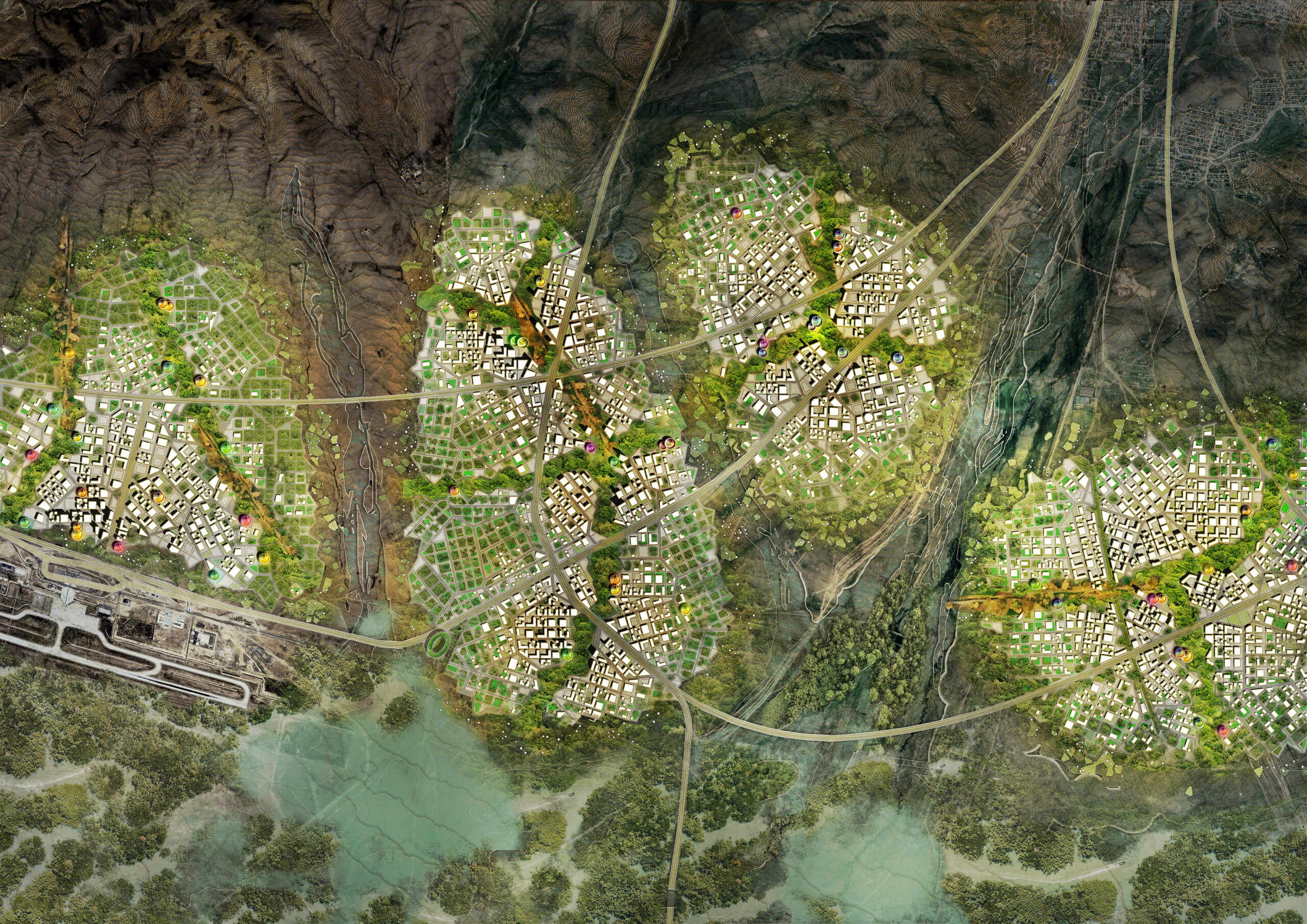
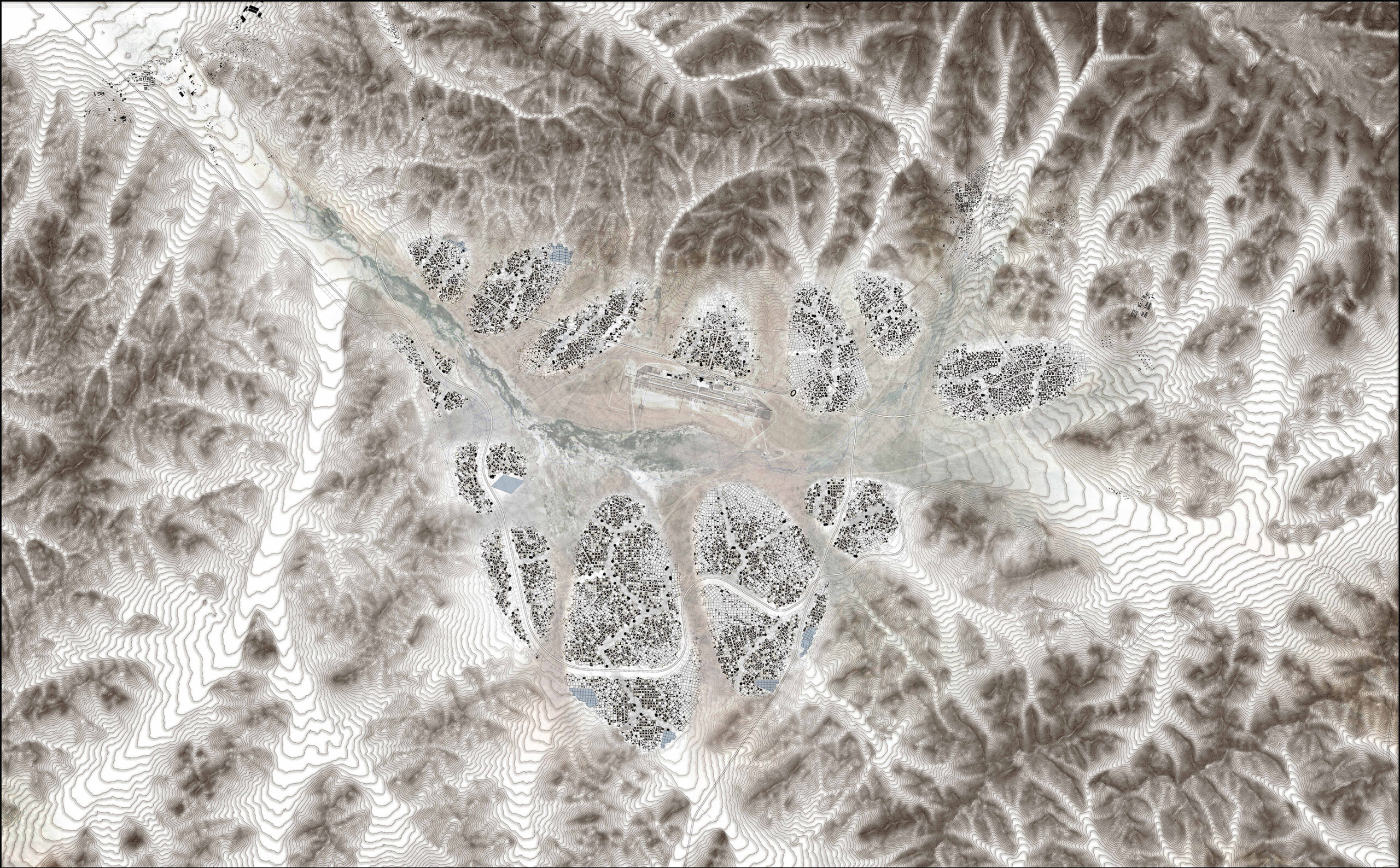
A master plan born from the land: a biomimetic, cellular, and regenerative city
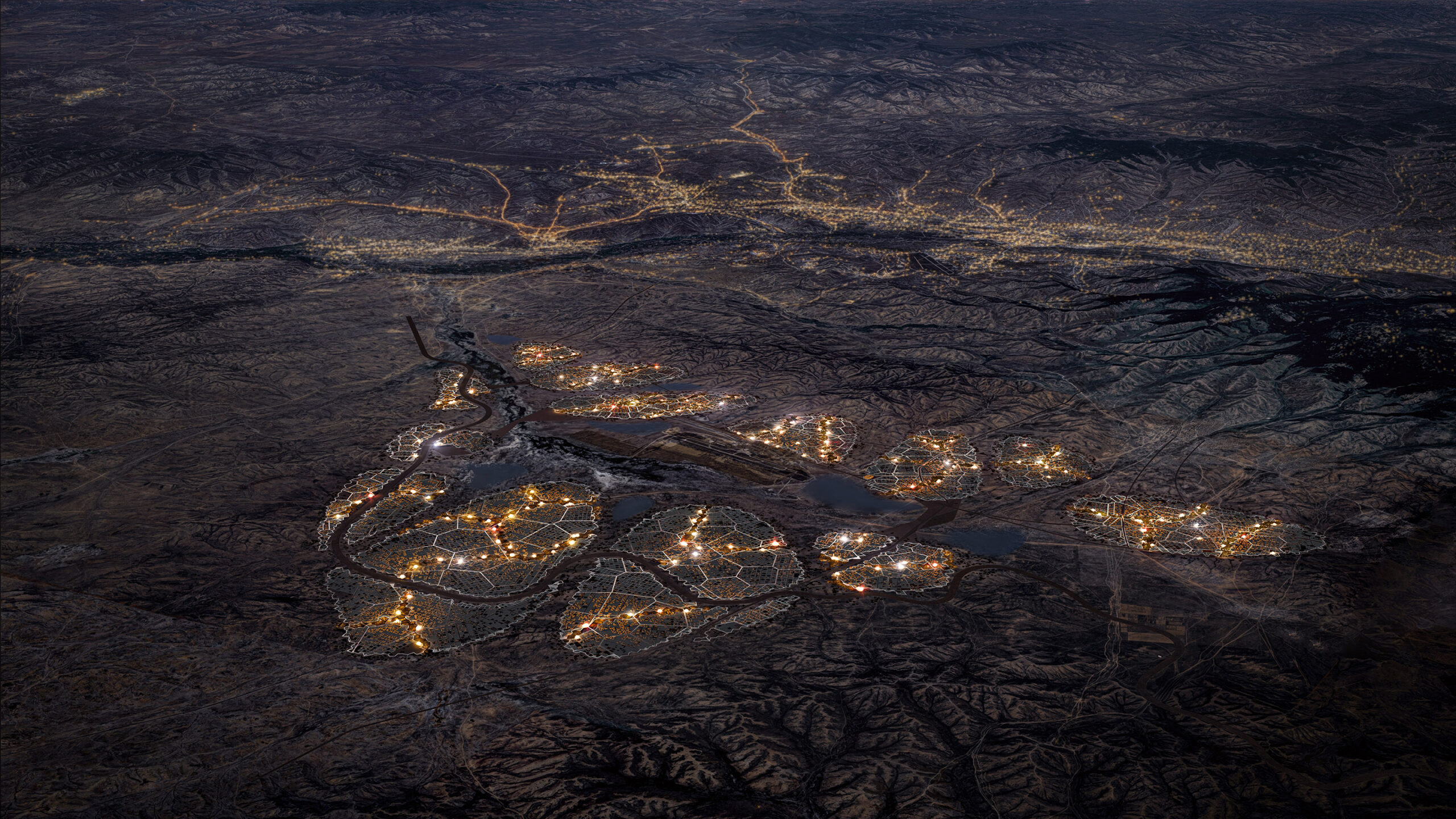
The winning project is based on a biomimetic and cultural approach entitled: A new steppe of constellation. A living story, born from the steppe, shaped by Nature and built for people.
Guided by the wisdom of the land, including the sacred number 9, inspired by the natural elements, the master plan proposes a city that does not impose its form but is born from its environment.
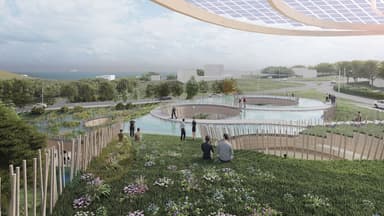
It observes, listens, adapts, and then unfolds like a living organism through the integration of all its life-giving flows: water flows (captured, slowed, reused), energy flows (solar, thermal, vegetal), ecological flows (biodiversity, soils, natural corridors), human flows (soft mobility, seasonal movements, cultural spaces, fifteen-minute city).
Hunnu City thus becomes a regenerative city, designed to create more resources than it consumes, transforming the site into an active ecosystem where infrastructure, landscapes, habitats, and communities co-evolve, and where the balance between nature, community, and services creates a simpler, more human, and profoundly sustainable daily life.
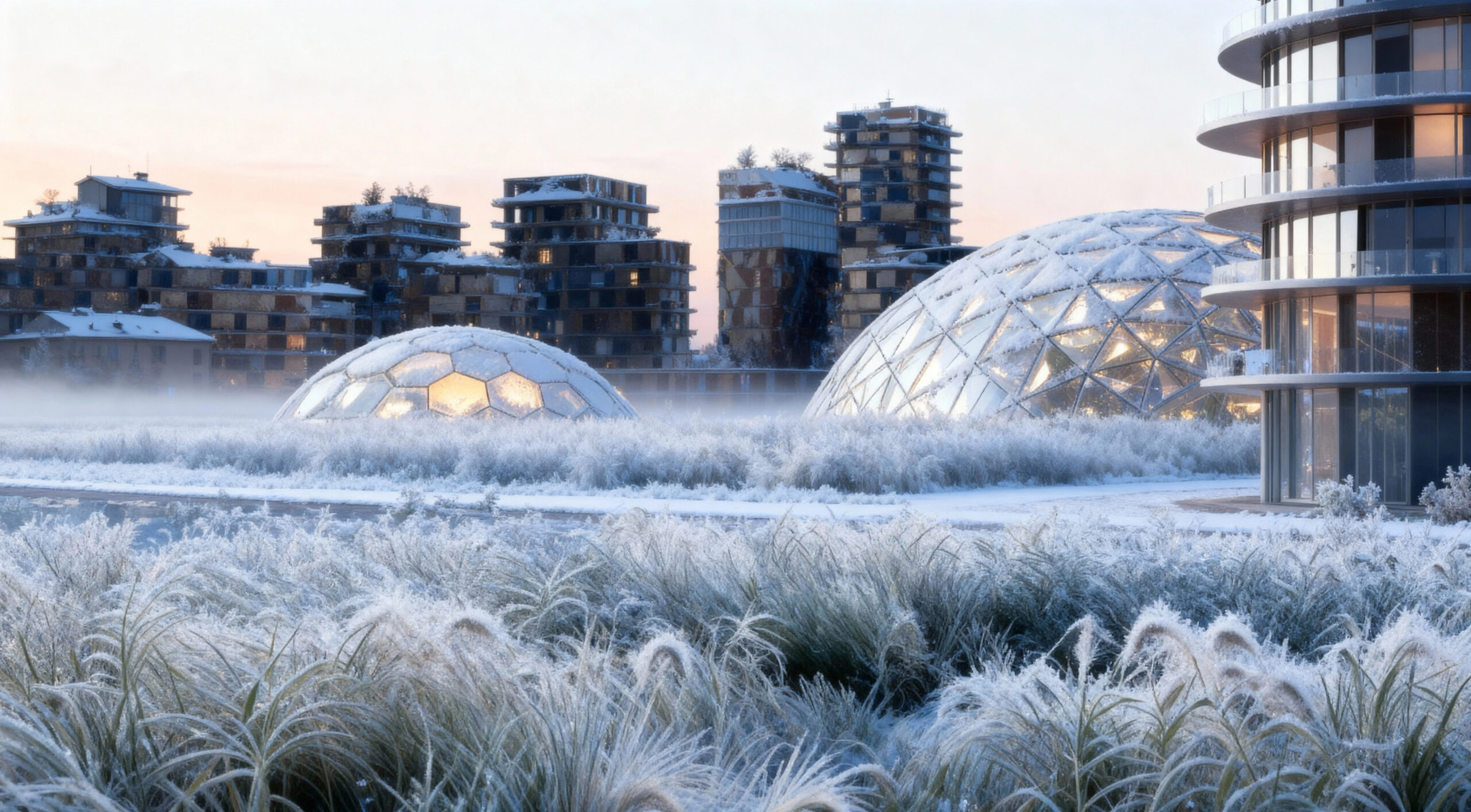
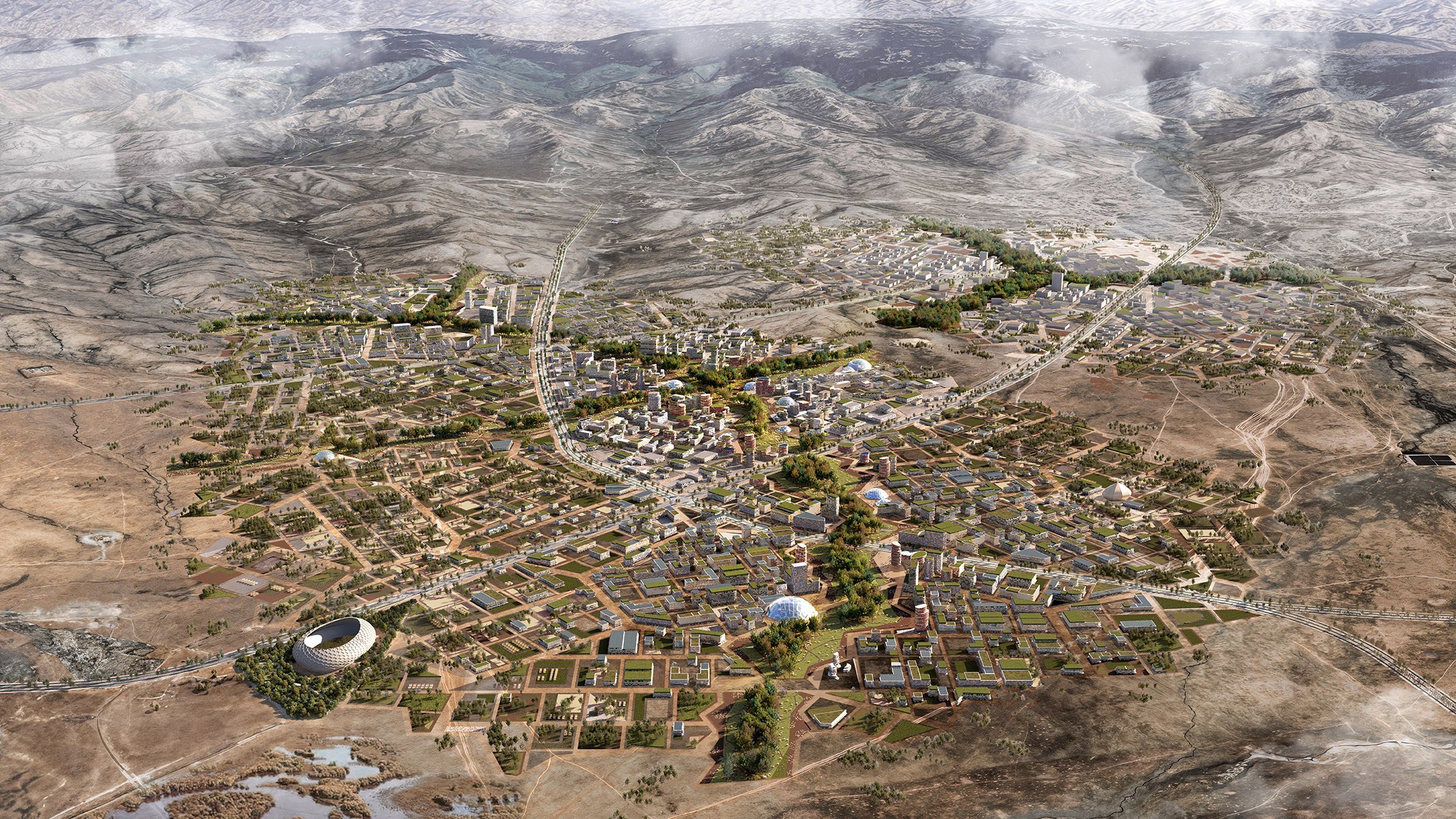
The Amid Od, stars of a new constellation, where progress and nomadic heritage coexist in harmony
At the heart of the project, the Amid Od, literally “stars of life,” structure the entire city.
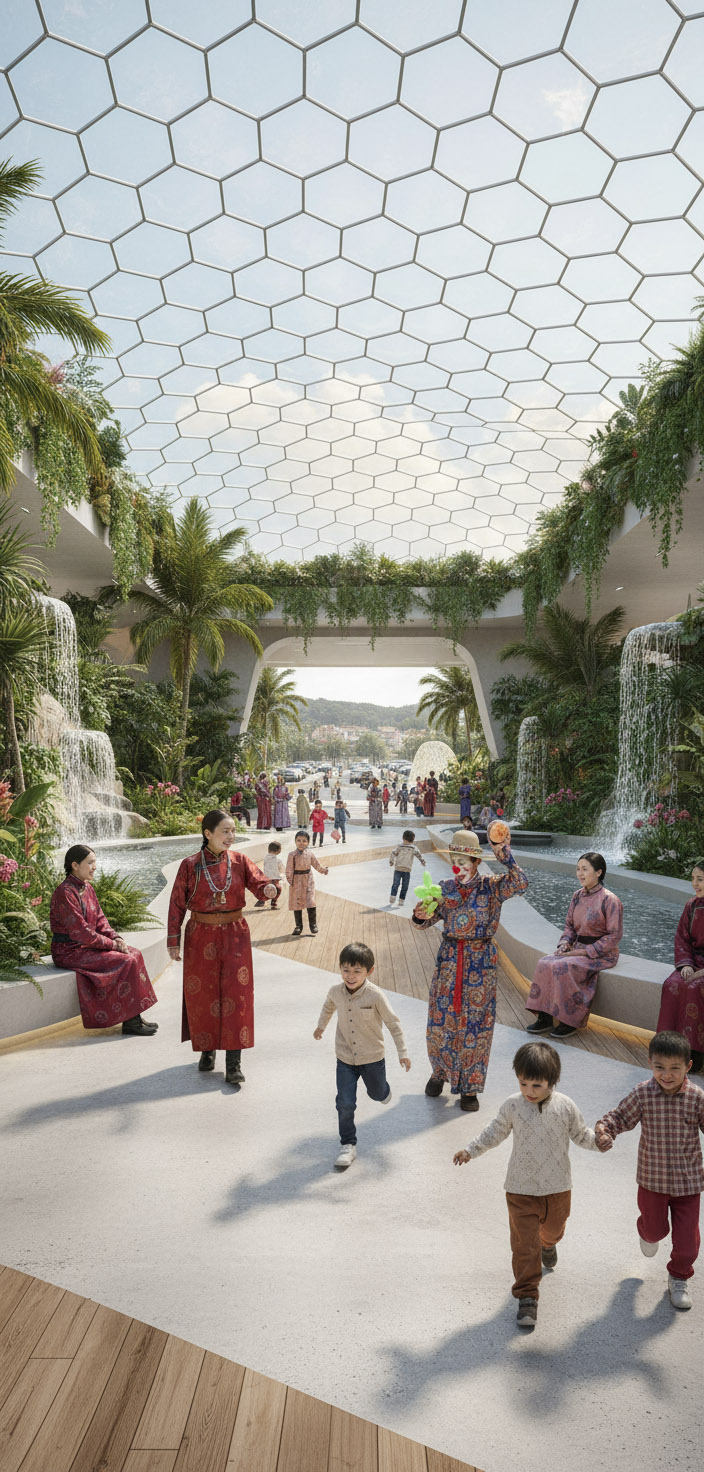
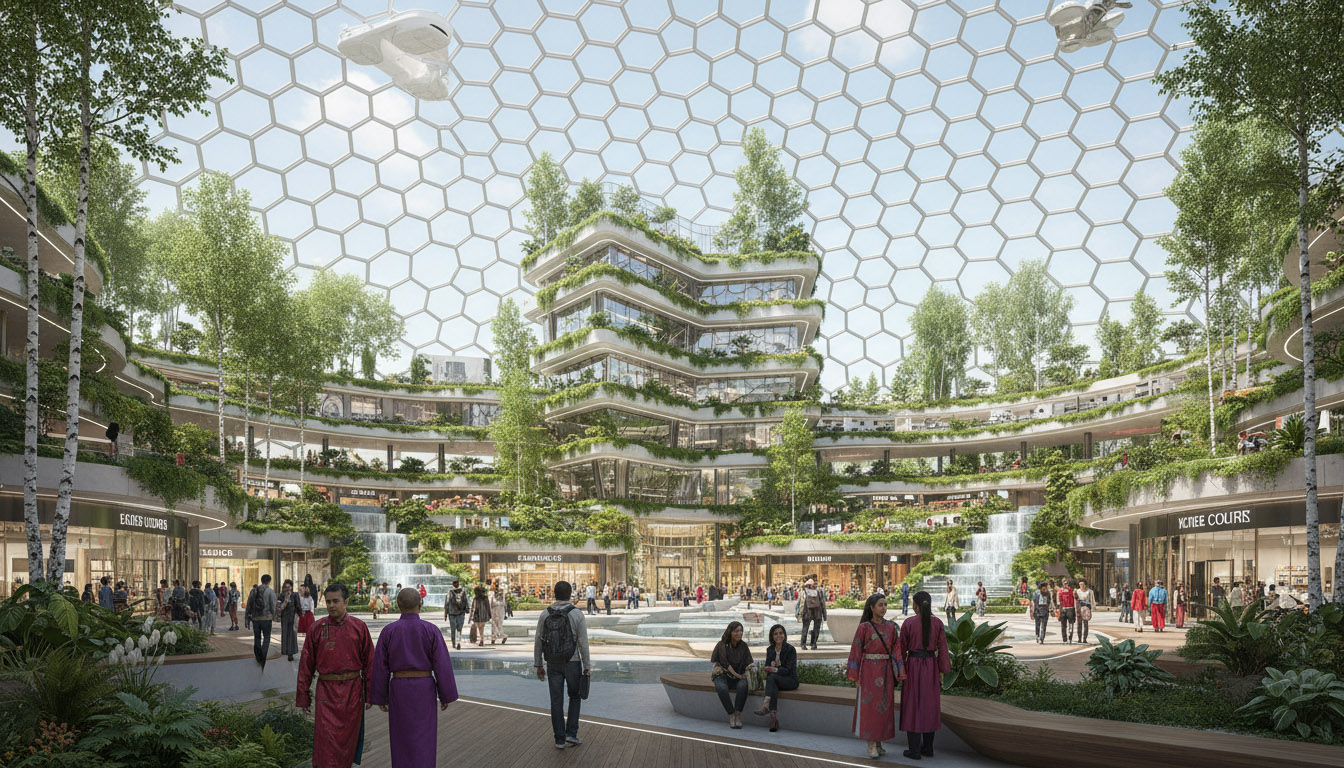
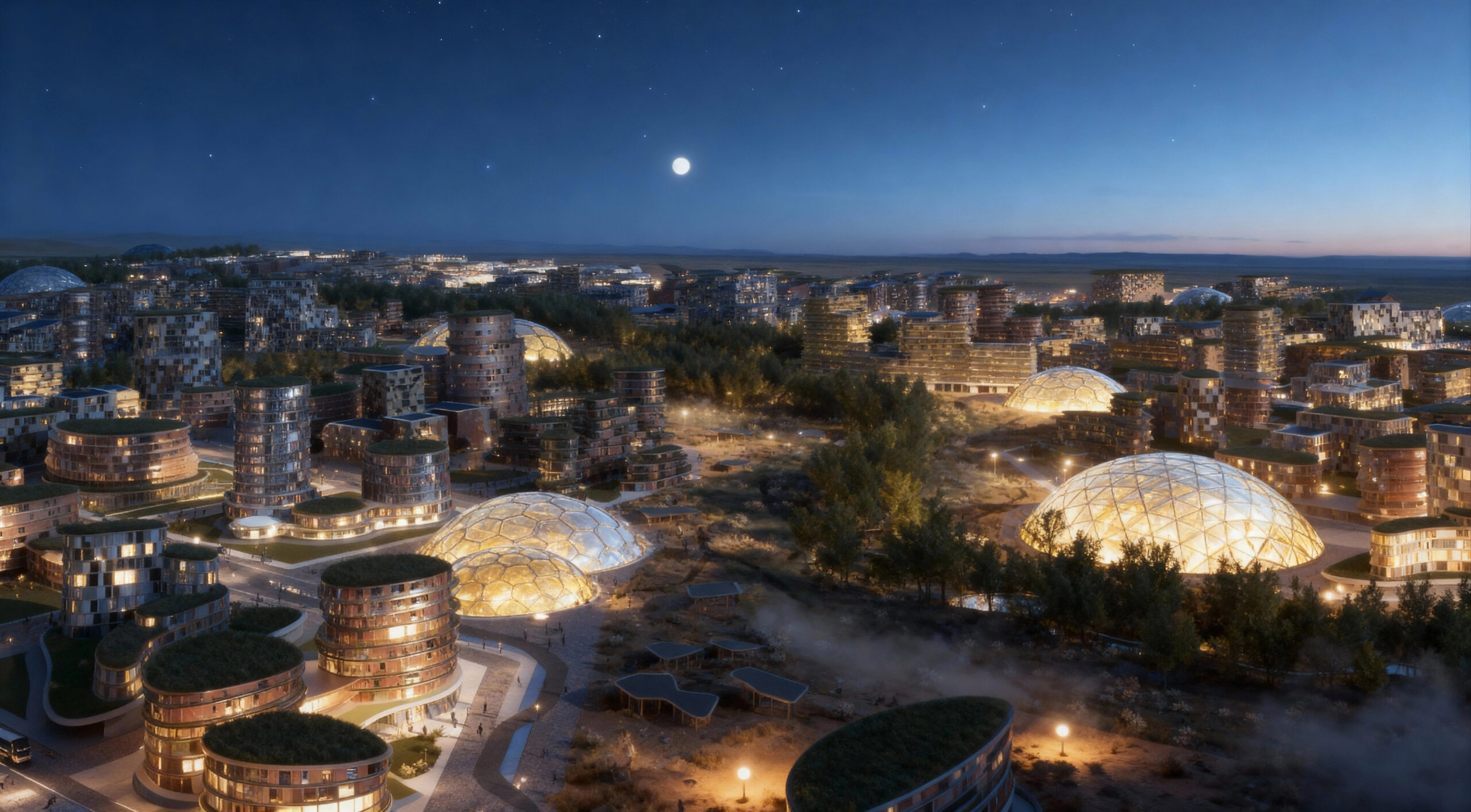
These circular centers, inspired by the ger (Mongolian yurt), form a genuine urban constellation, new landmarks and identity symbols for future generations. Both cultural, social, energy, and food hubs, they become places for meeting, sharing, and living throughout the year, while playing an essential role as climate refuges and resilience anchors for the community.
True engines of the fifteen-minute city, each Amid Od guarantees proximity access to health, education, culture, work, sport, and sustainable transport.
They are integrated into a living fabric connecting neighborhoods like a constellation.
The city is thus organized into a living gradient:
- Closest to the Amid Od: density, diversity, and urban vitality.
- Moving outward: forms dissolve into gardens, agriculture, and the steppe.
This cellular framework makes Hunnu City an adaptive urban organism, able to meet the climatic and societal challenges of the twenty-first century.
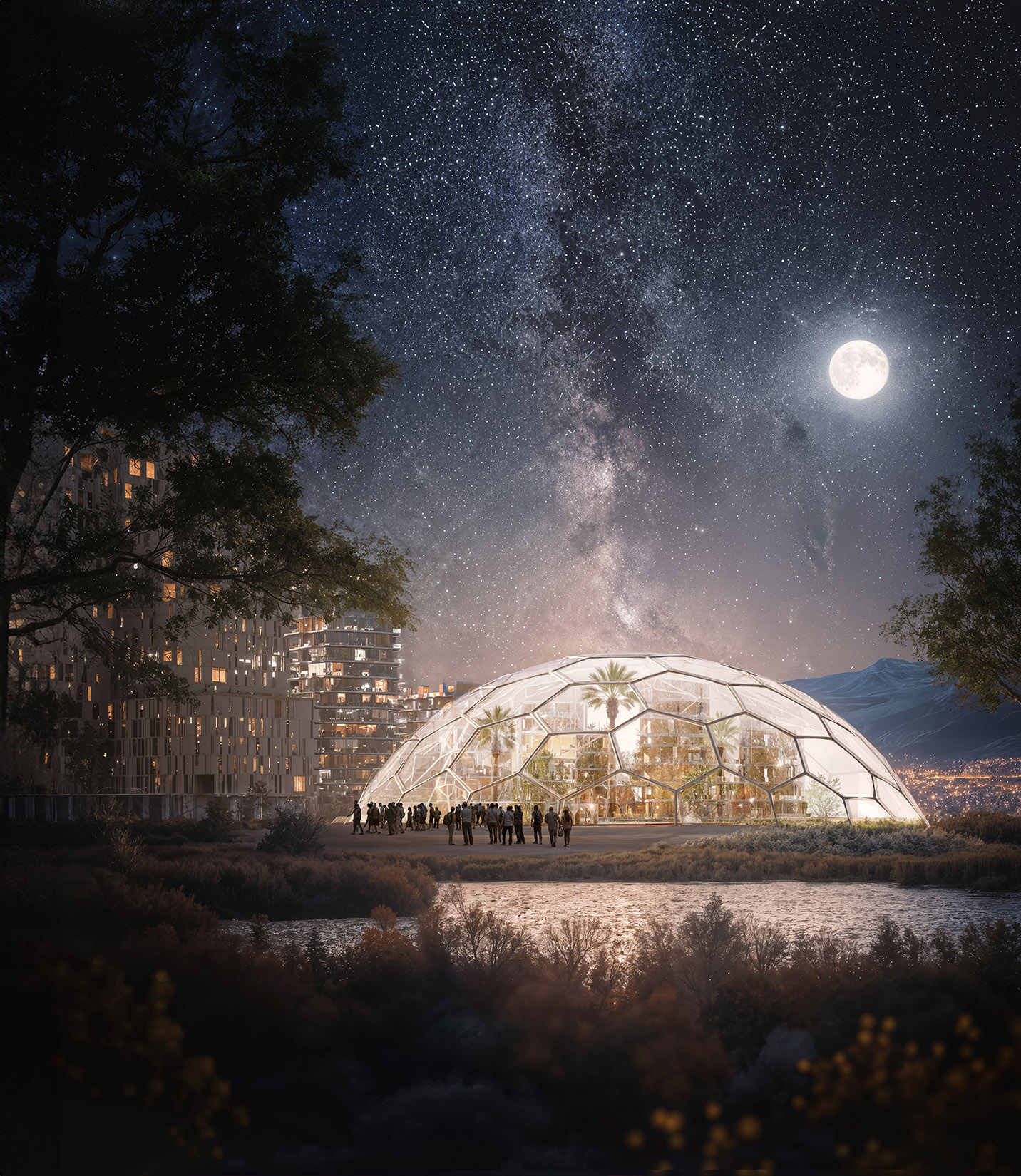
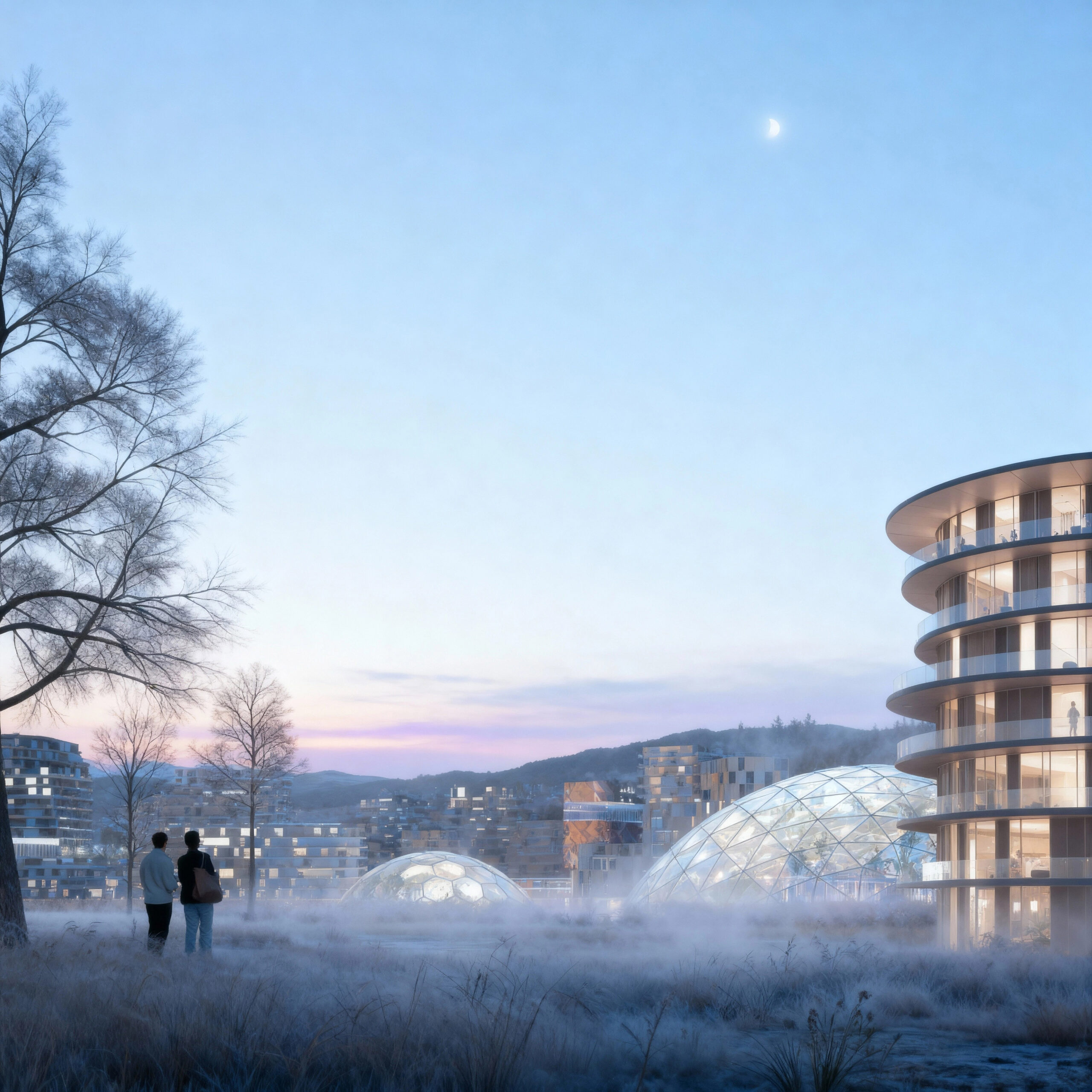
The 9 founding pillars
Philosophy of a city born from its land.
- Origins – The breath of the steppe as an urban matrix.
- Human/Nature – Architecture as dialogue and reciprocity.
- Living heritage – The ger as the foundation of a rooted modernity.
- Symbiosis – The living world as a model for a city-metabolism.
- Constellation – The Amid Od as the structuring stars of the city.
- Food & Soil – The ground as a strategic resource of abundance.
- Resilience – Learning from the extreme climate to better adapt.
- Co-evolution – A city that learns, experiments, and adjusts.
- Time – An architecture guided by cycles, seasons, and memory.
Discover also
See all our projectsSee all our projects