Objectif Métropoles « City Gateways: These Edges Becoming Fronts of a New Urban Narrative »
Long reduced to mere functional thresholds, city gateways today offer a strategic lever to transform the city starting from its margins.

City Gateways: These Edges Becoming Fronts of a New Urban Narrative
In her column, Clémence Bechu offers not only her perspective but also new ways of shaping the city to adapt to climate change. Here, the focus is on city gateways, those commercial areas inherited from an urbanism that has become obsolete.
Long reduced to mere functional thresholds, city gateways today offer a strategic lever to transform the city starting from its margins. Between the dense fabric and the periphery, these long-neglected areas can become the keystones of a more resilient, more desirable city, better connected to its territory. To reinvent them means adapting to the climate, but also reweaving the ties between the center and the fringes.
Commercial gateways, a strategic resource on a national scale
France has more than 3,800 commercial city gateway sites, covering around 80,000 hectares—seven times the size of Paris—and representing an estimated potential of 1.6 million housing units.
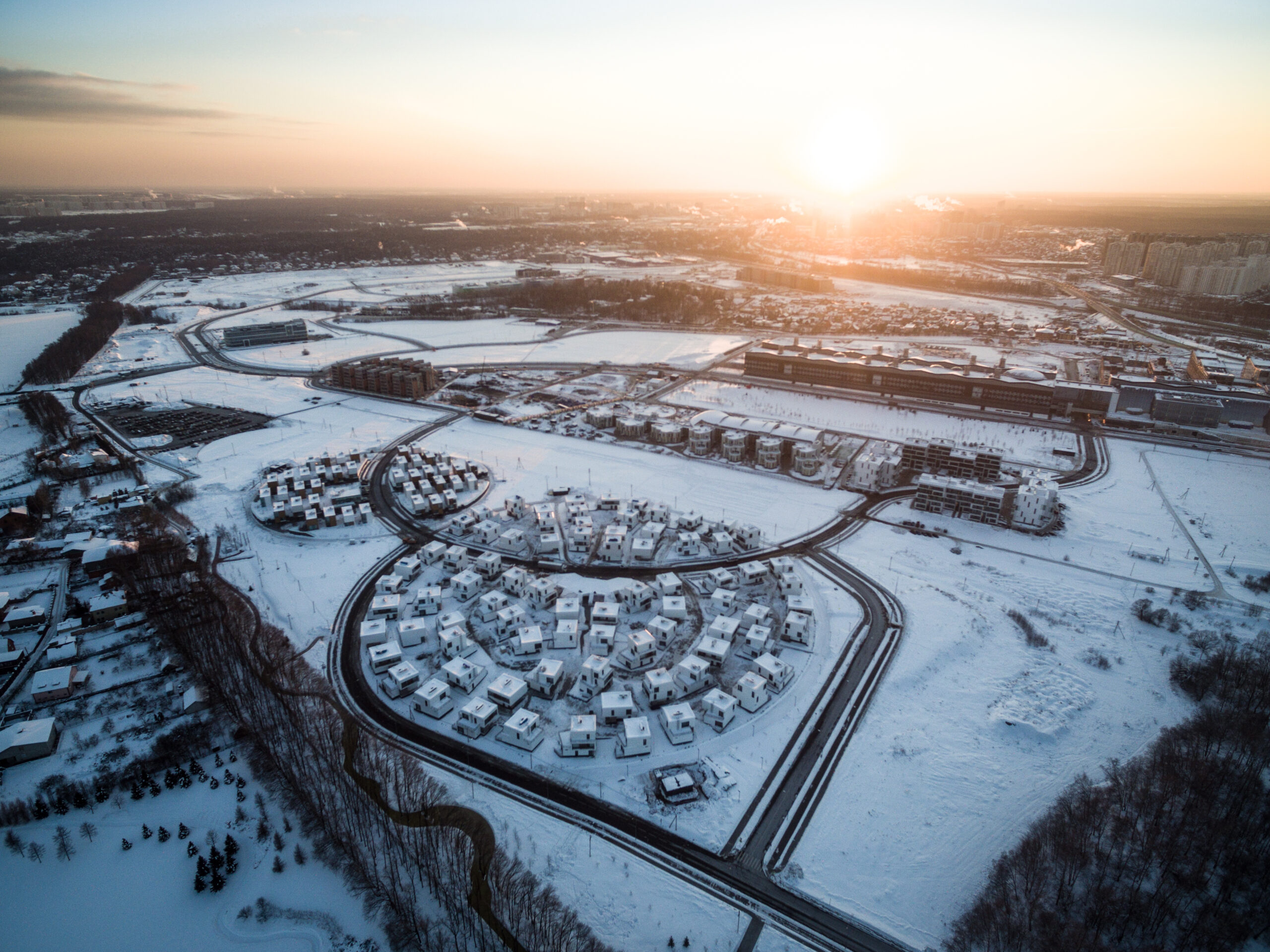
Inherited from the urbanization of the late 20th century, these areas are now in crisis: that of the linear commercial model, and that of a planning approach that has become obsolete in the face of new uses. At once heat islands, impermeable zones, and underutilized territories, these spaces nonetheless represent an exceptional land and programmatic resource for hosting a sustainable city: housing, facilities, decarbonized mobility, natural spaces…
From threshold to system: gateways change status
In the era of climate, social, and territorial transitions, urban gateways are no longer mere places of passage.
They are becoming spaces of reciprocity, of destination as much as circulation, where the city engages in dialogue with its environment. Less dependent on cars, more inclusive and resilient, they are inventing a new way of entering—or remaining—in the city. This evolution is now being carried forward at the national level by the “City Gateways” program of the Banque des Territoires. In 2023, Rollon Mouchel-Blaisot, then director of the Action Cœur de Ville program, described these spaces as a “new frontier” of urban planning, capable of providing concrete answers to the challenges of mobility, consumption, and quality of life.
Bordeaux as pioneer: a consultation with high programmatic value
In the summer of 2025, Bordeaux Métropole launched an international consultation on six “metropolitan gateways” located around the ring road, taking a decisive step toward an urban regeneration strategy that is both pragmatic and visionary.
This initiative follows on from a successful local experience: the transformation of the Mérignac Soleil commercial area into a mixed-use neighborhood, started about ten years ago, which demonstrated the ability of these single-use spaces to evolve into integrated, accessible, and adaptable living environments for new uses.
The Bordeaux consultation goes far beyond architectural gestures. It aims to build a shared vision for each site, bringing together urban planners, architects, experts, and local stakeholders around a clear triptych: de-sealing, demobilizing, and de-artificializing. In other words: transforming these gateways into vibrant, permeable, and desirable places, where functional diversity and ecological transition are combined at the metropolitan scale. In its specifications, the Métropole emphasizes the need for a renewed narrative for urban thresholds and an approach capable of reconciling planning, climate adaptation, accessibility, and territorial hospitality.
Such ambition requires thinking of the gateway as a system in itself, not just as a seam. Each multidisciplinary team will therefore have to propose an evolving strategy to turn these sites—currently dominated by cars, vacant land, and fragmentation—into catalysts for transformation for the entire urban fabric. The Bordeaux consultation could thus serve as a model for a new operational approach, linking vacant land, programmatic transformation, and concrete responses to the climate emergency.
The Grand Paris Express: a new archipelago of metropolitan gateways
If one were to look for a contemporary example of “metropolitan gateways” being redesigned, the Grand Paris Express (GPE) is undoubtedly the most powerful illustration.
With Line 15, the Île-de-France transport network is shifting for the first time from a purely radial system, focused on central Paris, to a circular system that directly connects peripheral municipalities which, until now, interacted very little with each other. Each future GPE station thus becomes much more than just a railway access point: it transforms into a new gateway to the metropolis in both directions. On one hand, it enables easier access to the historic center while easing pressure on existing radial flows. On the other, it grants direct access to a metropolitan fabric that was previously fragmented, revealing unexpected local potential—facilities, natural spaces, business areas, residential neighborhoods. These station-cities, often located on the fringes, thus become sites of urban activation, able to generate new narratives, new centralities, and new forms of use. They embody the transition from a metropolis conceived in concentric circles to a polycentric metropolis that is more resilient and better connected, enabling structural adaptation to changing lifestyles, mobilities, and, more broadly, to climate challenges.

Edges of La Défense: catalysts for a broader transformation
Another emblematic territory: the La Défense district. Although it is not a municipality in itself, this part of the metropolis, shared by several cities, embodies a profound transformation, with the ambition of becoming a campus for innovation and knowledge.
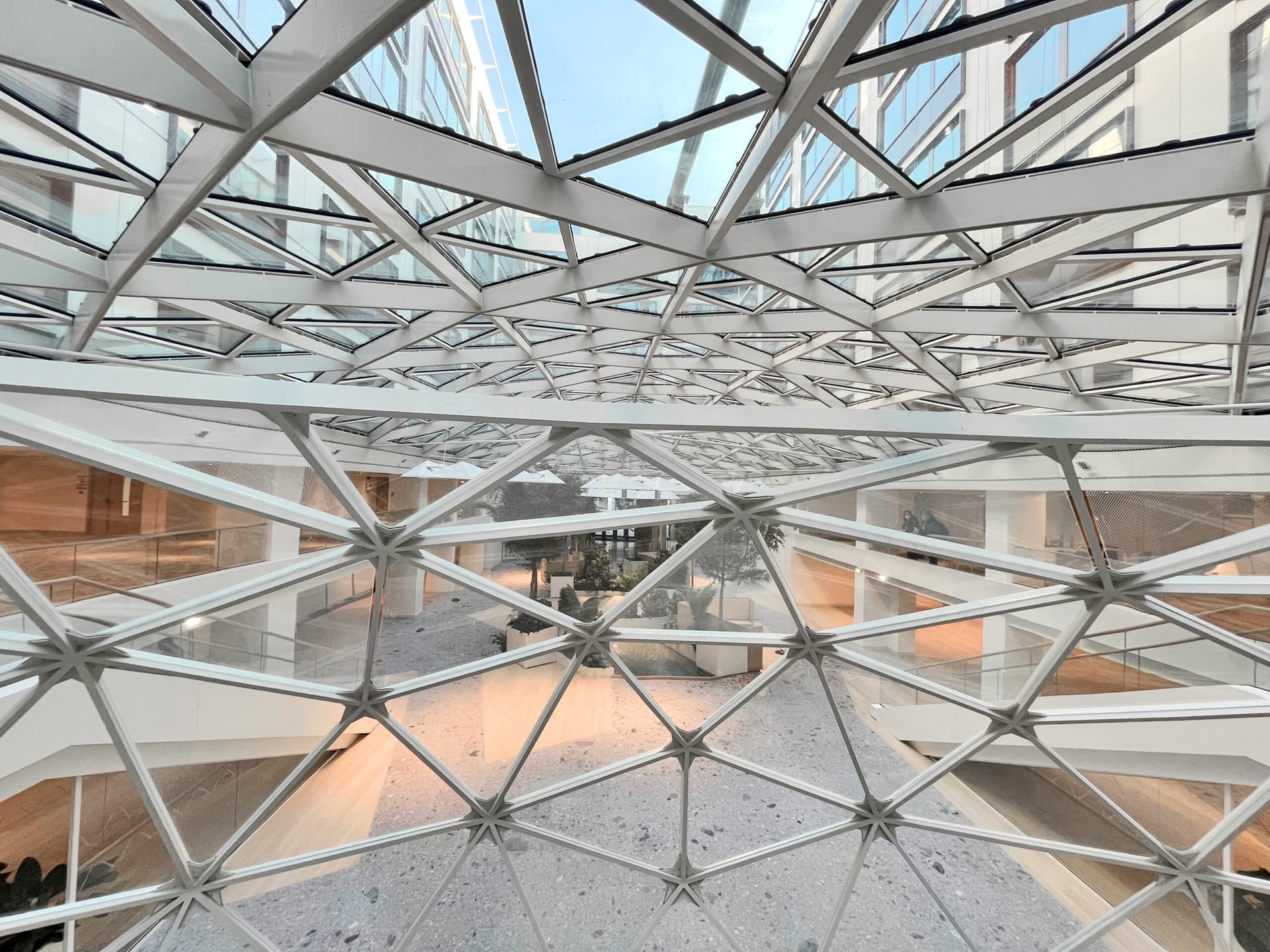
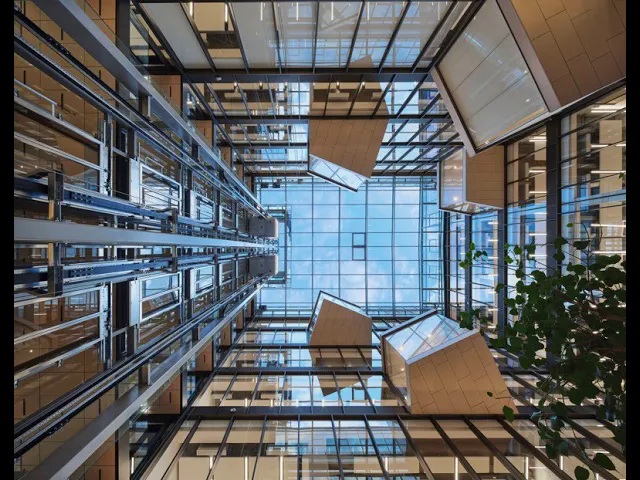
And it is indeed its edges that are contributing to this transformation. Today, they host housing, schools, soft mobility solutions, and public spaces, prefiguring a business district that is more mixed-use and human-centered. The INSPIRE project in Puteaux is one example: an urban laboratory reconciling scales and uses.
Across France, urban edges are becoming territories of innovation. Whether bordering a ring road, a beltway, or a skyline, they crystallize the challenges of the city of tomorrow: climate adaptation, new mobilities, land recycling. Long neglected, they are now emerging as the forefront of a renewed urban narrative—an operational and sensitive narrative ushering the city into systemic transformation via its peripheries.
These gateways are also windows onto a circular, inclusive, and resilient metropolis—and undoubtedly one of the major projects of urban adaptation to come.