Hunnu City, a new constellation of life for Mongolia
Hunnu City, a new constellation of life for Mongolia
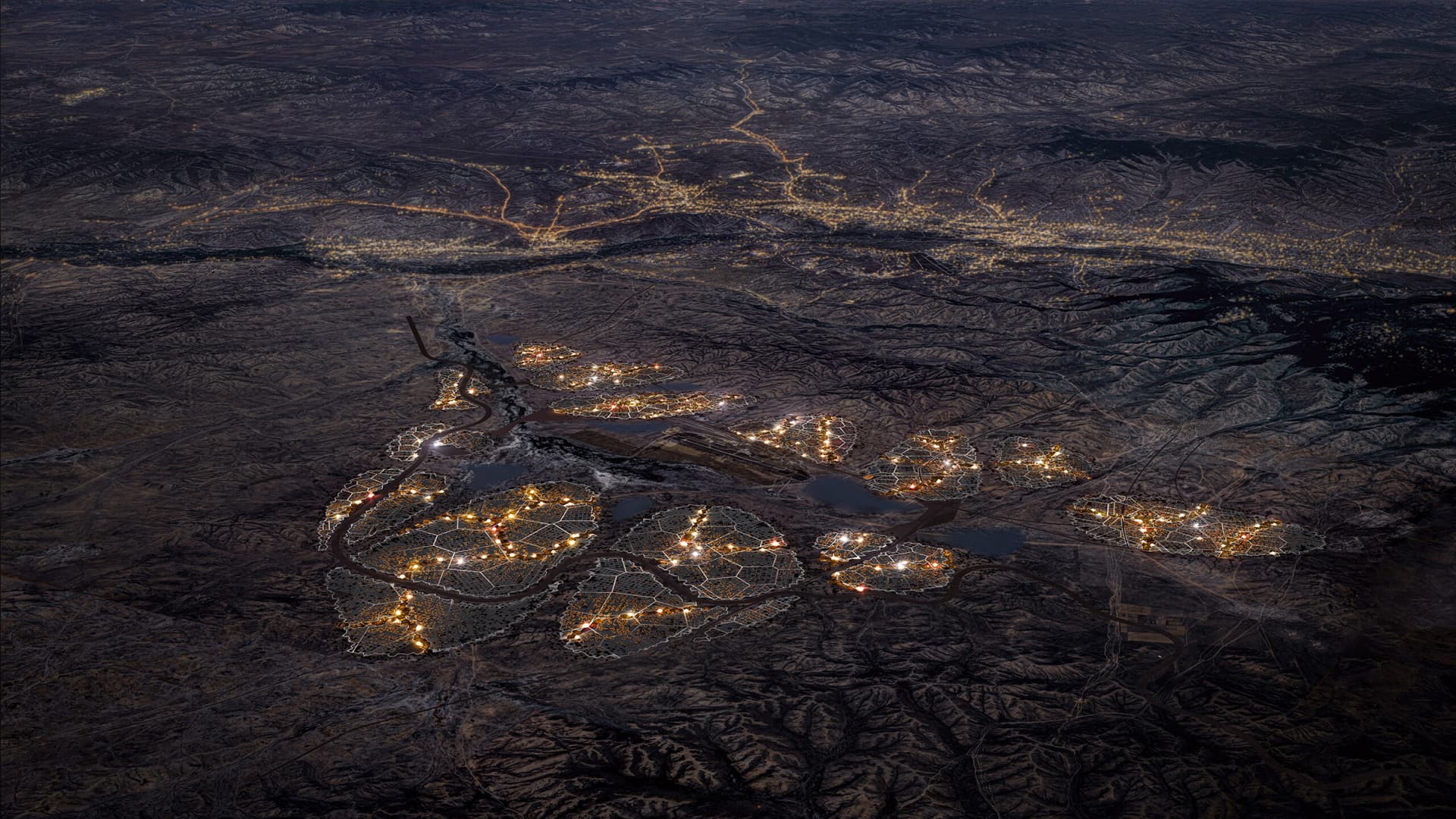
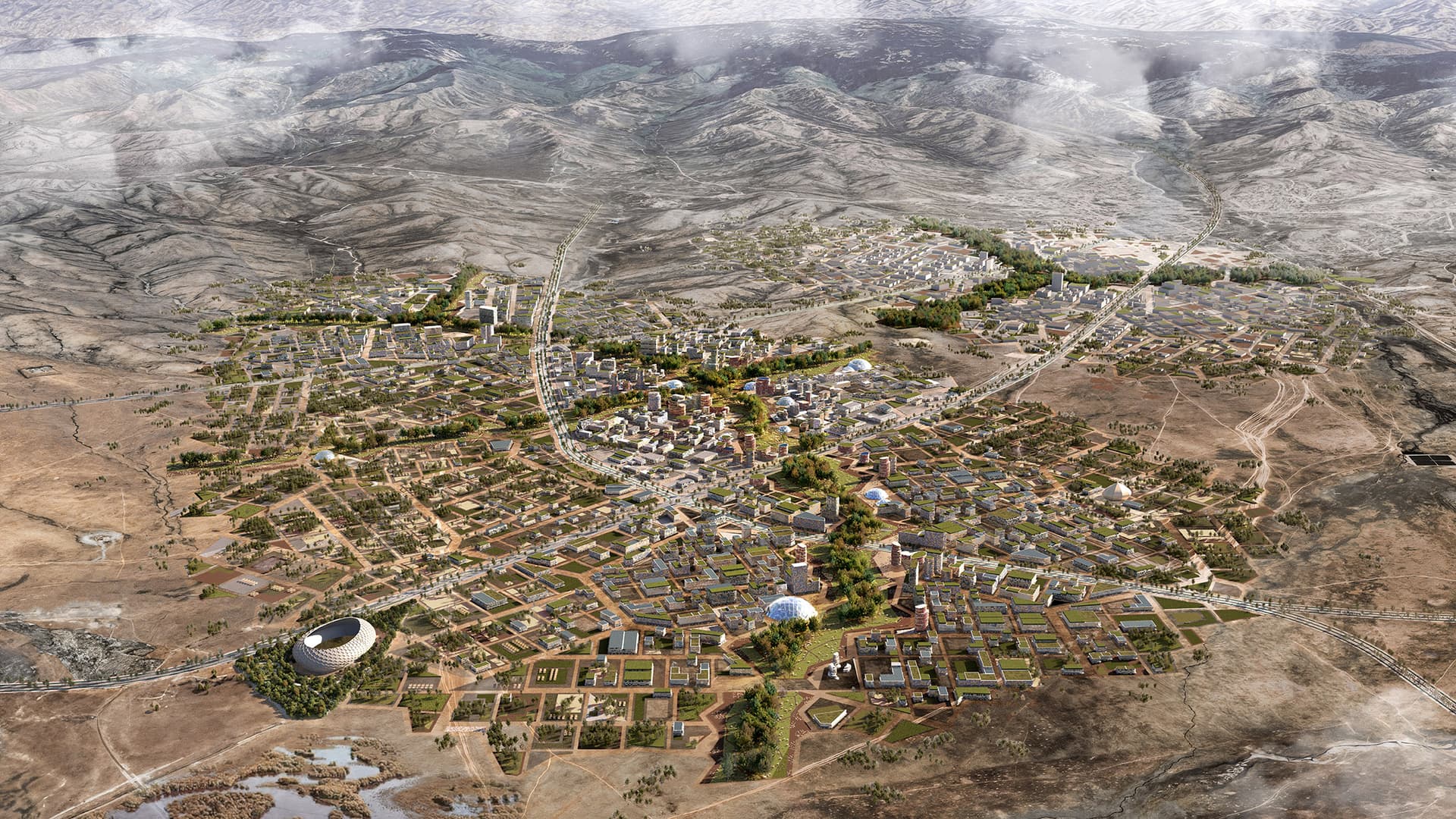
We won the international competition for Hunnu City, a new Mongolian city set to grow until 2045 over more than 31,500 hectares, directly connected to the new Chinggis Khaan International Airport. This strategic project lies at the heart of the national “Vision 2050” policy, which aims to strengthen the country’s economic sovereignty, its climate resilience and the expression of its cultural identity. With Hunnu City, we are envisioning a regenerative city designed to generate more resources than it consumes, where infrastructures, landscapes, housing and communities co-evolve in a renewed balance between nature, society and innovation.
A city born from its territory
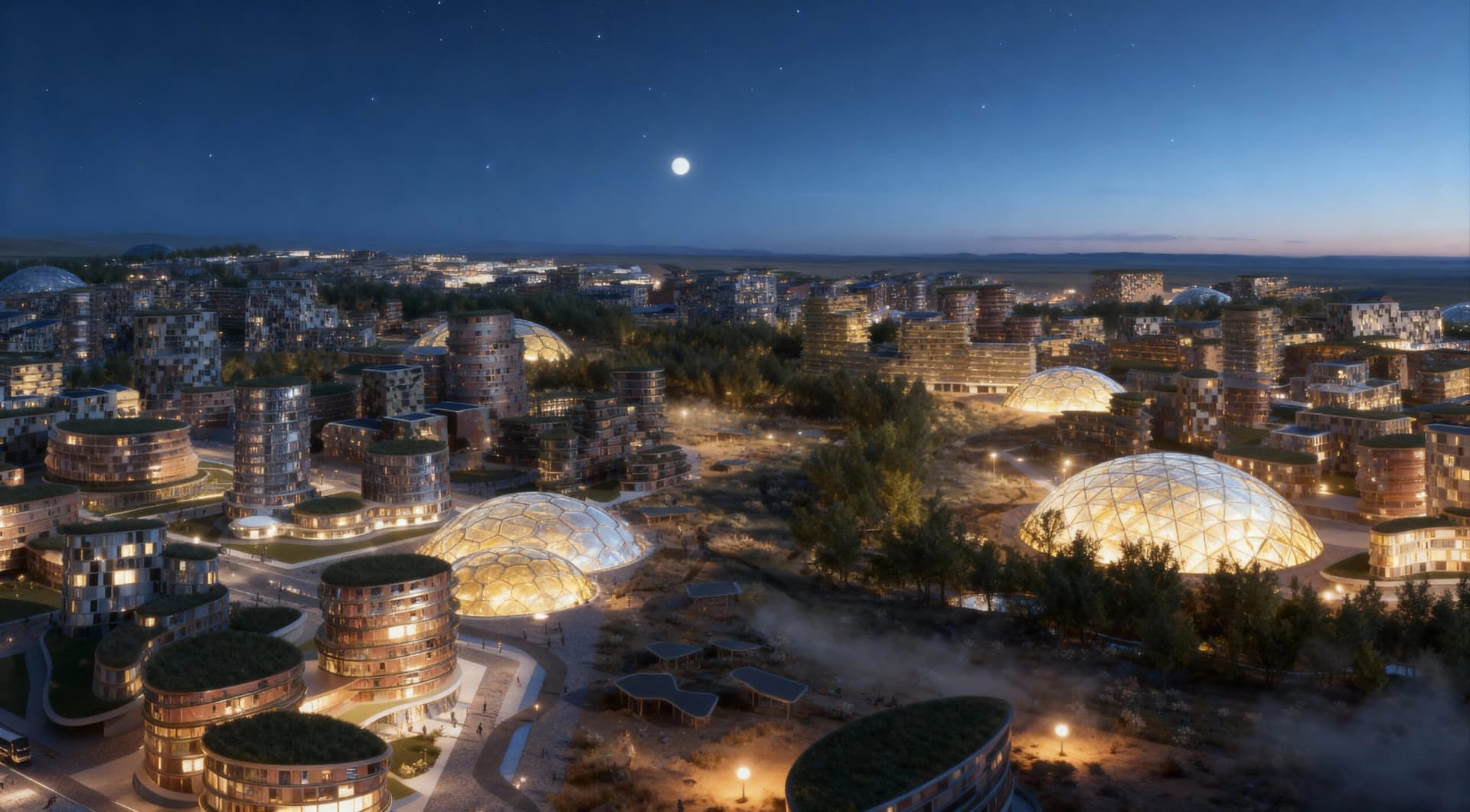
From the very first sketches, the decision was made not to impose an abstract urban form, but to let the territory guide the project, starting from the steppe, its winds, its waters and its cycles. The city is conceived as a living organism that observes, listens and then unfolds through the integration of its flows, captured, slowed and reused water, solar and thermal energies, ecological corridors for biodiversity, soft mobilities and a “15-minute city” framework. Guided by the symbolism of the number 9, sacred in Mongolian tradition, the masterplan is structured around nine founding pillars, origins, human–nature relationship, living heritage, symbiosis, constellation, nourishing soil, resilience, co-evolution and time, which shape the long-term vision for Hunnu City.
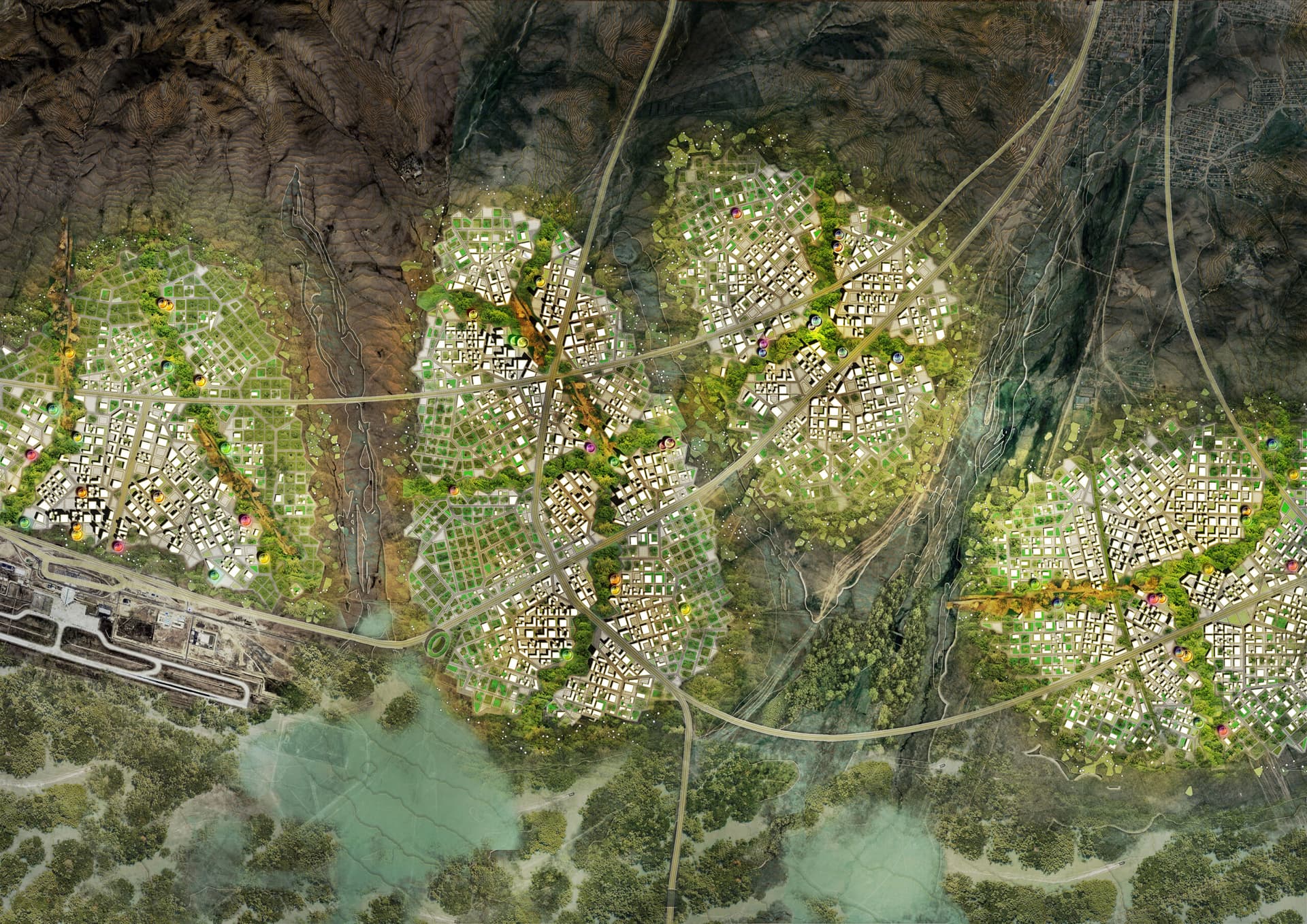
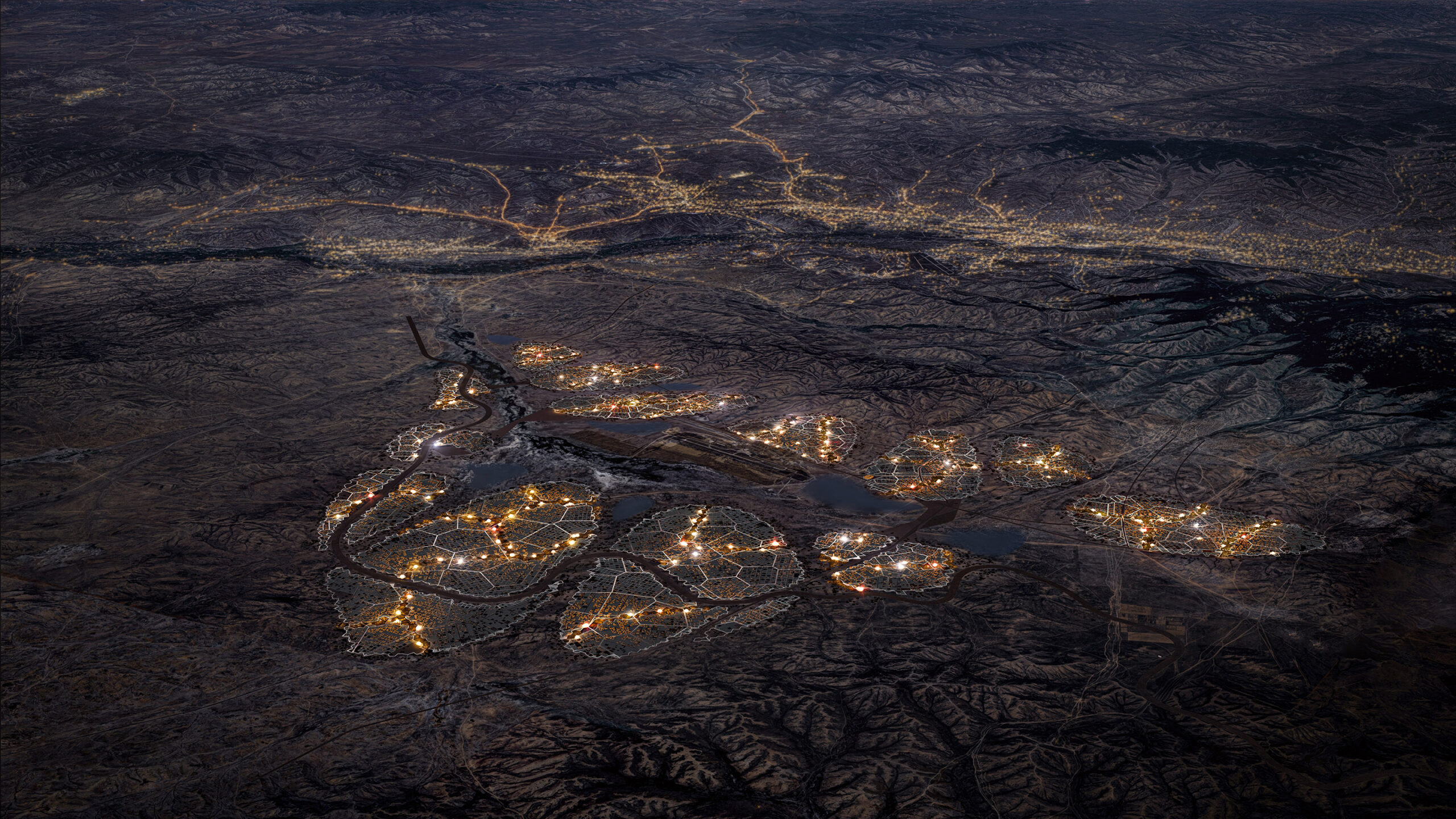
Amid Od, the stars of a new urban constellation
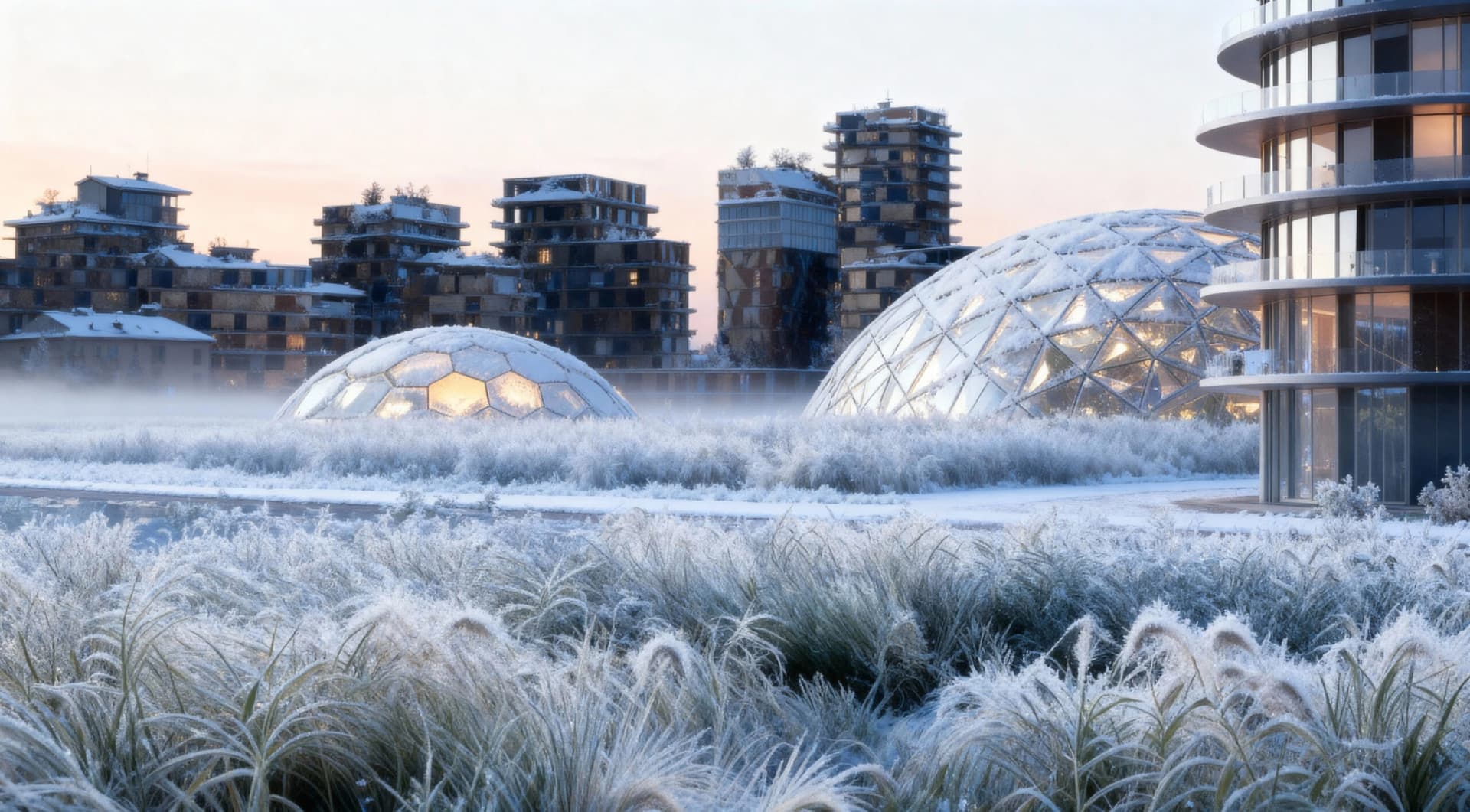
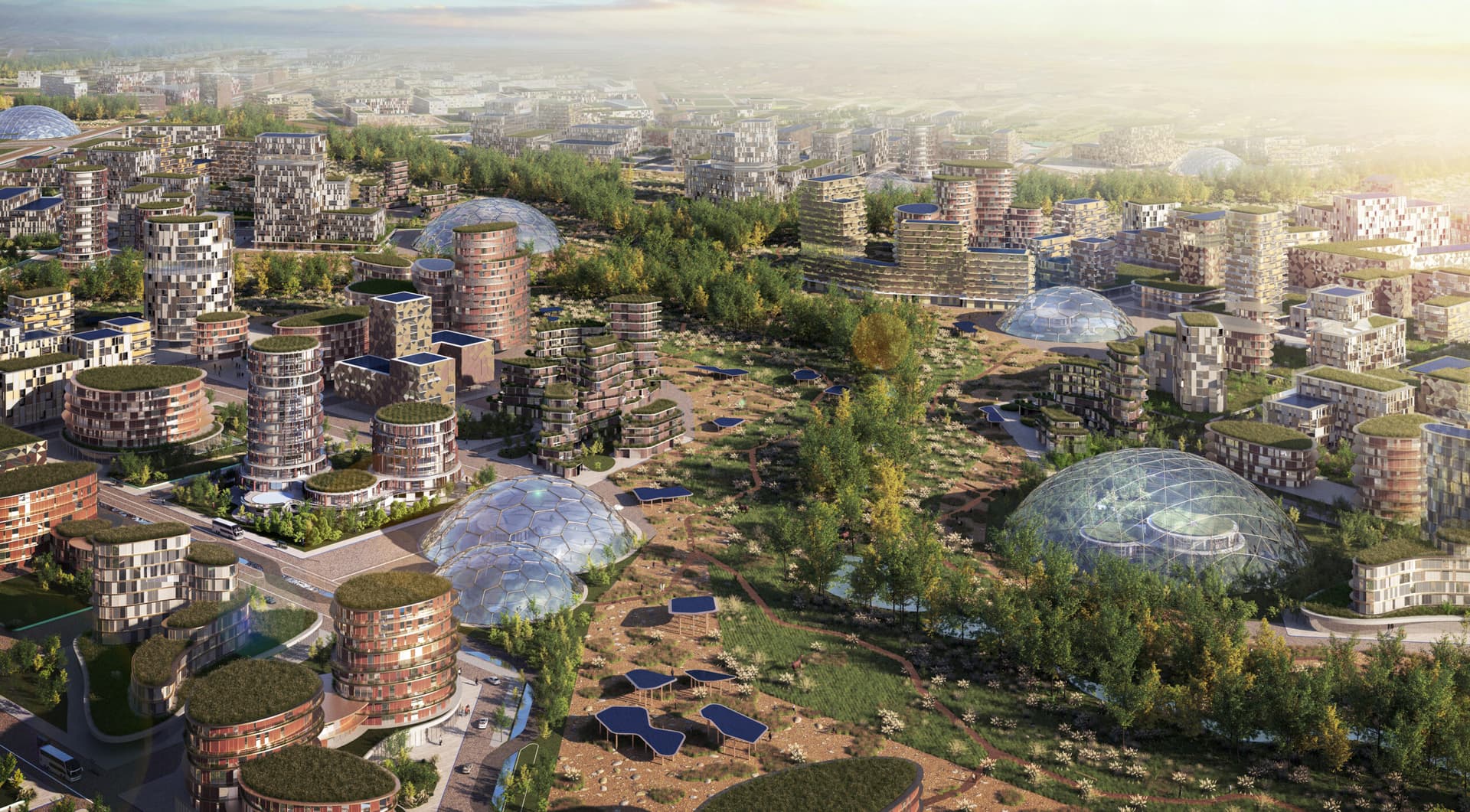
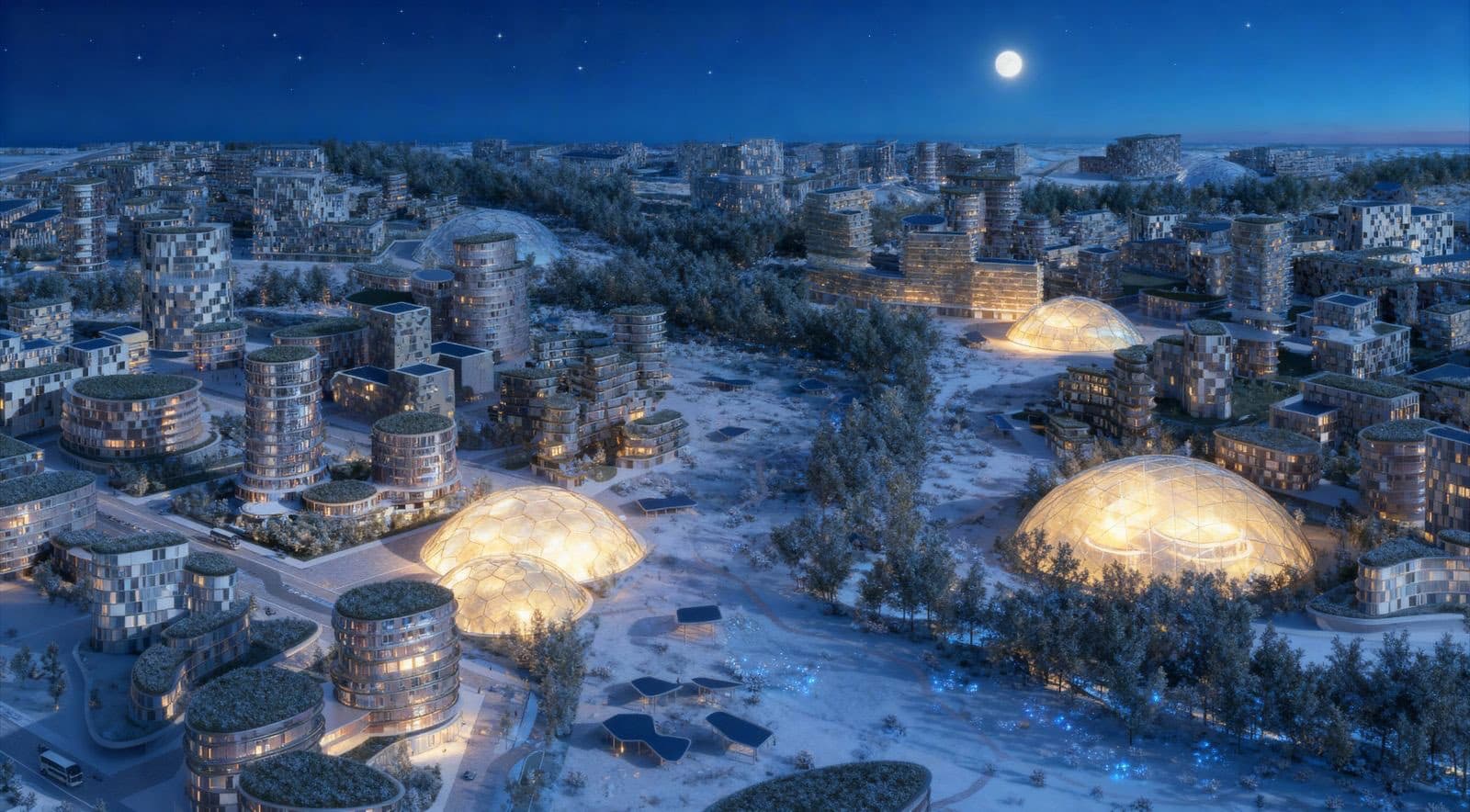
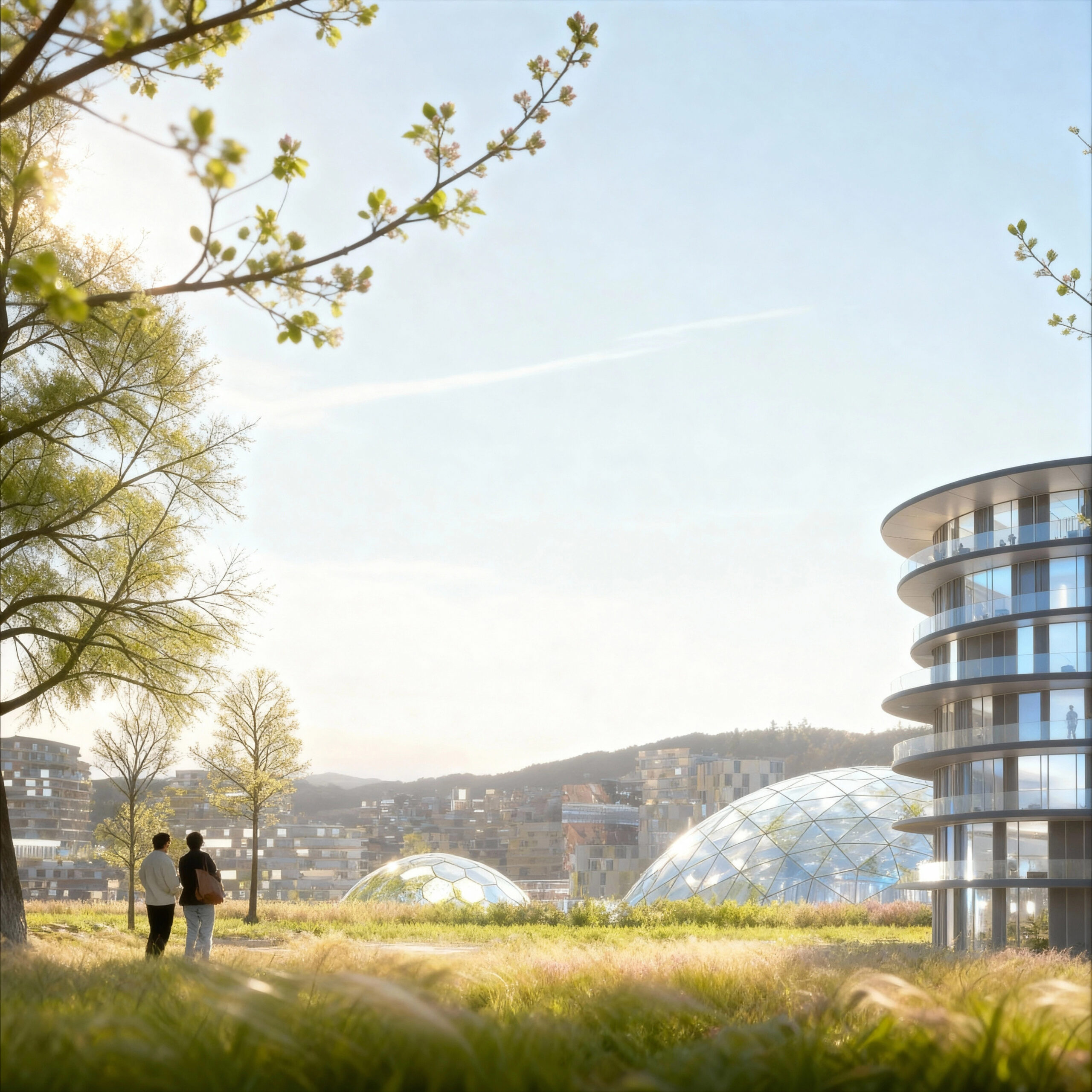
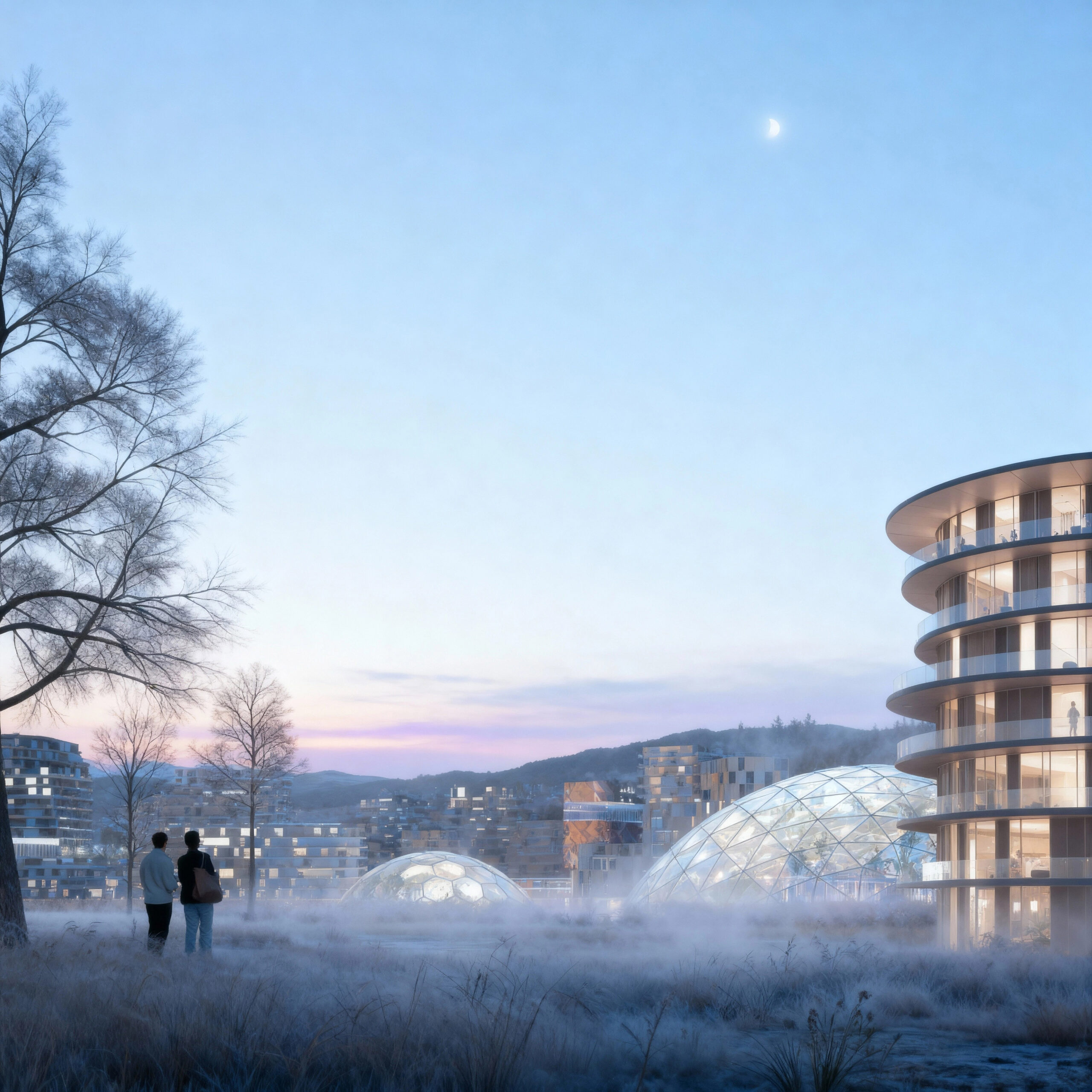
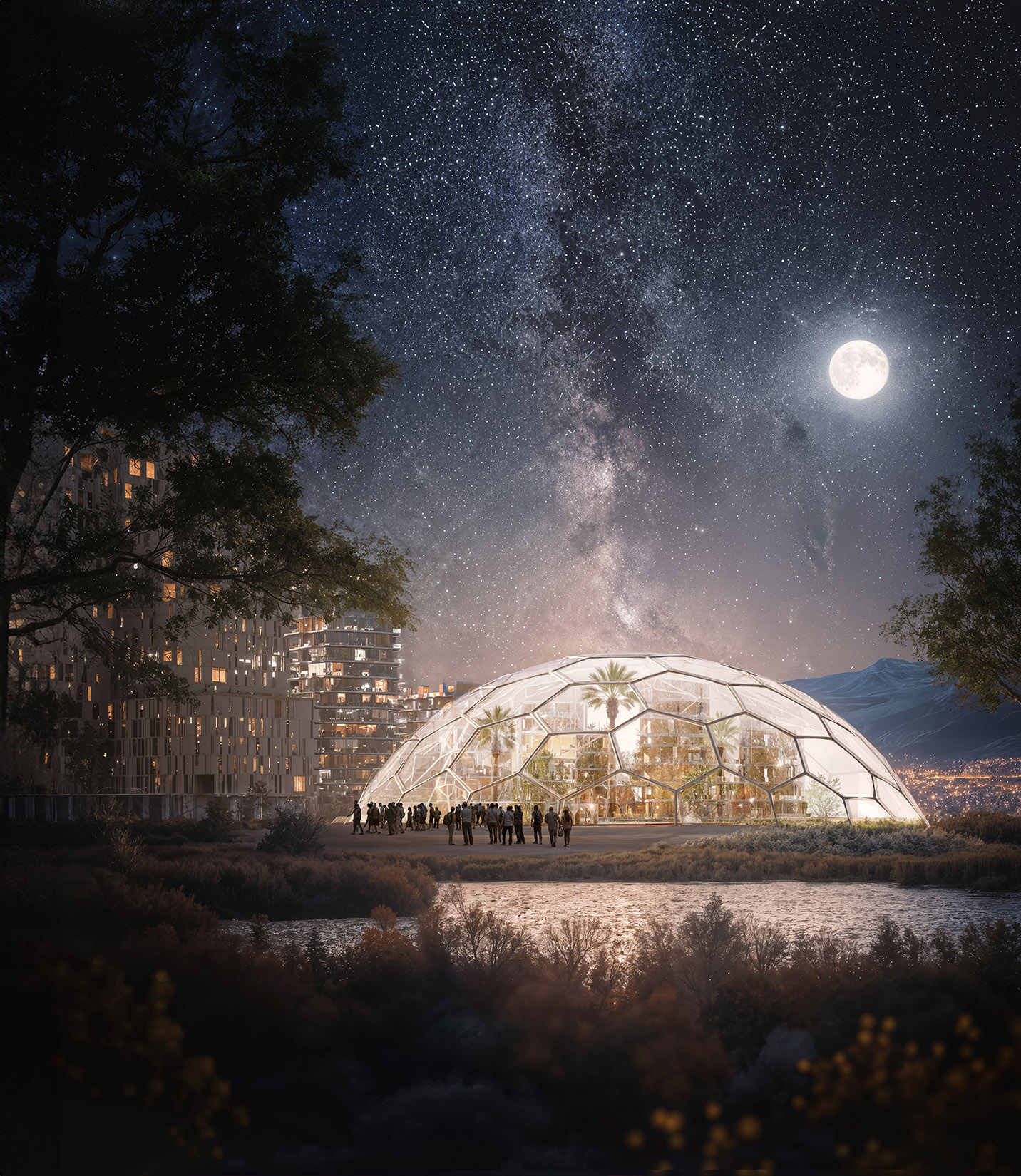
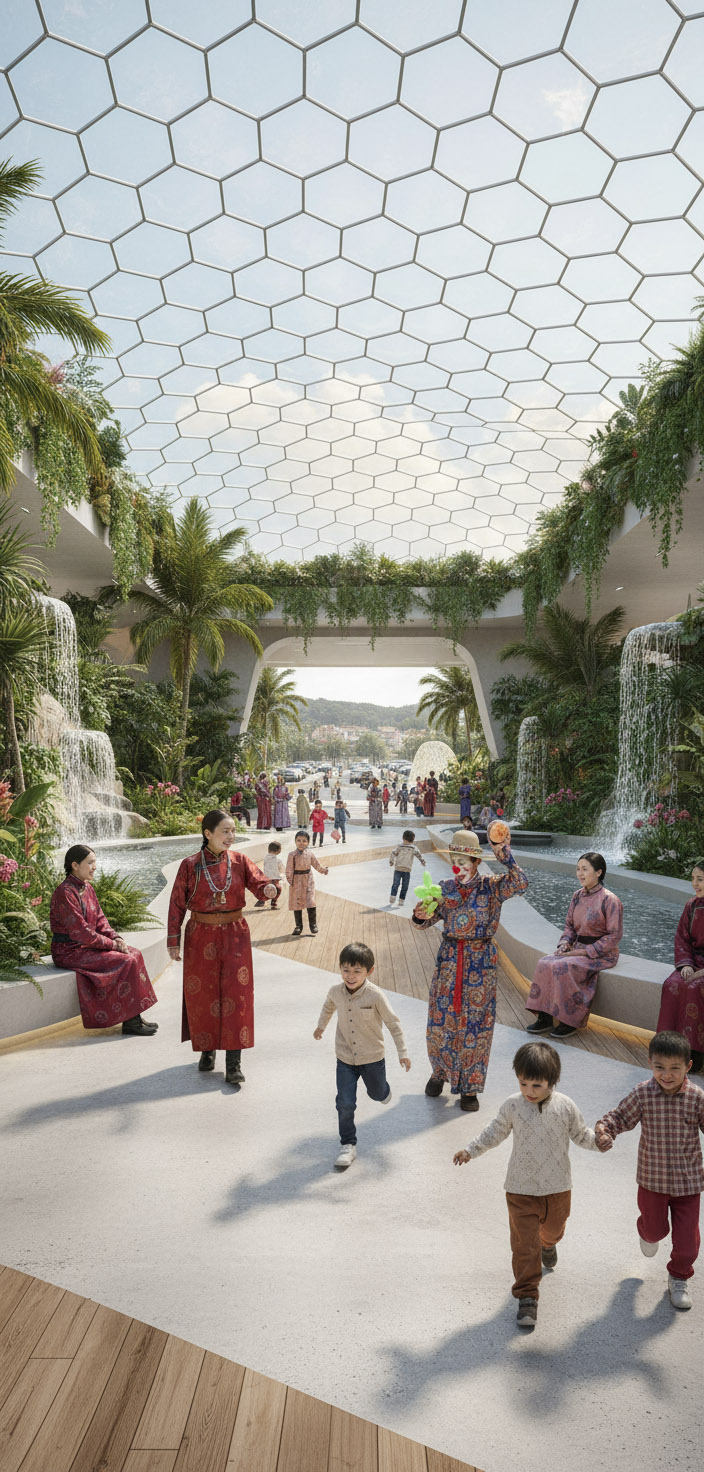
At the heart of the project, we imagine the Amid Od, literally stars of life, which structure the whole city as a contemporary constellation. These circular centres, inspired by the ger, the Mongolian yurt, become new identity markers for future generations, acting at once as cultural, social, energy and food hubs. Each Amid Od serves as a neighbourhood heart and climatic refuge, accommodating public spaces, gardens, places for culture, sport, education and work, while ensuring close access to essential services within a fifteen-minute city framework. Designed as climatic biomes with light, demountable envelopes, they provide comfortable conditions all year round despite harsh winters, thanks to passive solar gains, heat recovery and rainwater harvesting.
Biomimetic, cellular and regenerative urbanism
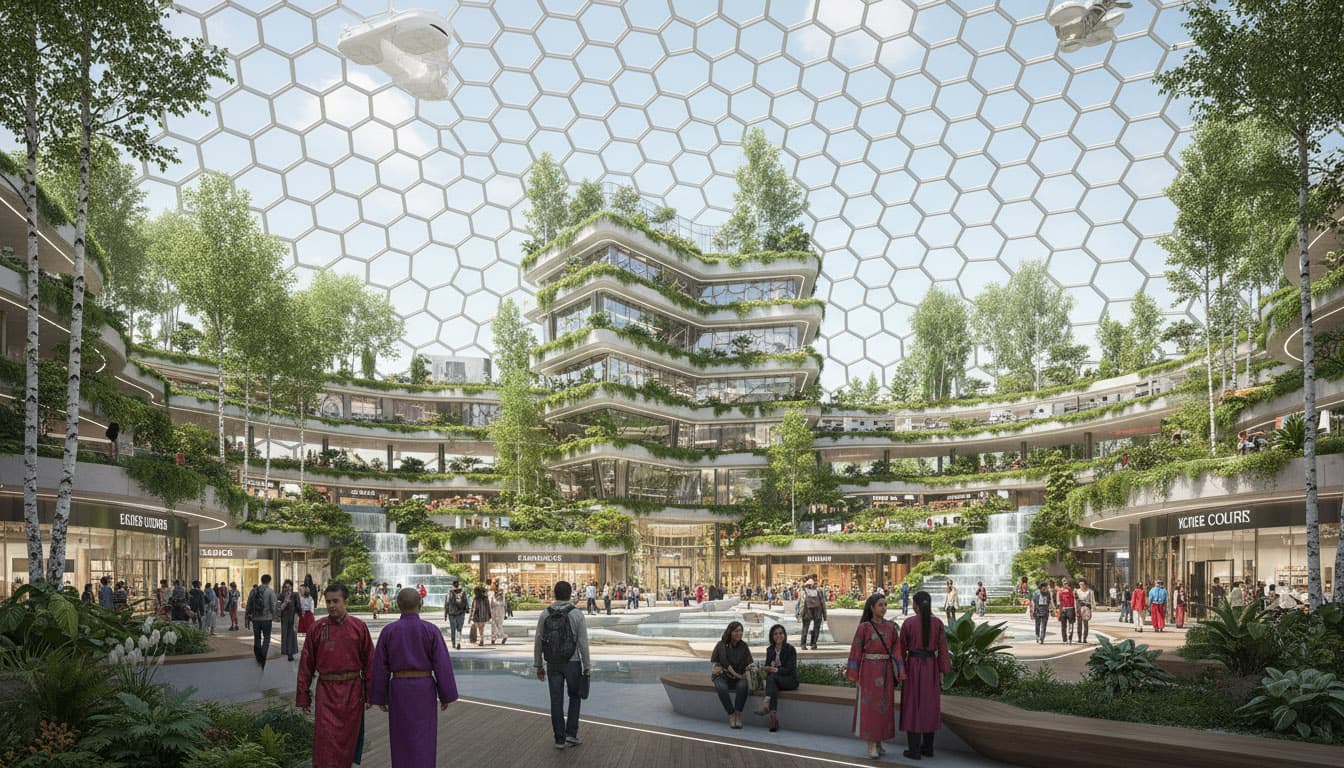
The masterplan is based on a cellular framework that organises the city into living gradients, with density, programmatic diversity and urban vitality concentrated around the Amid Od, then progressively dissolving into gardens, farmland and steppe. This structure allows Hunnu City to absorb the challenges of an extreme climate, very cold winters, hot summers, strong winds, flood risks and hydrological imbalances, by combining ecological corridors, no‑build zones and landscape infrastructures for water retention and infiltration. Conceived as a city that learns, Hunnu City embeds resilience and circularity strategies at multiple scales, near‑zero‑energy urban cells, buildings designed for passive survivability, local and demountable materials, and intelligent technical networks organised as a smart grid to optimise resources.
Feeding the city, regenerating the soil, connecting communities
A shared vision for a twenty-first-century learning city
Hunnu City is conceived as a learning city, where every space, from the Amid Od to the landscape corridors, becomes a place of education about energy, water, climate, food and the cycles of living systems. Drawing on international collaborations between urban planners, architects, landscape designers, engineers and researchers, while grounding the project in local knowledge, the aim is to outline a city model capable of inspiring other territories facing similar climatic and socio-economic challenges. Hunnu City, a new steppe of constellations, thus tells a living story in which nature, culture and humanity move forward together, and in which Mongolia asserts a strong vision of resilient, rooted and profoundly sustainable urbanism.